 Vietnamnet.vn

 Podcast



U20 Vietnam suffered a painful 2-1 defeat to U20 Palestine at Viet Tri Stadium in Phu Tho, despite creating a string of chances in a match they desperately needed to win.
It was Vietnam’s second consecutive defeat in Group C of the 2027 AFC U20 Asian Cup qualifiers, following a 3-0 loss to U20 North Korea in their opening game. The result leaves the hosts bottom of the group without a point and no longer in control of their own destiny.
Their hopes of reaching next year’s finals, however, are not completely over.
Vietnam must now defeat U20 Iran in their final group match and hope U20 North Korea beat Palestine. Even then, Ikeuchi’s players will need the tiebreakers to fall in their favor before potentially entering another battle for one of the seven best runners-up spots.
Missed chances prove costly
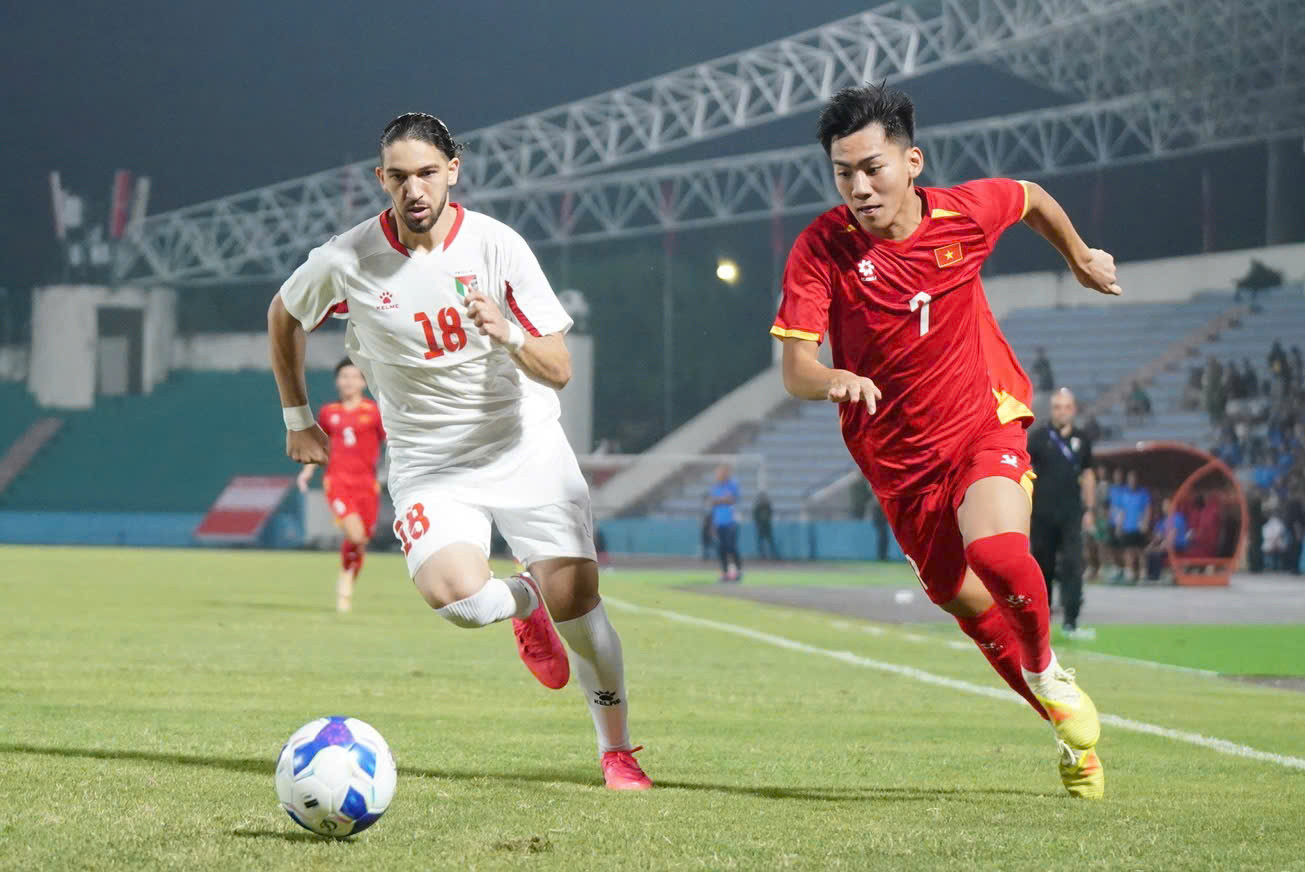
Knowing that victory over Palestine was essential, Vietnam started on the front foot and repeatedly pushed forward, only to struggle against a disciplined Palestinian defense.
The hosts created opportunities but failed to turn their pressure into goals, and Palestine punished them in the 34th minute.
Laieth Tayem found space inside the penalty area before producing a composed finish to give Palestine a 1-0 lead.
Vietnam raised the tempo after the break and finally drew level in the 67th minute. Captain Nguyen Quoc Khanh rose high to direct a dangerous header toward goal. The ball struck the crossbar before rebounding off goalkeeper Diogosamara Lourenco and into the net for an own goal.
With momentum on their side, Vietnam pushed for the winner. Instead, they were caught on the counterattack.
In the 83rd minute, Zaki Hamade broke clear and finished clinically to restore Palestine’s lead and secure a 2-1 victory.
The defeat was particularly painful for Vietnam given the number of opportunities they had created, but head coach Yutaka Ikeuchi acknowledged that his team had fallen short at crucial moments.
“This was a match we absolutely had to win. The players prepared well and were good in transitions. However, in the first half, the team’s mentality and concentration were not really at the required level,” Ikeuchi said.
“In the second half, U20 Vietnam created much more pressure around the opposition goal, but our failure to score another goal led to this result.”
The Japanese coach also pointed to Palestine’s defensive organization and counterattacking threat, while acknowledging Vietnam’s lack of experience in dealing with decisive moments.
“U20 Palestine defended well and were dangerous on the counterattack. Our defending at crucial moments still showed a lack of experience,” he said.
“When U20 Vietnam fail to convert the chances we create, we have to accept the result. Our chances are now limited because of the goal difference, but as long as there is still hope mathematically, we will continue fighting until the end.”
Palestine coach Sajid Karakra, meanwhile, praised Vietnam but said his players deserved the victory after producing a committed performance.
“U20 Vietnam are a strong team and had home advantage. It was not easy to find weaknesses in their game. Perhaps they lost concentration and that was why they lost to U20 North Korea in their opening match,” Karakra said.
“This was a difficult game because we did not have a good start in our previous match, but the players competed with a strong sense of responsibility, gave everything and managed the game well. We created many chances and scored two goals.”
Vietnam’s narrow path to the Asian Cup
After two rounds of Group C, North Korea sit top with six points and a goal difference of +4. Iran and Palestine both have three points, while Vietnam remain bottom with zero points after scoring once and conceding five goals.
Vietnam can no longer challenge for top spot, leaving their only possible route to the 2027 AFC U20 Asian Cup finals through second place and, ultimately, a place among the seven best runners-up in qualifying.
The first requirement is non-negotiable: Vietnam must beat Iran in their final match while North Korea must defeat Palestine.
Under that scenario, Vietnam, Iran and Palestine could all finish with three points, with tiebreaking criteria then determining their positions. Head-to-head results would be among the key factors used by the Asian Football Confederation.
One of the most favorable scenarios for Vietnam would be a narrow, high-scoring victory over Iran, such as 3-2 or 4-3. That could allow the hosts to finish above both Iran and Palestine based on the relevant head-to-head calculations.
But finishing second in Group C would only solve part of the equation.
Vietnam would then have to compare their record with the runners-up from other qualifying groups to secure one of the seven available places for the best second-placed teams.
There is another complication. With the Philippines having withdrawn from Group A, leaving that group with only three teams, results against the bottom-placed side in four-team groups would be excluded when comparing runners-up.
If Palestine finish bottom of Group C, Vietnam’s 2-1 defeat to Palestine would therefore be removed from that comparison.
Vietnam’s record for the runners-up ranking would then consist of a victory over Iran and a defeat to North Korea, giving them three points and a goal difference of minus two. Scoring as many goals as possible against Iran could prove important if goals scored are eventually needed as another tiebreaker.
It remains an extremely difficult path. Iran are among the strongest teams in the group, while Vietnam’s fate also depends on North Korea beating Palestine and results elsewhere in the qualifying competition.
After two defeats, Vietnam no longer control their own destiny. Yet their Asian Cup dream is not mathematically over. Victory against Iran could still leave the door slightly open — and give Ikeuchi’s young side one final chance to squeeze through.
Thien Binh - Dai Nam
.svg)
