 Vietnamnet.vn

 Podcast



According to the Ministry of Education and Training (MOET), in the 2024–2025 period, 173 public higher education institutions (excluding military and police universities) have already established university councils, while one institution - Vietnam Petroleum Institute - has yet to do so.
All 41 institutions under MOET have established their university councils. For the 2024–2029 term, six units have already appointed new councils, complying with Resolution 19, which requires the Party Secretary to concurrently serve as Chair of the University Council. An exception is Ho Chi Minh City Open University, which has not yet elected a council chair. For the 2025–2030 term, 21 institutions are scheduled to establish their new councils in 2025.
However, MOET acknowledged that in many public universities, university councils have not fulfilled their intended function. Their activities often overlap with those of the Party Committee and executive board, resulting in ineffective management and wasted resources.
Additionally, coordination between Party Committees, university councils, and school administrations has shown signs of internal division and lack of unity.
In line with Resolution 71 by the Politburo on breakthrough strategies for educational development, university councils will no longer be organized within public higher education institutions. Instead, the Party Secretary will also serve as the institution’s head.
MOET has directed public higher education and vocational institutions to suspend planning and appointments for chairpersons and deputy chairpersons of university councils as of September 12, 2025.
Furthermore, it instructed institutions to temporarily suspend planning and new appointments for director, deputy director, rector, and vice rector positions until new guidance is issued. This does not apply to reappointments at the end of existing terms.
University councils and their leadership teams whose terms have ended will continue functioning until further instructions. If the council chair has surpassed the age limit for management roles, the deputy chair (if available) will take over. If no deputy chair exists, the council may elect a temporary leader.
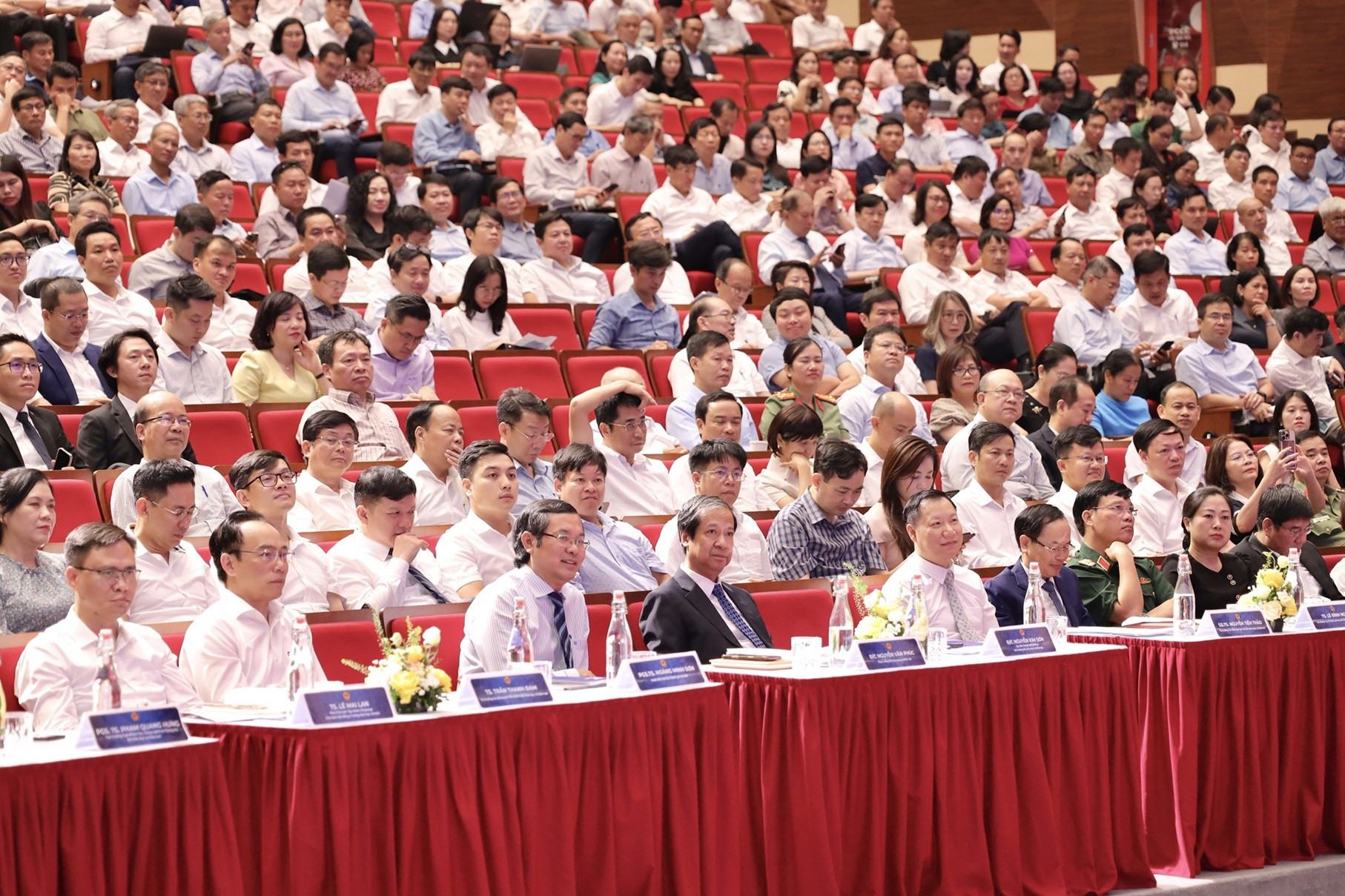
At the recent National Higher Education Conference, Minister of Education and Training Nguyen Kim Son acknowledged the uncertainty and concerns among university leaders about the elimination of university councils, combined with the upcoming institutional mergers and leadership restructuring.
“This is a moment for bold restructuring,” Son said. “Teachers and administrators must be ready for all possibilities, and embrace every situation with integrity. Asking 'Where will I sit?' is an unhelpful mindset.”
“What we must do in the next three months is think together about how to strengthen our institutions, seize this opportunity, and prepare for long-term development,” he added. “That is what I urge all faculty members to focus on during this critical moment.”
University councils are currently defined as part of the organizational structure of higher education institutions. These governance bodies represent the ownership and stakeholders’ interests. In private and not-for-profit private universities, councils represent investors and other stakeholders.
Nationwide, there are 11 national universities, 173 public universities and academies, and 67 private or foreign-invested universities. As of 2025, Vietnam’s higher education system employs 35,999 administrative staff and 82,451 full-time lecturers.
Thanh Hung
.svg)
