 Vietnamnet.vn

 Podcast



Consumers today are not just worried about what children eat - everyone is at risk of consuming unsafe vegetables. Meanwhile, the Ministry of Finance is seeking feedback on a draft regulation for betting on horse racing, dog racing, and international football.
Consumer protection leaders raise alarm over contaminated vegetables
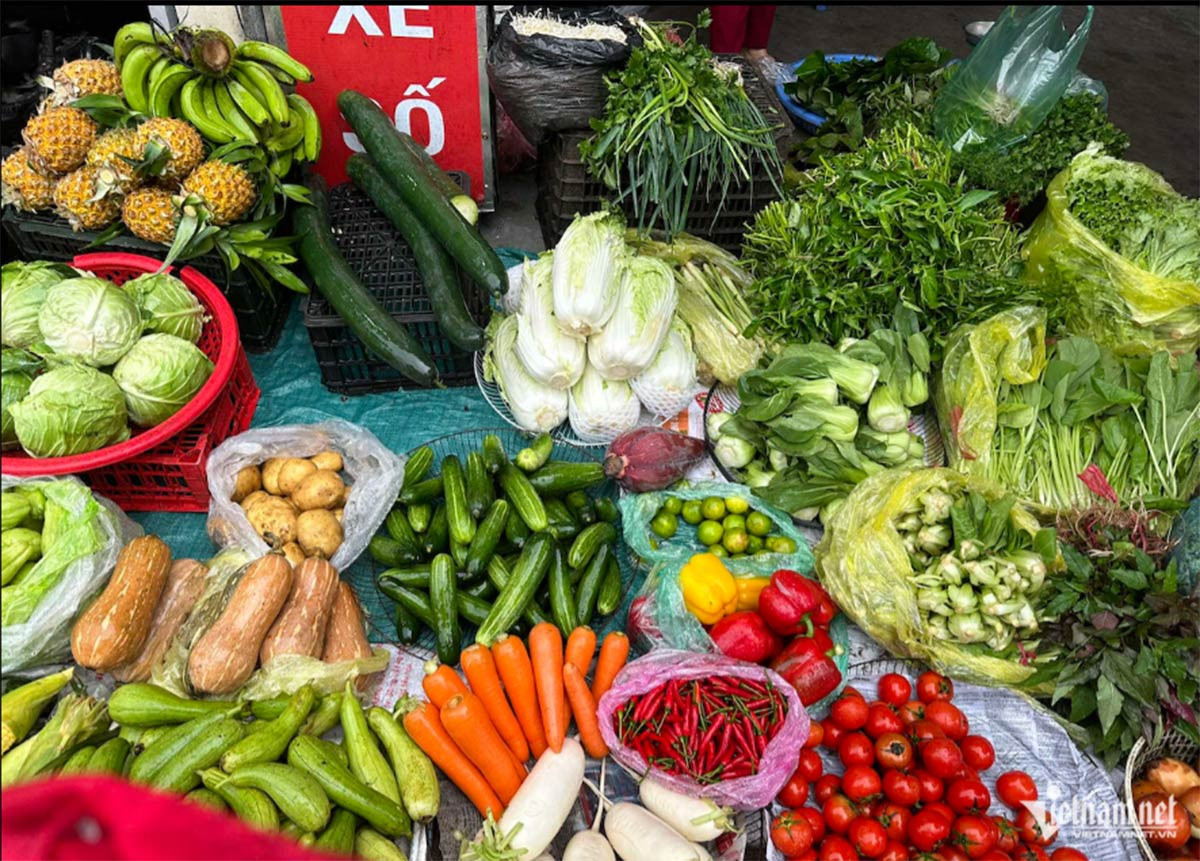
Consumers are increasingly eating unsafe vegetables, and experts warn that a serious reassessment is needed - particularly in how schools and suppliers may be profiting from inadequate sourcing.
At the roundtable “Closing loopholes in school and supermarket vegetable sourcing” on September 24, Ta Van Tuong, Deputy Director of Hanoi’s Department of Agriculture and Rural Development, noted that the capital needs 1.3 million tons of leafy greens each year. However, its current cultivation area spans only 33,000 hectares, yielding about 735,000 tons annually - meeting just 60% of demand. Despite early efforts to promote safe vegetable farming, only 400 hectares in Hanoi are certified under VietGAP standards.
Notably, even supermarkets are not immune - vegetables of unclear origin still find their way onto shelves. According to Tran Thi Dung, Vice President of the Vietnam Consumer Protection Association, the issue must be seriously addressed from production through to distribution.
At a previous seminar titled “Enhancing food safety and quality of domestic agricultural products” held on September 23, Nguyen Van Muoi, Deputy General Secretary of the Vietnam Fruit and Vegetable Association, emphasized that standardized production processes - especially VietGAP certification - are essential for food safety.
Yet current data shows that only around 5–6% of vegetables meet VietGAP standards.
Nguyen Quy Duong, Deputy Director of the Department of Crop Production and Plant Protection, revealed that according to a five-year national survey released in 2024, only 150,000 hectares across six crop groups were certified under VietGAP.
Cambodia pays 682 times more to import Vietnamese coconuts
Data from the General Department of Customs shows that by the end of July this year, Vietnam’s coconut exports had generated over $306 million - up 40% from the same period last year.
The United States has overtaken China as the largest buyer of Vietnamese coconuts in the first seven months of 2025. Meanwhile, Cambodia paid 682 times more to import the fruit compared to previous levels.
Surging demand from China pushes areca nut prices up by 30%
In An Giang province, high demand has pushed the price of young areca nuts to between 25,000 and 30,000 VND per kilogram (approximately $1.02–$1.22), with spikes reaching 80,000–100,000 VND ($3.25–$4.06) at peak times.
On September 23, Tuoi Tre Online reported that in Binh An commune, An Giang, young areca nuts were being purchased at a stable price of 25,000 VND/kg, while mature nuts were priced at 10,000–15,000 VND/kg. These are considered high prices compared to recent years, providing a welcome boost for local farmers.
Traders say the spike is driven by high demand from China, especially for processing into areca nut candy. Despite limited supply, demand remains strong, keeping prices elevated.
New mooncake flavor goes viral in Hanoi, crowds queue to buy
With just over a week left before the Mid-Autumn Festival, mooncakes have flooded markets across Hanoi - from supermarkets to online shops - with a wide range of prices and flavors.
According to Arttimes, this year’s breakout hit is a mooncake filled with green rice (com), a flavor that captures the essence of Hanoi’s autumn and has generated massive demand.
As early as a month before the festival, residents of Hue Street in Hanoi were already familiar with the sight of hundreds of people lining up for hours on crowded sidewalks, all trying to get their hands on the coveted green rice-filled mooncakes.
In contrast, mooncake stalls from well-known traditional brands on major streets have seen surprisingly little foot traffic, with some even going completely unnoticed.
Meanwhile, a 40-year-old bakery on Pham Phu Thu Street in Ho Chi Minh City also saw long lines of customers eagerly waiting to buy their signature mooncakes.
New betting regulations on horse racing, dog racing, and international football
The Ministry of Finance is gathering public feedback on a new draft decree governing betting on horse racing, dog racing, and international football - intended to replace Decree No. 06 issued in 2017.
The ministry has proposed raising the maximum daily betting limit from 1 million VND to 10 million VND (approximately $41 to $408), stating that capping bet amounts helps prevent excessive gambling.
The draft also proposes that only one enterprise be licensed to pilot international football betting over a five-year trial period, pending approval from competent authorities. This enterprise must have a minimum charter capital of 1 trillion VND (about $40.8 million), and foreign ownership must not exceed 49%.
Hanh Nguyen
.svg)
