 Vietnamnet.vn

 Podcast



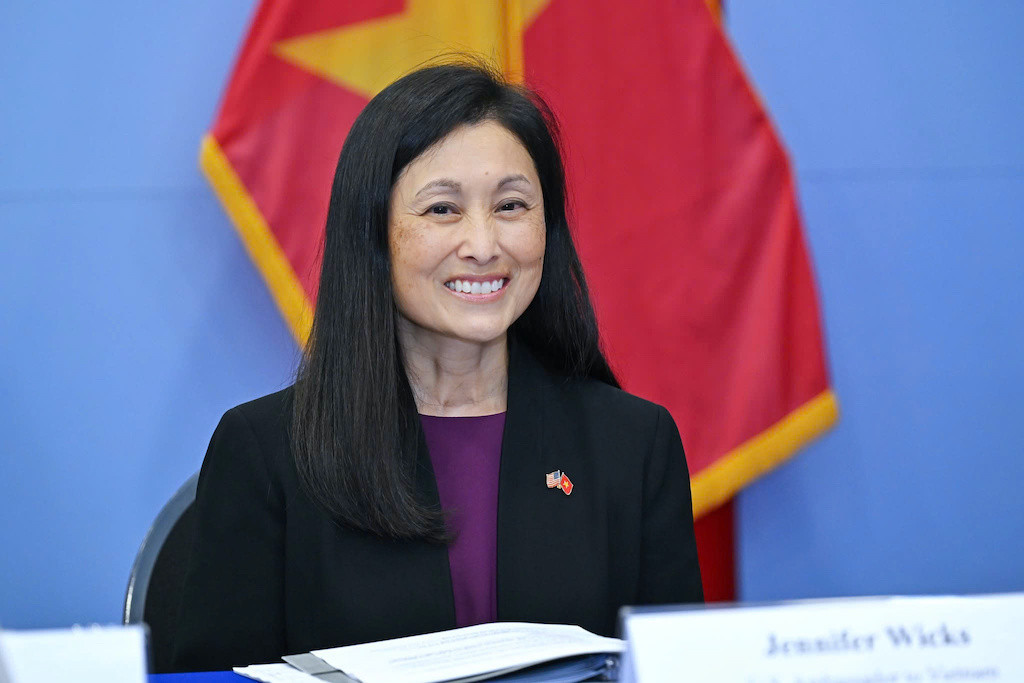
Economic and trade ties were among the most closely watched topics at the roundtable.
Looking back at the history of bilateral relations, Wicks said trade between Vietnam and the United States had grown remarkably. One of her top priorities during her tenure, she said, is to promote opportunities for US businesses while helping Vietnam gain better access to high-quality American products and services.
Since arriving in Vietnam in July, she said she has directly promoted cooperation in a range of areas, including aviation, energy, technology and defense.
Notably, the ambassador also addressed issues of concern to businesses, from market access to regulatory and procedural barriers. The goal, she said, is to create a more level playing field for US companies operating in Vietnam. As Vietnam works to transform its growth model, rising demand for energy, technology, aviation and emerging industries is also opening up broader opportunities for businesses from both countries.
Comprehensive Strategic Partnership must translate into projects
Another question raised at the roundtable was how the Vietnam-US Comprehensive Strategic Partnership could move beyond a political framework and produce visible, measurable results.
Wicks said the two sides had begun discussions with the Vietnamese government on a “concrete roadmap” covering a range of cooperation opportunities across different sectors.
She cited the recent visit to Da Nang by the US aircraft carrier USS George Washington as an example. During the trip, she not only visited the American carrier but also had the opportunity to board a vessel of the Vietnam People’s Navy. Such activities, she said, demonstrate the scope of cooperation the two countries can continue to expand under their new relationship framework.
Quang Tri and the foundations of trust
One of the most notable moments of the discussion came when Wicks spoke about her visit to Quang Tri early in her tenure.
For the ambassador, choosing Quang Tri was no coincidence. The locality has been closely associated with numerous Vietnam-US programs addressing the legacies of war, from unexploded ordnance clearance and searches for missing people to the identification of remains. She described these efforts as a “foundation for building trust” between the two countries.
During the visit, Wicks witnessed mine and unexploded ordnance clearance work carried out by a Vietnamese team, as well as efforts to identify those who remain missing.
She said the two countries had signed a new memorandum of understanding reaffirming their commitment to addressing the consequences of war, adding that she would continue to advance these programs during her tenure.
Education and connections that span generations
If addressing war legacies provides a foundation for trust, Wicks sees education and people-to-people exchanges as an important driving force for the future.
According to figures she shared, Vietnam currently ranks first in ASEAN and fifth worldwide in the number of students studying in the United States. Nearly half of Vietnamese students in the US are pursuing STEM fields.
The ambassador highlighted one story she encountered during her visit to Quang Tri. There, she met alumni of US government exchange programs, including an English teacher and students preparing to enter university.
When she asked one student what career the student hoped to pursue, the answer was becoming an English teacher, just like the teacher who had taught them. For Wicks, that small moment illustrated how the power of people-to-people exchanges lies not only in the number of programs or participants, but also in their ability to create connections that can continue across generations.
She said this area could become increasingly important as Vietnam seeks to develop high-quality human resources for science and technology, innovation, semiconductors and the industries of the future.
“The United States will do everything it can”
Toward the end of the discussion, attention returned to the legacies of war, particularly efforts to search for and identify missing people.
Wicks said technology, archival records, resources from the US Department of Defense, private businesses and educational institutions could all play a role in this process.
She pointed to the involvement of Texas Tech University in collecting information and researching archival documents and related data.
What left the strongest impression on her, however, went beyond the technical aspects of the work. She recalled an emotional moment while attending a televised program in Hanoi marking Vietnam’s War Invalids and Martyrs Day on July 27.
“I understand what it means for families to be able to find information about loved ones who remain missing. The United States will do everything it can to support Vietnam in areas related to the search for missing people on both sides,” she stressed.
A tenure beginning with journeys across Vietnam
Wicks said she hopes to have the opportunity to visit every province and city in Vietnam, meet local people, sample regional specialties and see the country’s landscapes firsthand.
Behind that desire to explore Vietnam, however, is a broader message about how she wants to approach her tenure: by working not only with the government, but also with businesses, universities and people from both countries.
“I will do my utmost to advance our shared achievements and help our two countries achieve positive results from our cooperation,” the ambassador said.
Thai An
.svg)
