 Vietnamnet.vn

 Podcast


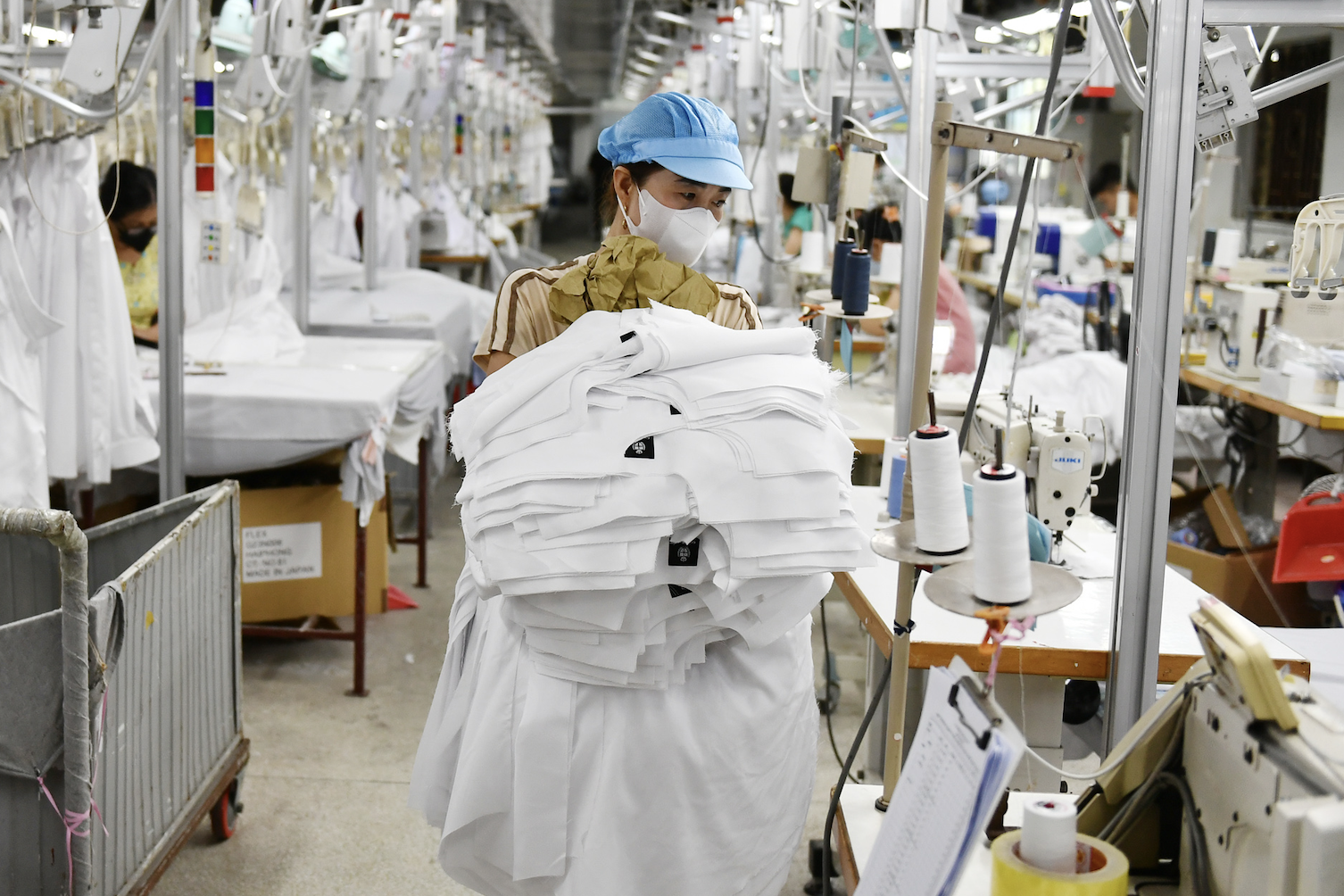
Proposed US tariffs have yet to take effect
According to Vietnam’s Ministry of Industry and Trade (MoIT), the Office of the United States Trade Representative (USTR) issued preliminary findings on the evening of November 25 (Vietnam time) in an investigation conducted under Section 301 of the US Trade Act of 1974.
The findings concern 14 of the 16 economies covered by the investigation into structural excess capacity and production in manufacturing industries.
The economies include Vietnam, China, the European Union (EU), Singapore, Switzerland, Indonesia, Malaysia, Cambodia, Thailand, South Korea, Taiwan (China), Bangladesh, Japan and India.
Under its preliminary findings, the USTR proposed a maximum additional tariff of 35% on goods imported from Vietnam.
However, the rate could be reduced to 20% if Vietnam and the US reach a reciprocal, fair and balanced trade agreement.
The tariff could also be adjusted to take into account existing duties imposed under Sections 301 and 232.
The USTR also proposed exempting 2,121 product categories, identified by eight-digit Harmonised System (HS) codes, from Section 301 tariff measures.
“The issuance of preliminary findings and the proposed maximum tariff rate is part of the statutory process under US law. This is only a proposal and has neither taken effect nor been officially implemented,” the ministry said.
The USTR will receive public comments and consult relevant parties before making a final decision on applicable tariff rates, implementation mechanisms, interactions with other tariffs and product exemptions.
Public hearings on the preliminary findings are scheduled to begin on January 25, 2027.
Under US regulations and established practices, a final decision is expected as early as February 2027 and no later than March 11, 2027.
The final tariff rate could be lower than the proposed maximum if the USTR determines that significant progress has been made or satisfactory solutions have been reached through bilateral negotiations addressing the actions, policies or practices of foreign governments.
Vietnam steps up reforms to address US trade concerns
The MoIT said Vietnam had made numerous commitments during negotiations on a reciprocal, fair and balanced trade agreement with the US.
Vietnam has also proactively introduced major reforms to address US concerns, including issues related to Section 301 investigations under the Trade Act of 1974.
On November 21, the Vietnamese Government issued a resolution on a comprehensive plan to manage trade surpluses and mitigate risks in international trade during the 2026-2030 period.
The plan identifies specific tasks and assigns responsibilities to ministries, government agencies and local authorities to ensure coordinated and consistent implementation.
It aims to manage bilateral trade surpluses proactively and sustainably, striking a balance between export expansion and strengthening import capacity to support domestic production, thereby improving the quality and added value of Vietnamese exports.
The plan also focuses on preventing excess production capacity, tariff circumvention, illegal transshipment and origin fraud.
In addition, it seeks to strengthen oversight and effectively enforce regulations prohibiting imports of goods produced using forced labour.
Alongside progress in negotiations on a reciprocal, fair and balanced trade agreement, the implementation of these measures will provide an important basis for the US to consider applying a lower tariff rate than the maximum proposed in its preliminary findings.
In the coming period, the MoIT will coordinate with relevant ministries and agencies to participate fully in subsequent stages of the USTR investigation, including registering for and attending public hearings, presenting Vietnam’s position and responding to questions from US authorities.
The ministry will also prepare and submit written comments challenging the preliminary findings and inaccurate statements or allegations made by relevant parties.
It will continue consultations and discussions with relevant US agencies to help ensure an appropriate outcome.
Meanwhile, Vietnam and the US are working to conclude negotiations on a reciprocal, fair and balanced trade agreement as soon as possible.
Tam An

