 Vietnamnet.vn

 Podcast



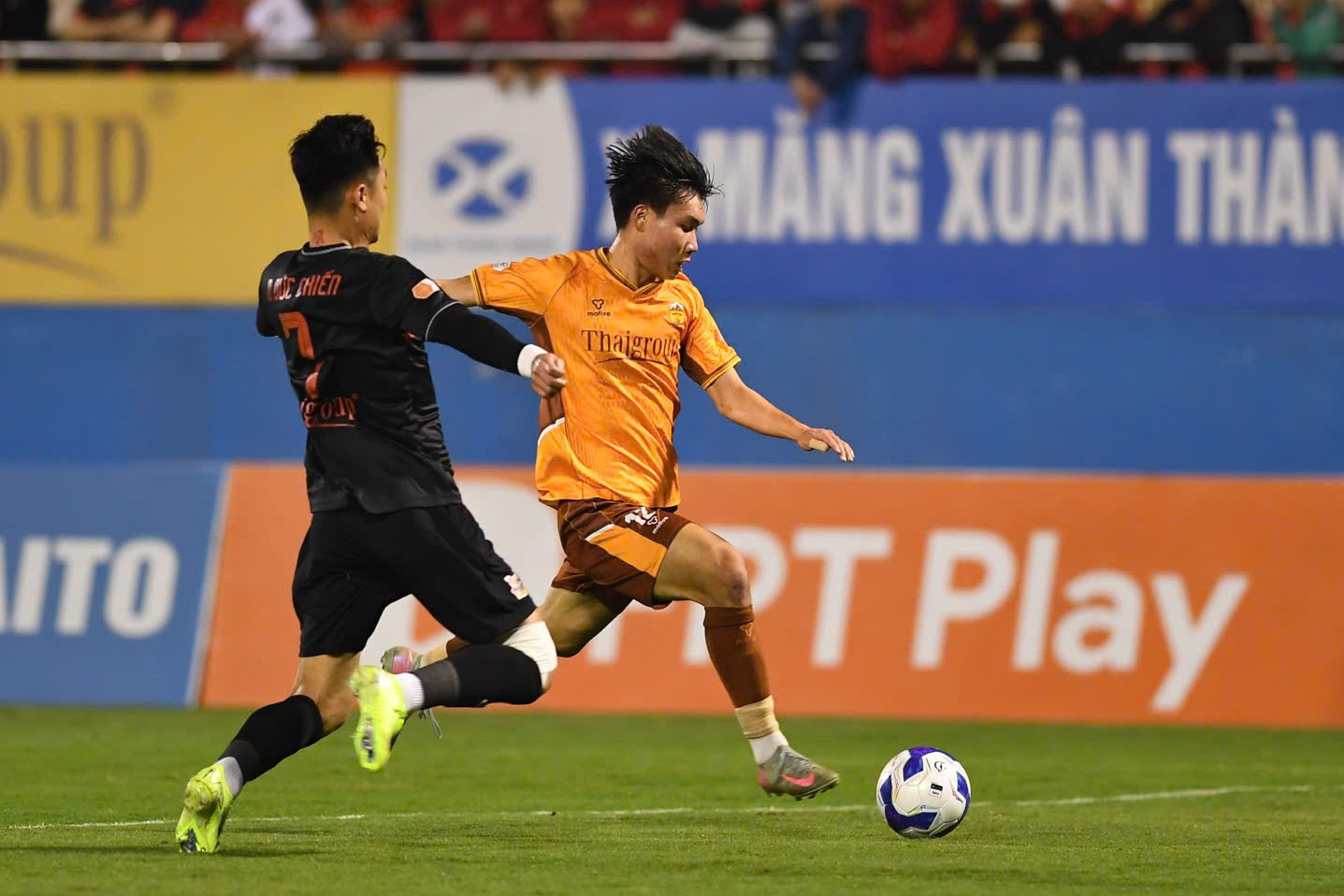
The long hiatus granted to U23 Vietnam as the team chased glory at the SEA Games and the AFC U23 Championship has made the LPBank V-League more unpredictable than ever. Seen from an optimistic angle, that unpredictability is… a welcome development.
A wave of surprises has defined the two rounds since the LPBank V-League resumed after more than 80 days away, giving domestic football fans a fresh and unfamiliar feeling. The competition has become harder to forecast, free from the usual patterns of recent seasons.
The clearest example is the stumble of Ninh Binh. The top contender for the title, and a team that had gone unbeaten and led the standings for most of the first half of the season, suddenly fell at home to HAGL.
Not only Ninh Binh, but the latest round also saw PVF CAND (People's Police) defeat former champions B. HCM City despite conceding first. The victory shifted the shape of the table and showed that underdog teams are ready to rise rather than accept their fate as they often did earlier in the season.
More surprises followed as Thanh Hoa defeated CA TPHCM (HCM City Police) FC 2–1 at Thong Nhat Stadium, while SLNA (Song Lam Nghe An) delivered an even bigger shock, beating The Cong Viettel 4–1 at Hang Day Stadium.
One round earlier, Thanh Hoa - despite severe personnel shortages - still fought back bravely to earn points against defending champions Nam Dinh.
These continuous surprises have made the V-League more unpredictable than ever. And the common thread running through all these twists is the long break created to accommodate U23 Vietnam.
The 80-day interruption for U23 Vietnam to compete at regional and continental tournaments has been a double-edged sword for V-League clubs. For teams like Ninh Binh, who had reached peak form and stability, the long pause clearly had a negative impact.
Their loss to CAHN (Hano Police) may have been understandable, but falling at home to a far lower-rated opponent like HAGL (Hoang Anh Gia Lai) points to deeper issues - the most significant being the loss of competitive momentum.
Conversely, for clubs that had struggled earlier, the long break became a valuable reset period. Hanoi FC, HAGL, and PVF CAND are prime examples. Their coaches used the downtime to recalibrate tactics and reorganize their squads. As a result, they have returned to the league with renewed energy, sharper play, and far more resilience.
Undeniably, prioritizing the U23 team disrupted the domestic league and created disparities in advantages and disadvantages among clubs. Yet a fair assessment shows the current developments are bringing positive effects to the V-League. The unpredictability has made the title race more compelling, preventing complacency and giving fans more reason to follow each round with heightened interest.
No one knows how long the surprises will last. But for now, Vietnam’s top professional league has found fresh vitality after the long pause that allowed U23 Vietnam to pursue regional and continental ambitions.
Duy Nguyen
.svg)
