 Vietnamnet.vn

 Podcast



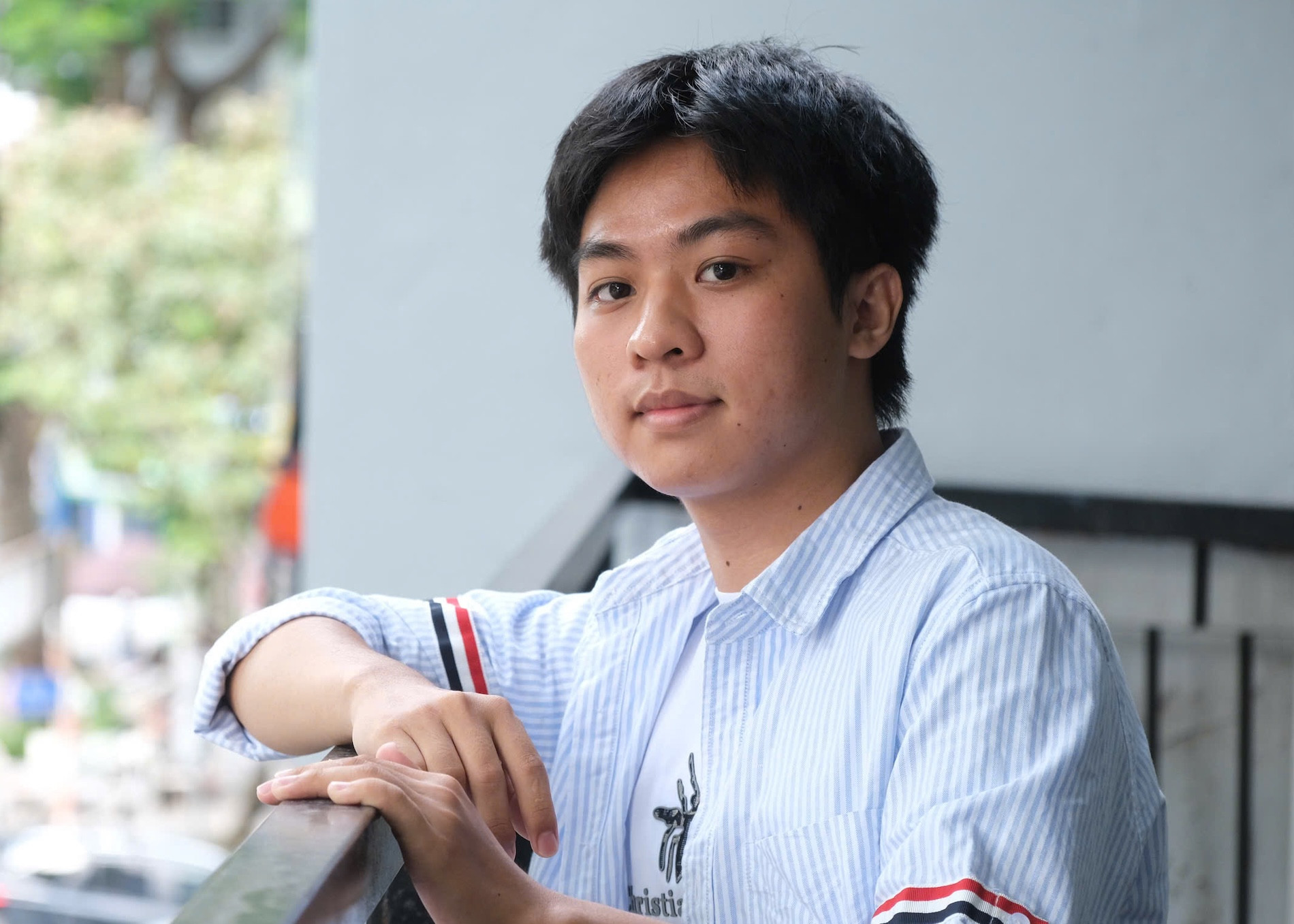
Four years later, the student became one of three valedictorians graduating with a perfect 4.0 GPA.
Vu, born in 2004, a native of Quang Ninh, who graduated as valedictorian in Mechatronics from HUST, said he was surprised by the result because the valedictorian title was not part of his goals.
Ngoc Vu is a former student of Dong Trieu High School in Quang Ninh Province. After winning first prize in physics at the provincial-level excellent student competition, Vu was admitted to HUST through its talent-based admissions process.
However, he admitted that he still had no clear career direction when choosing a major. “At the time, a cousin introduced me to Mechatronics Engineering. Since I liked physics, I decided to choose the major,” Vu said.
During his first days at the university, Vu could not avoid feeling under pressure as he was surrounded by students with outstanding academic records.
“Many of my classmates had attended gifted schools and competed in national and international academic competitions. They were good at their studies, grasped lessons quickly and could solve algebra problems right in class. I felt a little overwhelmed,” Vu recalled.
In high school, Vu had been accustomed to a relatively relaxed approach to studying. He often studied the material right in class and rarely had to review lessons at home. Only when exams were approaching would he start studying seriously, sometimes preparing in just one night.
But after his very first university class, he realized that this approach was no longer suitable. It was a calculus class with more than 200 students. Vu arrived shortly before the class began and found that “there were almost no seats left.” In the end, he had to sit at the back of the room.
Because he had not read the material in advance, Vu could not keep up with the amount of knowledge the lecturers covered in a single class.
“I was confused because I understood nothing in my first class. But that also made me realize that if I continued studying this way, it simply wouldn’t work,” Vu said.
Vu decided to change. Starting with his second class, he read the textbooks and studied the material in advance before each lecture. This allowed him to get an idea of what would be taught and identify areas he did not understand so he could focus on them in class and ask questions.
During lectures, Vu paid close attention and discussed anything he was still unclear about with his lecturers. As a result, he grasped the material more quickly and saved time on self-study after class.
After changing his study method, Vu found studying gradually became “more manageable.”
He also changed the way he prepared for exams. When the university announced exam schedules about a month in advance, Vu began making a study plan for all his subjects. He usually spent about a month reviewing the material as a whole. As each exam approached, he focused only on that particular subject, avoiding overlapping study schedules.
Thanks to the new method, Vu no longer found himself scrambling to finish everything right before exams. Throughout his time at HUST, he received an academic encouragement scholarship every semester.
Olympic medalist
In addition to earning a perfect GPA, Vu also received a conduct score of 99/100. He said he always participated in activities from the beginning of each academic year, then devoted more time to his academic studies during the later stages.
Vu also won two gold medals and one silver medal at the National Mechanics Olympiad, as well as a third prize at the National Physics Olympiad.
In his third year, Vu began working at a laboratory under the Department of Applied Mechanics, where he researched problems involving modeling, vibration, simulation, dynamics and robot control under the guidance of Dr. Nguyen Thai Minh Tuan and Dr. Truong Quoc Chien.
One of the studies Vu worked on involved modeling a continuum robot. He developed a simpler model to facilitate simulation and control, while also adjusting the parameters so that the model could approximately reproduce the robot’s real-world movements.
His work in the laboratory allowed Vu to apply the knowledge he had learned to specific problems while also honing his research presentation and report-writing skills.
Thuy Nga
.svg)
