 Vietnamnet.vn

 Podcast



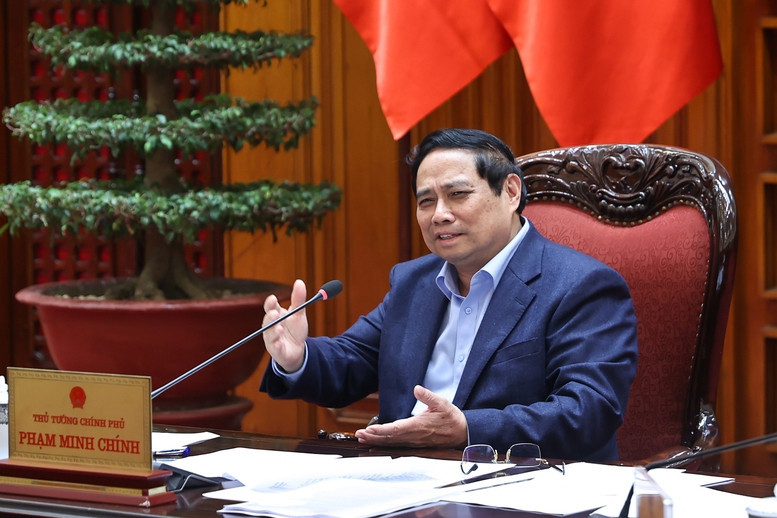
At a high-level cabinet meeting on January 17, chaired by Prime Minister Pham Minh Chinh, the government’s Standing Committee reviewed and provided feedback on several critical agendas - including the national rare earth strategy, mechanisms for resolving transitional build-transfer (BT) projects, and regulations for addressing legal bottlenecks in infrastructure investment.
Focusing on the rare earth agenda, the Prime Minister stressed the urgent need to develop a robust rare earth industry as a pillar of national self-reliance. He called for strengthened state management in the sector and outlined five key directions for policy and implementation.
From resource potential to economic strength
Vietnam possesses some of the world’s largest rare earth reserves, but exploitation and processing remain underdeveloped. The upcoming national strategy aims to shift the focus from raw extraction to high-value processing and application.
According to the Prime Minister, the rare earth strategy must be anchored in institutional reform, with priorities placed on deep processing technologies and high-quality value chains. Public-private partnerships will play a central role, supported by targeted financial investments and incentives to attract domestic and foreign capital.
Government agencies are tasked with creating favorable conditions for technology transfer and adaptation of advanced, sustainable extraction and processing methods. Digital transformation will be leveraged to improve governance, transparency, and resource tracking across the entire rare earth value chain.
Collaborative, science-driven development
The Prime Minister directed the Ministry of Natural Resources and Environment to collaborate closely with other relevant agencies to incorporate feedback from the meeting and finalize draft policies for higher-level approval.
The strategy envisions a coordinated effort between central and local governments, scientific institutions, and private sector actors. Smart governance and environmental safeguards will be integral to balancing economic development with ecological responsibility.
Tackling legacy issues in infrastructure
The meeting also addressed longstanding challenges surrounding transitional BT projects - public-private partnerships that were initiated before regulatory changes. To resolve legal entanglements, the Prime Minister instructed the Ministry of Finance and other authorities to expedite the drafting of a government resolution under fast-tracked procedures.
For projects already subject to audit or inspection conclusions, the resolution will guide compliance and corrective action. Projects still pending oversight will fall under provincial jurisdiction, with local governments given clear authority - and responsibility - for auditing and resolving cases transparently.
Pham Minh Chinh emphasized that any resolution must strictly follow legal norms, uphold the rule of law, and balance risks and benefits fairly among the state, investors, and the public. “Local governments must take initiative. Local decisions, local implementation, and local accountability,” he stated.
Toward rare earth resilience
Vietnam’s move to build a comprehensive rare earth strategy comes at a pivotal time. Global demand for rare earths - used in everything from electric vehicles to smartphones and defense technologies - is soaring, while supply remains concentrated in a few countries.
By investing in deep processing capabilities, mastering modern technologies, and aligning with international standards, Vietnam aims not just to extract rare earths, but to extract strategic value.
This long-term vision could position Vietnam as a critical player in the green economy, digital transformation, and global tech supply chains, while reinforcing its own economic sovereignty.
VGP
.svg)
