 Vietnamnet.vn

 Podcast



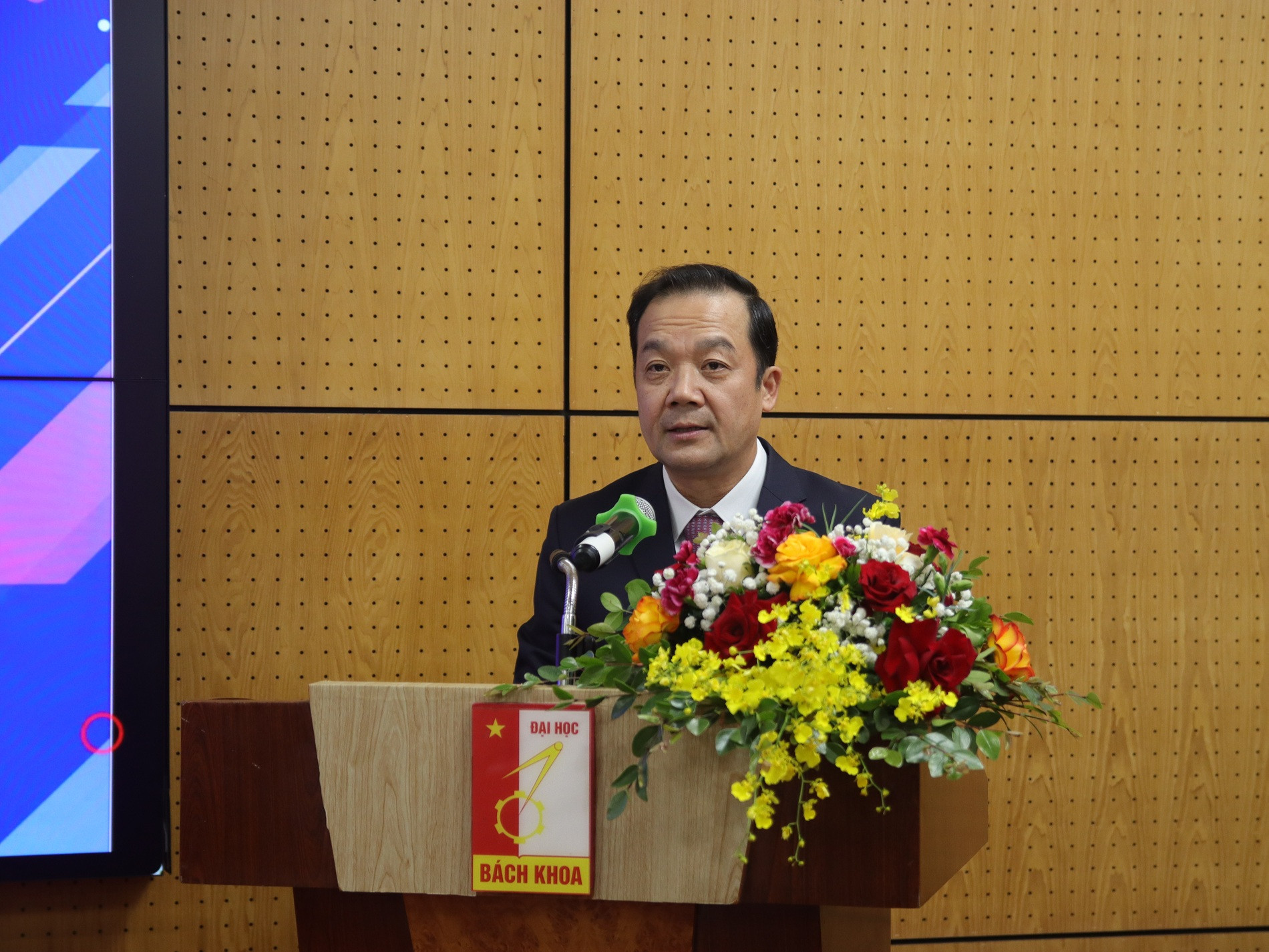
The news was shared by Tran Minh Tuan, deputy director of the Institute of Digital Technology and Digital Transformation under the Ministry of Science and Technology (MST), at the 28th National Conference on Electronics, Communications and Information Technology (REV-ECIT 2025) held on December 20.
Earlier, delivering opening remarks at the conference, Deputy Minister of Science and Technology Pham Duc Long said that one of the ministry’s key directions for 2026 is to continue reviewing and removing institutional bottlenecks, unlocking and effectively mobilizing resources for science, technology, and innovation. The consistent spirit of the new laws is a shift from a management mindset to a facilitation mindset, from “input management” to “output evaluation,” and from scattered investment to a focus on strategic technologies.
Building a high-performance computing (HPC) center to support the development of Vietnam’s AI in 2026–2035 is a national strategic project aimed at establishing foundational infrastructure for Vietnam’s AI in the next decade, with a total estimated budget of VND7,500 billion.
Reviewing key highlights of Vietnam’s current AI infrastructure, Tuan pointed out that the total AI infrastructure capacity nationwide as of 2024 had reached only about 51MW, while 61.2 percent of enterprises are deploying AI solutions. In addition, only 22 percent of that 61.2 percent are truly ready to fully exploit the potential of this technology.
These figures show a large gap between infrastructure supply and application demand, as well as the distance between “having AI” and “using AI proficiently.”
According to the MST’s representative, the two biggest barriers preventing Vietnamese enterprises from accessing AI are high deployment costs, with 46.7 percent of enterprises facing financial difficulties, and a shortage of in-depth AI human resources, at 43.7 percent.
These issues reveal three national-level challenges: AI infrastructure scale is far too small compared to actual demand; there is a lack of large-capacity power supply; and there are no specific standards or regulations to guide AI infrastructure development.
Meanwhile, Vietnam’s AI market is forecast to grow at about 18 percent per year from 2024 to 2030, reaching a size of $1.6 billion by 2030. This is a driving force encouraging major enterprises such as Viettel, FPT, and foreign corporations to expand AI infrastructure in Vietnam.
Bringing Vietnam into the top 3 ASEAN
The project is expected to be implemented in three phases: pilot (2026-2027), implementation (2028-2030), and completion (2031-2035). The most important milestone in the completion phase is achieving over 70 percent technological self-reliance in applications, meaning that most AI software and solutions are developed by domestic teams rather than relying on foreign products.
"This autonomy not only reduces licensing and service costs but also ensures data security and technological independence, the key factors for Vietnam to truly master the AI revolution," Tuan said.
The project tasks include building HPC infrastructure, software and platforms, applications and services, data development, and human resources and ecosystems.
The project proposes assigning MST to implement an Open Data Center for AI at the National Data Center, serving AI research, training, and application with public data-sharing policies at preferential or free rates depending on the user.
There will be three data layers with increasing complexity: a foundational Vietnamese multi-domain, multi-style LLM dataset reaching 200–400 billion tokens in phase two (2028–2030); purely Vietnamese multimodal data including images, videos, and audio in phase three (2031–2035); and specialized datasets for six priority sectors: healthcare, logistics, agriculture, law, finance, and education.
The project aims to bring Vietnam into the top 3 ASEAN for HPC capacity by 2035 through training 1,000 in-depth specialists in HPC and AI, creating a human resource foundation for the sustainable development of the domestic AI industry.
The national economy is expected to reap dual benefits. On one hand, sharing computing resources instead of individual investments will help businesses and research organizations save over $100 million annually in infrastructure costs. On the other hand, the national AI infrastructure will foster the birth of two AI unicorns valued at over $1 billion each, along with more than 50 commercial AI products for domestic and export markets, contributing 0.3 percent to the national GDP, equivalent to $1.5 billion per year from AI and digital transformation activities.
The project is hoped to enhance Vietnam's basic research capacity, with scientific simulation, climate forecasting, energy, and new material development capabilities increasing by 300 percent compared to the present, enabling proactive research and reducing dependence on foreign computing centers.
Thai Khang
.svg)
