 Vietnamnet.vn

 Podcast



The report “AI Slop Report: The Global Rise of Low-Quality AI Videos”, released by U.S.-based content platform Kapwing, paints a concerning picture of YouTube’s current landscape. "AI slop" is spreading rapidly across Google’s video platform, generating billions of views and massive profits for channel owners, despite growing concerns over user experience.
According to the Oxford University definition, “AI slop” refers to low-quality, inaccurate or synthetic content that is distributed indiscriminately.
Kapwing’s research analyzed the 100 most trending YouTube channels in each country to measure the popularity of such content.
As of December, South Korea leads the world in AI slop viewership, with a total of 8.45 billion views across trending channels. Pakistan follows with 5.34 billion, then the U.S. (3.39 billion) and Egypt (3.24 billion).
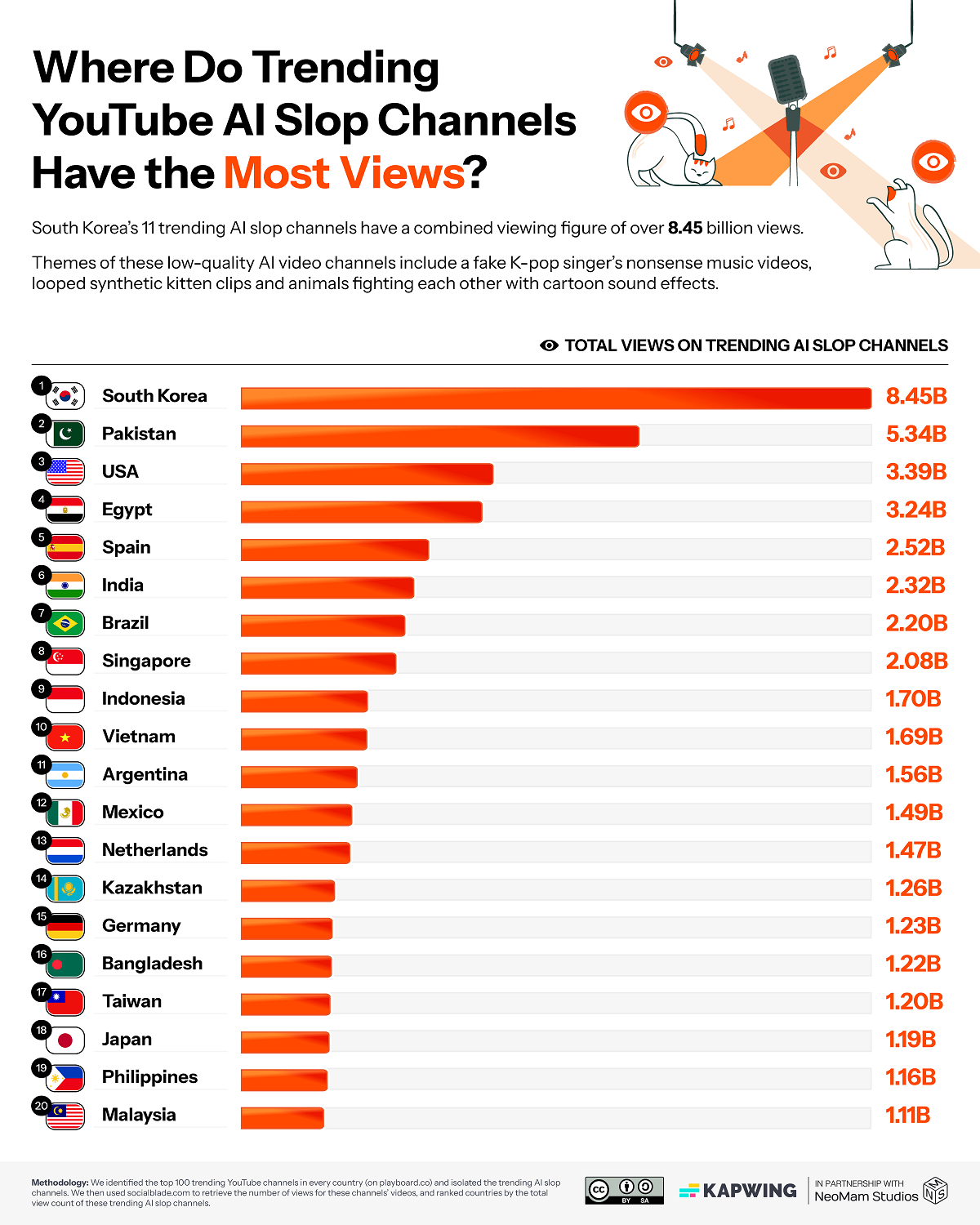
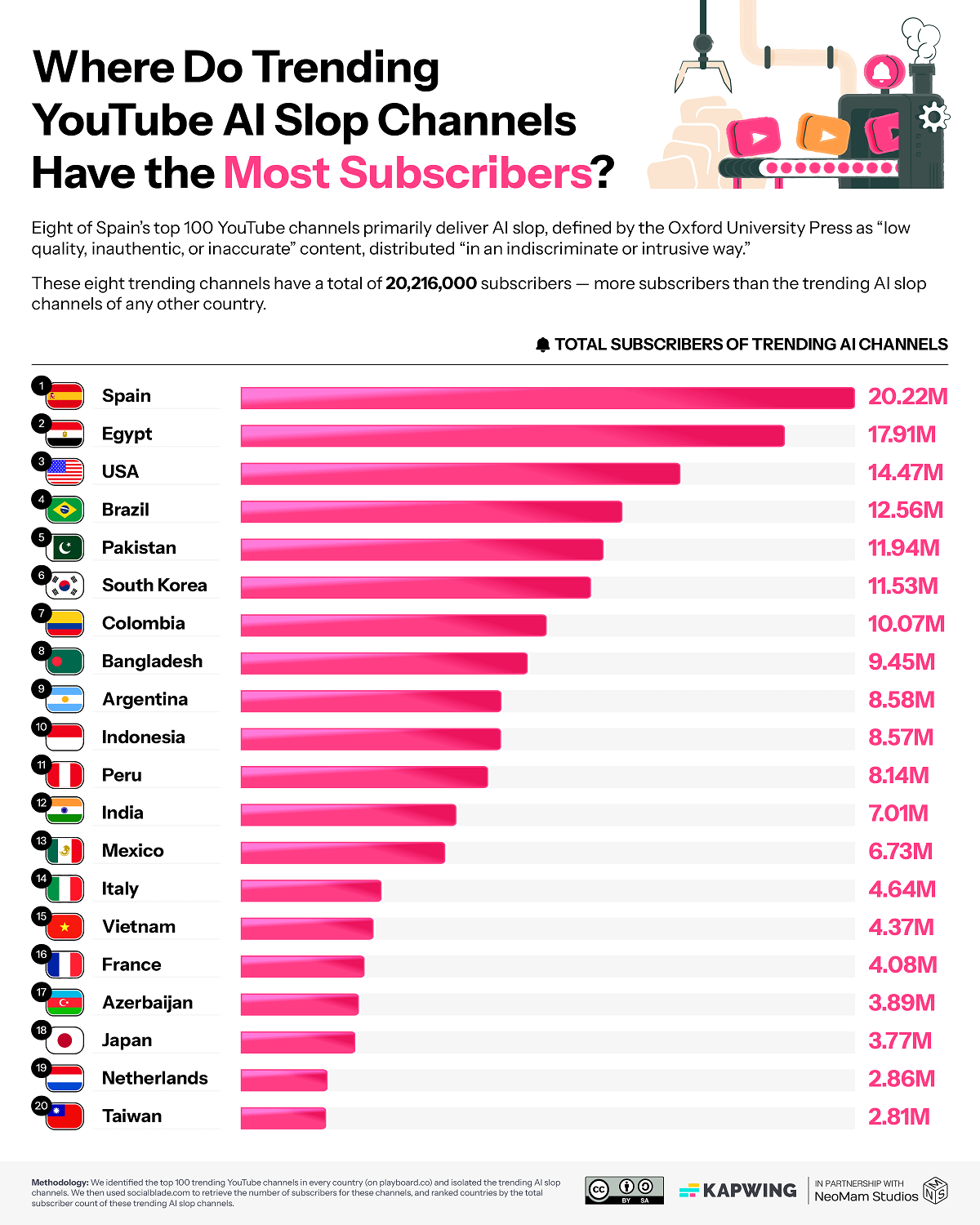
In terms of subscribers, Spain tops the list with 20.22 million users following AI slop channels, outpacing both the U.S. (14.47 million) and Brazil (12.56 million) - despite Spain having far fewer trending slop channels than other countries.
Vietnam is not outside the storm of AI slop - it is rapidly becoming a key market for this content category.
Kapwing’s data shows that Vietnam ranks in the top 10 globally, with 1.69 billion views of AI-generated slop videos from trending channels.
In terms of regular subscribers, Vietnam ranks 15th, with 4.37 million users following these channels.
The huge profits from AI-generated junk content are a key driving force behind its boom.
The most viewed AI slop channel globally, Bandar Apna Dost from India, has racked up 2.07 billion views. Based on average revenue estimates, this channel may earn up to 4.25 million USD per year (over 100 billion VND).
In South Korea, the Three Minutes Wisdom channel accounts for nearly a quarter of the country’s total AI slop views, bringing in an estimated 4 million USD annually from ads. Its content mainly consists of AI-generated clips depicting wild animals losing to household pets, with imagery that appears real but is entirely synthetic.
In the U.S., Cuentos Fascinantes holds the record for most subscribers in this genre worldwide, with 5.95 million followers.
More alarming is the user experience for new viewers, who are increasingly bombarded with harmful content.
In a test where researchers created a new YouTube account and watched the first 500 Shorts, Kapwing found that 21% of them were AI-generated.
Even more concerning was the prevalence of “Brainrot” content - a sub-genre of meaningless, addictive videos that numb cognitive engagement. These accounted for 33% of a new user’s feed. While the first 16 videos seemed safe, the deeper users scrolled, the more aggressively YouTube’s algorithm pushed AI content.
This explosion of AI slop places YouTube in a tricky position.
On one hand, CEO Neal Mohan likens generative AI to a creative revolution - comparable to the invention of the synthesizer in music - stressing that it’s the human creativity behind AI that matters.
On the other hand, advertisers fear brand damage when their ads appear next to low-effort, soulless videos.
Despite the controversy, with its ability to retain viewers through addictive formats, AI slop - and the brainrot genre - are silently reshaping global video culture.
Du Lam
.svg)
