 Vietnamnet.vn

 Podcast



As India marks the 80th anniversary of its Independence Day (August 15, 1947-August 15, 2026), Indian Ambassador to Vietnam Tshering W. Sherpa reflects on the country’s development journey and highlights key milestones in the longstanding friendship and Comprehensive Strategic Partnership between India and Vietnam.
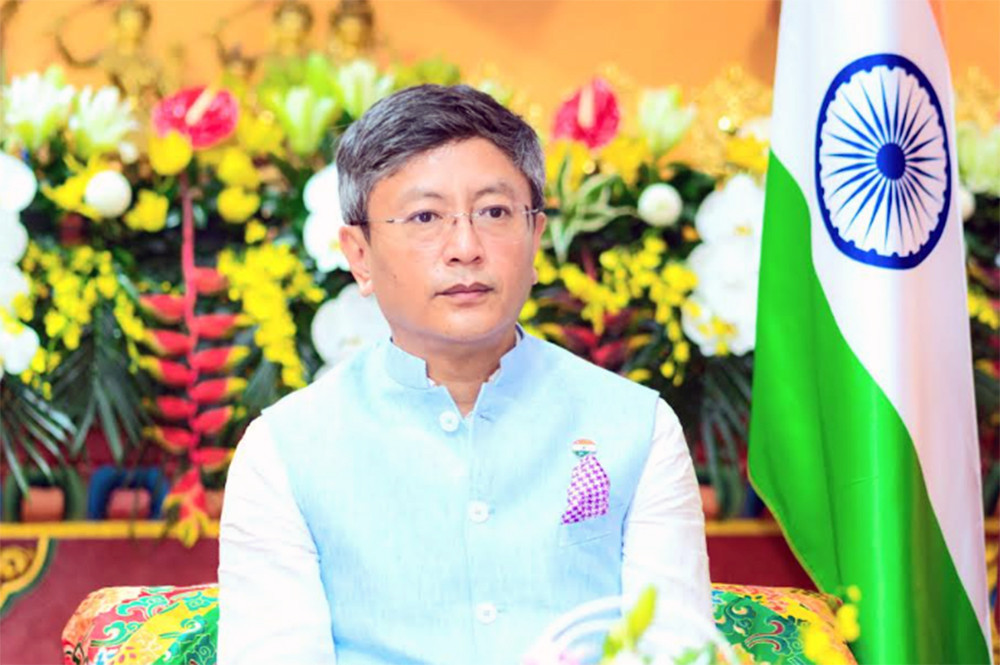
On August 15, 2026, India celebrates 80 years of independence, commemorating its historic “tryst with destiny” and the moment the country reclaimed the right to determine its own future in 1947. The eight decades since have witnessed the remarkable rise of a nation that has evolved from a developing economy into one of the world’s important centers of growth.
The year 2026 also marks an important stage in India’s Viksit Bharat, or Developed India, vision for 2047, when the country will celebrate the centenary of its independence. Along that journey, India continues to advance reforms, develop technology, deepen international integration and strengthen ties with partners around the world, with Vietnam holding a particularly important place.
Historical parallels underpin Vietnam-India relations
Vietnam-India relations are rooted in shared historical experiences, cultural connections and aspirations for development. Both nations fought for independence during the same era: Vietnam declared independence in 1945, while India gained independence in 1947.
From the earliest days of independence, the two countries extended strong support and friendship to each other. Their relationship has been nurtured not only by similarities in their struggles for national liberation, but also by centuries-old cultural connections, particularly through Buddhism and longstanding exchanges between their civilizations.
Today, Vietnam-India relations continue to grow strongly, underpinned by a high level of political trust, shared strategic interests and a common desire for peace, stability, cooperation and development across the region.
Elevating the Comprehensive Strategic Partnership
A major milestone in bilateral relations came with the state visit to India by General Secretary and President To Lam in May 2026 at the invitation of Indian Prime Minister Narendra Modi.
The visit injected fresh momentum into bilateral ties, ushering Vietnam-India relations into a broader and deeper phase of development toward an Enhanced Comprehensive Strategic Partnership (ECSP).
During the visit, the two sides signed 13 cooperation documents spanning multiple fields and agreed on a target of raising bilateral trade to US$25 billion by 2030.
The outcomes reflected the determination of the two countries’ leaders to translate their traditional friendship into substantive programs of cooperation that deliver tangible benefits to their people.
Comprehensive cooperation across multiple sectors
Building on their strong political trust, Vietnam and India are expanding cooperation across trade, investment, science and technology, digital transformation, healthcare, pharmaceuticals, culture, education, tourism and human resource development.
The two countries have made considerable progress in cultural cooperation and local-level connectivity, including stronger links between Ho Chi Minh City and Mumbai. Academic exchanges are also expanding through India-focused research programs, while cooperation in heritage conservation includes the digitization of Cham inscriptions and joint work at the My Son Sanctuary, a UNESCO World Heritage Site.
In economic cooperation, the two countries continue to facilitate bilateral trade and expand market access for agricultural products, including Indian grapes and Vietnamese durians.
Defense and security cooperation remains an important pillar of the relationship, contributing to peace and stability in the Indo-Pacific region. Vietnam and India also share a commitment to respecting international law, strengthening multilateral cooperation and building a peaceful, stable and prosperous region.
Vietnam as a pillar of India’s Act East Policy
Vietnam has consistently been identified as an important partner in India’s Act East Policy and its MAHASAGAR vision.
The convergence of strategic interests has led the two countries to coordinate increasingly closely at regional and international forums, including ASEAN, the United Nations and other multilateral mechanisms.
Vietnam’s participation in the Indo-Pacific Oceans Initiative (IPOI) further demonstrates the two countries’ shared commitment to contributing to regional peace, stability, security and prosperity.
Eight decades after gaining independence, India is working toward its ambition of becoming a developed nation by 2047. Vietnam, meanwhile, has set the goal of becoming a developed, high-income country by 2045.
These parallel development aspirations are creating fresh momentum for the two countries to exchange experience, support each other and move forward together on their paths toward modernization.
Vietnam-India relations have been built on trust, mutual respect and shared values. From historical and cultural connections to the strategic cooperation of today, the two countries continue to write a story of enduring friendship - one that serves their peoples while contributing to peace and prosperity across the region.
As Prime Minister Narendra Modi once emphasized: “We will walk together, develop together and win together.”
Thai An
.svg)
