 Vietnamnet.vn

 Podcast



On June 18 in Hanoi, Minister of Ethnic and Religious Affairs Nguyen Dinh Khang held courtesy meetings with Poshitha Perera, Ambassador Extraordinary and Plenipotentiary of Sri Lanka to Vietnam, and Silvia Danailov, UNICEF Representative in Vietnam.
Advancing Vietnam-Sri Lanka cooperation in ethnic and religious affairs
Welcoming Ambassador Poshitha Perera, Minister Nguyen Dinh Khang noted that since establishing diplomatic relations in 1970, Vietnam and Sri Lanka have continuously strengthened political trust and expanded cooperation across a wide range of fields.
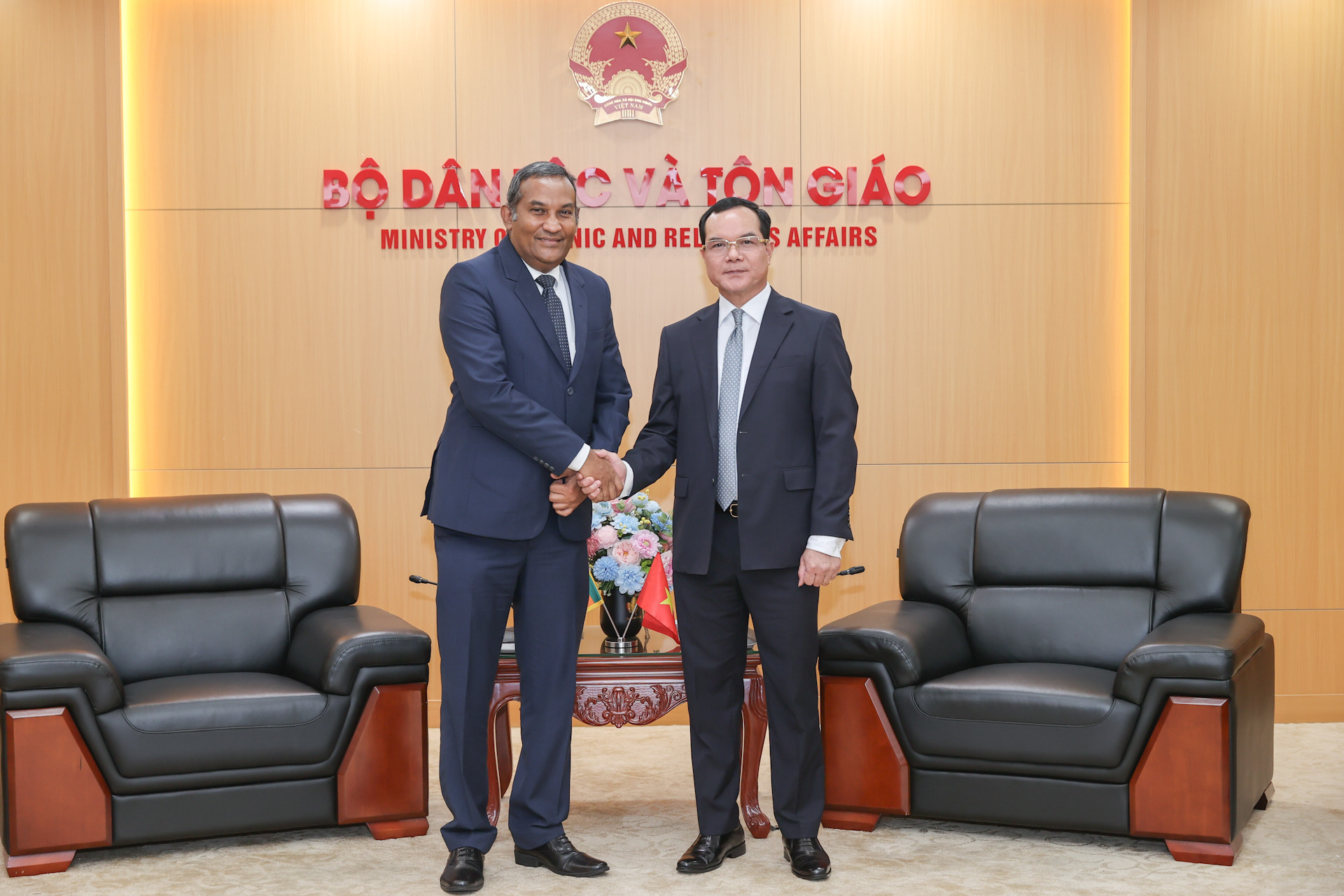
He highlighted the recent visit to Sri Lanka by Party General Secretary and State President To Lam as a significant milestone that has helped elevate bilateral relations to a new level.
According to the minister, senior leaders of both countries agreed on multiple strategic directions for cooperation and issued a joint statement on upgrading bilateral ties. This, he said, requires ministries and agencies on both sides to actively translate commitments into practical and effective cooperation programs.
One of the most notable commonalities between Vietnam and Sri Lanka, Minister Nguyen Dinh Khang emphasized, is their long-standing Buddhist traditions.
During a recent working visit to Sri Lanka, Vietnam's Ministry of Ethnic and Religious Affairs held talks with Sri Lanka's Ministry of Buddhism, Religious and Cultural Affairs. The two sides signed a memorandum of understanding under the witness of senior leaders from both countries.
Minister Nguyen Dinh Khang proposed that the Sri Lankan Ambassador continue serving as a bridge to facilitate the effective implementation of agreed areas of cooperation. He expressed hope that Sri Lanka would continue creating favorable conditions for Vietnamese monks and nuns to study, conduct research and pursue religious training, while also supporting the expansion of Vietnamese Buddhist cultural activities in Sri Lanka to further strengthen people-to-people exchanges.
For his part, Ambassador Poshitha Perera praised Vietnam's development achievements and described the visit by General Secretary and State President To Lam as an important milestone in bilateral relations.
He noted that the Sri Lankan President's visit to Vietnam to attend the 2025 United Nations Day of Vesak celebrations further underscored the close relationship between the two countries, particularly in culture and Buddhism.
According to the ambassador, the growing number of Vietnamese monks and nuns studying in Sri Lanka reflects the increasing trust and deepening exchanges between the peoples of both nations.
Sri Lanka is also ready to share experience in cultural heritage preservation, archaeology and promoting the value of religious sites, he said.
On the occasion, Minister Nguyen Dinh Khang presented an invitation letter to Sri Lanka's Minister of Buddhism, Religious and Cultural Affairs to visit and work in Vietnam in the near future.
Joining hands to address challenges facing ethnic minority children
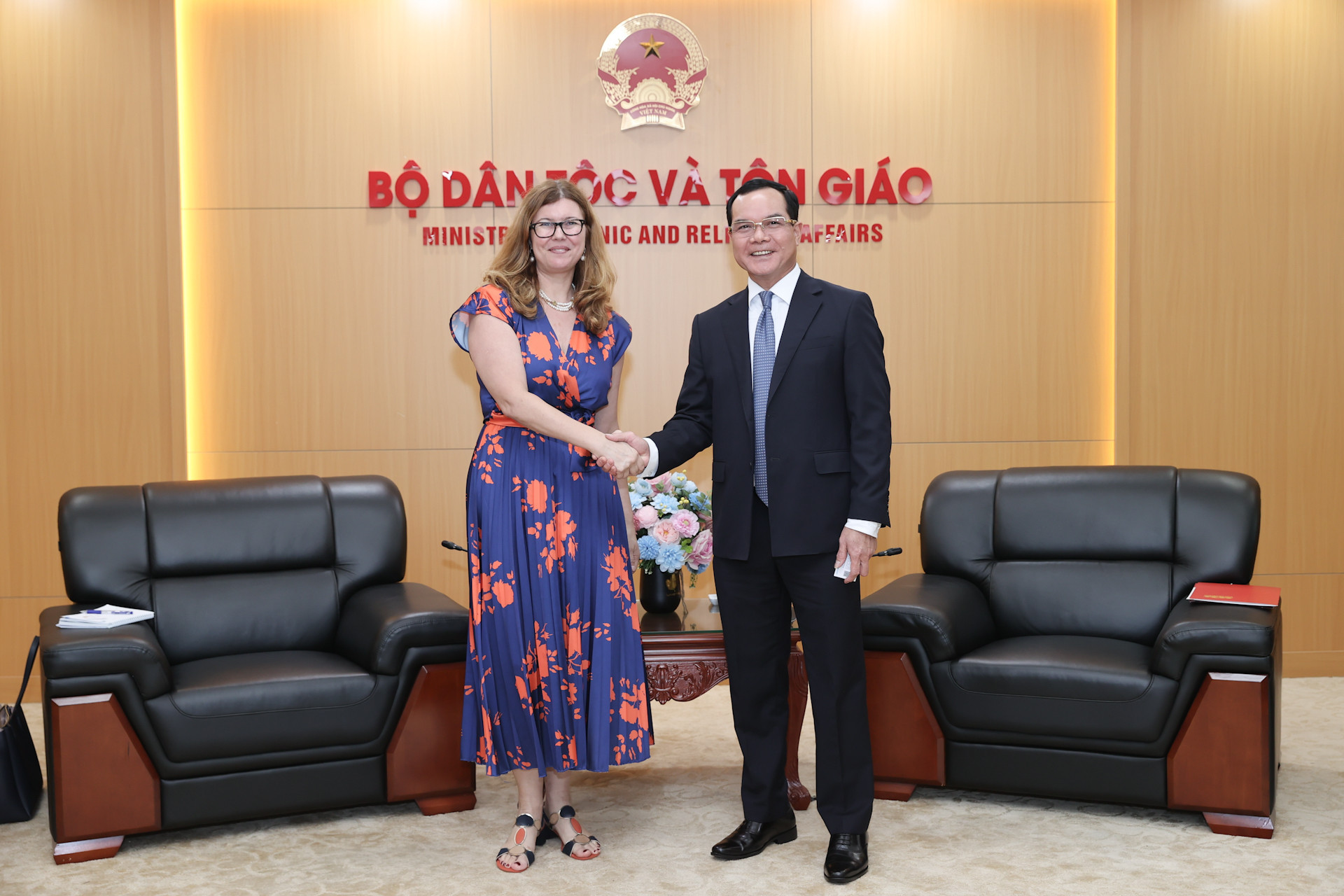
Also on June 18, Minister Nguyen Dinh Khang received UNICEF Representative Silvia Danailov.
At the meeting, the minister acknowledged UNICEF's important contributions to ethnic affairs in recent years, particularly its technical support in designing and implementing the National Target Program for Socio-Economic Development in Ethnic Minority and Mountainous Areas for 2021-2030, Phase I from 2021 to 2025.
UNICEF has also worked closely with Vietnam in implementing policies on education, healthcare, prevention of child marriage and consanguineous marriage, and the protection of children's rights in ethnic minority communities.
Sharing current concerns, Minister Nguyen Dinh Khang said access to clean water, especially for children in mountainous areas, remains a major challenge.
In many provinces, including Tuyen Quang, Dien Bien and Lai Chau, as well as other disadvantaged areas, shortages of domestic water continue to directly affect children's health, educational opportunities and overall development.
According to the minister, the Ministry of Ethnic and Religious Affairs is coordinating with the Ministry of Agriculture and Environment and other relevant agencies to develop long-term solutions, with the goal of largely resolving clean water shortages in particularly disadvantaged areas by 2027.
He expressed hope that UNICEF would continue sharing international experience and providing experts and appropriate technological solutions to help Vietnam effectively address clean water challenges in ethnic minority regions.
Speaking with the minister, Silvia Danailov said UNICEF, together with the Ministry of Ethnic and Religious Affairs and relevant agencies, had recently released the first report on multidimensional child poverty among ethnic minority children in Vietnam.
The study found that the multidimensional poverty rate among ethnic minority children remains around 33 percent, significantly higher than among the majority population.
According to UNICEF, multidimensional poverty extends beyond income shortages and includes limitations in access to education, healthcare, clean water, living conditions and basic social services.
Lack of clean water and sanitation is among the major factors directly affecting children's health and development opportunities.
Danailov emphasized that UNICEF has a team of international experts specializing in water, sanitation and hygiene who are ready to support Vietnam in developing solutions tailored to the realities of ethnic minority communities.
UNICEF also proposed increasing investment in equitable education, particularly mother tongue-based bilingual education, strengthening climate resilience among ethnic minority communities and mobilizing additional international resources to support Vietnam's development goals.
Reaffirming UNICEF's long-term commitment to Vietnam, Danailov said the organization would continue supporting the Ministry of Ethnic and Religious Affairs in designing and implementing the next phase of the National Target Program.
Hoang Quy
.svg)
