 Vietnamnet.vn

 Podcast



The figures were shared by Nguyen Phong Nha, Deputy Director General of the Authority of Telecommunications under the Ministry of Science and Technology, during a panel discussion on “5G, Submarine Cables and Satellite Telecommunications” at the Global Gateway EU - Vietnam Forum.
Nguyen Phong Nha, Deputy Director General of the Authority of Telecommunications, shares updates on Vietnam’s nationwide 5G rollout. Photo: Du Lam
He emphasized that connectivity is no longer merely infrastructure but a strategic asset, forming the backbone of national security, economic growth and digital sovereignty. In the coming period, Vietnam will focus on three core pillars: 5G networks, submarine cable systems and satellite connectivity.
“Vietnam has made significant progress in deploying 5G infrastructure nationwide. As of February 2026, nearly 40,000 base stations have been installed, covering 90% of the population with close to 23 million 5G subscribers,” Nguyen Phong Nha said.
Vietnam currently has five mobile network operators and six mobile virtual network operators (MVNOs), serving 120 million mobile broadband subscribers. Average mobile download speeds have reached 188 Mb/s, ranking 14th globally. Meanwhile, fixed broadband includes 25 million FTTH subscribers, with average speeds of 288 Mb/s, placing Vietnam ninth worldwide. Fiber optic coverage now reaches 85% of households.
Looking ahead, Vietnam aims to achieve 100% 5G population coverage by 2030. The country also plans to expand telecommunications applications in smart manufacturing, intelligent transportation systems, smart ports and digital healthcare, leveraging technologies such as network slicing and private 5G.
Submarine cable networks remain the backbone of international connectivity. Vietnam currently participates in six undersea cable routes with a total capacity of 80 Tb/s and continues to invest in new routes.
However, the strategic focus is shifting from expanding capacity to ensuring resilience and autonomy. Vietnam is diversifying routes to reduce dependency risks, enhance redundancy and increase participation in international consortium models.
Satellite connectivity and Non-Terrestrial Networks (NTN) are expected to fill coverage gaps in remote, mountainous and island regions.
In February 2026, the Authority of Telecommunications granted a five-year pilot license to SpaceX’s Starlink service, allowing up to 600,000 subscribers.
Integrating satellite systems into the national connectivity architecture not only expands coverage in underserved areas but also strengthens disaster response capabilities.
The agency also highlighted that the upgraded comprehensive strategic partnership between Vietnam and the EU in early 2026 presents a significant opportunity to deepen cooperation in policy, governance and sustainable infrastructure development for the future digital market.
Security at the core of next-generation networks
At the discussion, representatives from global technology providers such as Ericsson, Nokia and Thales, alongside domestic operators including VNPT and Viettel, agreed that ensuring safety and security across 5G, submarine cables and satellite systems is critical.
Rita Mokbel, General Director of Ericsson Vietnam, stressed that security cannot be addressed in isolation but requires collective effort.
The Trusted Tech Alliance initiative has been launched to build a secure ecosystem spanning semiconductors to artificial intelligence, with participation from 15 technology companies.
For 5G and future 6G networks, advanced sensing and positioning capabilities demand security-by-design principles across the entire lifecycle, aligned with standards such as 3GPP and ETSI.
Hiro Miura, Head of Mobile Networks for Southeast Asia at Nokia, said the company is advancing “quantum-safe networks”, equipping all layers with protections against future quantum-based attacks.
From a domestic operator perspective, Nguyen Quoc Khanh, Deputy Head of Technology at VNPT, noted that the shift to 5G, cloud-based platforms, edge computing and data processing creates numerous new touchpoints.
As a result, safeguarding infrastructure, customers and end users becomes essential. VNPT is moving toward Zero Trust architecture and embedding security from the design stage.
For Viettel, the operator is applying comprehensive risk management frameworks across the entire lifecycle of network development, from policy setting and design to procurement, deployment and operation.
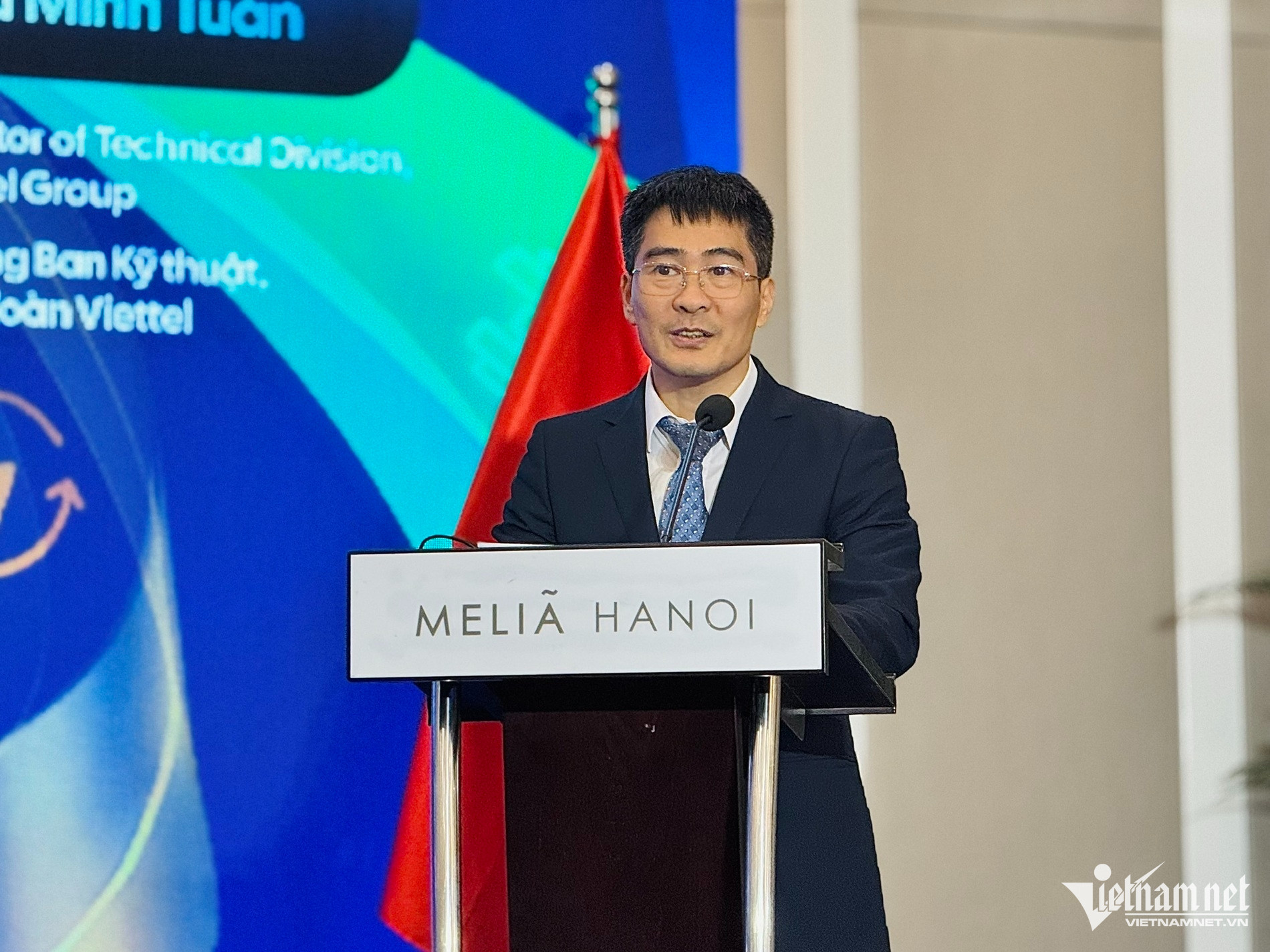
Ha Minh Tuan, Head of Technical Division at Viettel, highlighted procurement as a key example. “Security, safety, origin, and quality standards are mandatory criteria and are codified into contracts,” he said.
Emphasizing the need for technological self-reliance to ensure national security, Viettel revealed that half of its core network is now operated using equipment developed and manufactured in-house.
This approach reflects the company’s strategy to maintain security and resilience across its telecommunications infrastructure, particularly as it expands its 5G network.
Du Lam
.svg)
