 Vietnamnet.vn

 Podcast



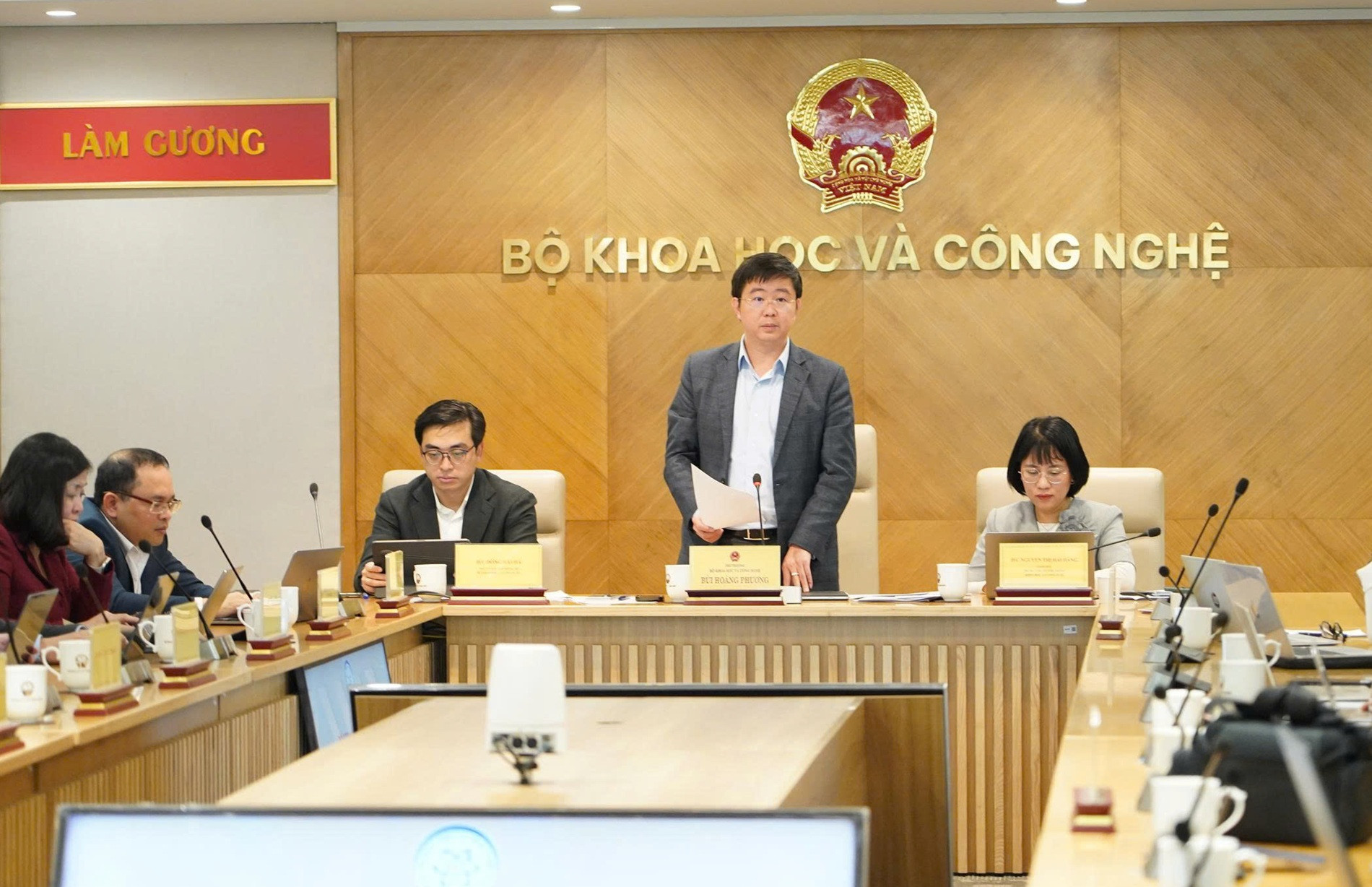
At a regular press briefing held on January 29, Deputy Minister of Science and Technology Bui Hoang Phuong emphasized that Vietnam is gradually laying the groundwork to master semiconductor technology - a vision that hinges on having domestic companies engaged across all key stages: design, production, and packaging.
One notable highlight he mentioned was the launch of a high-tech semiconductor chip manufacturing plant by Viettel Group on January 16.
"While Vietnam already has many companies involved in chip design, and hosts several foreign-run packaging and testing plants, we did not have our own chip production facility - until now,” the Deputy Minister said. “This marks a significant milestone for our information technology industry.”
In addition to Viettel, another tech giant - FPT Corporation - has stepped up its investment in infrastructure. The company recently announced the establishment of a semiconductor chip packaging and testing plant, with operations expected to begin within the next three months.
“It may still be small in scale and early in execution, but this is a pivotal first step. Once we have Vietnamese companies handling design, manufacturing and packaging, we will truly be laying the foundation to take ownership of semiconductor technology,” Bui Hoang Phuong stated.
Import age limit for used semiconductor equipment raised to 20 years
To support infrastructure for businesses, universities and research institutes, the Ministry of Science and Technology has issued Circular 30/2025, detailing criteria for importing used machinery and production lines.
A key update in this circular is the extension of the maximum age limit for imported semiconductor manufacturing equipment to 20 years - double the previous cap of 10 years.
Nguyen Anh Tuan, Head of the Quality Management Division at the Department of ICT Industry, said this threshold was set after consultations with leading tech corporations and assessments of the actual needs of academic and research institutions.
For training and research purposes, Circular 30 further relaxes import rules by exempting older equipment from requirements related to energy consumption and operational efficiency.
This approach aims to incentivize investment in infrastructure at a time when Vietnam's semiconductor sector is just taking its first steps.
Technically, all imported equipment and production lines must still meet three basic conditions: they must not belong to any category of obsolete, poor-quality, or polluting technologies in the exporting country; must not be on Vietnam's list of banned or restricted technologies; and must meet domestic safety, energy-saving, and labor safety standards. In the absence of local standards, G7 standards may apply.
The import process will also shift to a post-clearance inspection mechanism. Companies will be responsible for self-declaring and providing documentation and commitments to customs officials, replacing the prior system of pre-import administrative review.
However, post-import oversight will be strengthened. Under a forthcoming government decree on administrative violations in science and technology, any misuse - such as deploying research-intended equipment for commercial production - will be penalized. Violators may be forced to re-export the equipment and face additional fines to deter repeat offenses.
Du Lam
.svg)
