 Vietnamnet.vn

 Podcast


Science and technology awards are playing an important role in recognising creative achievements, encouraging research and supporting the development and application of home-grown technologies.
The Vietnam Digital Technology Enterprise Map 2026 and the Top 10 Vietnam Digital Technology Enterprises 2026 programme, organised by the Vietnam Software and IT Services Association (VINASA) under the sponsorship of the Ministry of Science and Technology, have provided an overview of the domestic digital technology sector.
Covering 11 fields and featuring 108 enterprise positions, the map identifies companies with strong capabilities and highlights their growing role in the technology value chain.
Deputy Minister of Science and Technology Pham Duc Long said the map not only introduces leading companies but also reflects Vietnam’s digital technology capabilities, the technologies mastered by local businesses and their ability to address practical challenges.
Developing young scientific talent is another priority for building technological capacity over the long term.
In 2026, the Golden Globe Science and Technology Awards continued to honour outstanding Vietnamese scientists aged 35 or under for their achievements in research, development and technology application. Ten young scientists were recognised for work in strategic technology fields.
This year's awards expanded the number of eligible fields from five to 10, while placing greater emphasis on research quality, mastery of core technologies, practical value, scientific integrity and the award winners' commitment to contributing to national development.
The 2025 Vietnam Science and Technology Innovation Awards (VIFOTEC) also recognised research projects with strong application potential and benefits for the community. Of 83 entries across six fields, 42 were selected for awards. The projects covered mechanical engineering and automation, information technology, electronics and telecommunications, materials, energy, the environment and biology.
Notably, two first-prize winning projects in energy conservation and new energy use, and materials technology, received certificates of recognition from the Director General of the World Intellectual Property Organisation (WIPO) as outstanding works of 2025.
Many of the awarded projects are aimed at practical applications in production, energy saving, environmental treatment and efficient resource use.
The value of these awards extends beyond recognition. They can open up opportunities for further research, cooperation, access to infrastructure and links with businesses, helping turn knowledge and creativity into technological capabilities, products and tangible economic value.
Making digital transformation deliver practical results
Digital transformation under Resolution No. 57-NQ/TW is increasingly assessed through concrete and verifiable outcomes. Efforts to connect State databases and bring digital platforms closer to citizens show how technology is being applied to public administration and everyday needs.
Following a 100-day campaign to address bottlenecks in digital transformation, the Ministry of Home Affairs completed the connection and synchronisation of data from all 12 of its databases with the National Data Centre.
Of these, 11 databases have been cross-checked against the National Population Database, nine successfully connected with the ministry's internal databases, and seven put into operation. The data is being used to support information searches and administrative procedures for citizens and businesses.
To meet the targets, the ministry carried out database development, digital platform building, institutional improvements and administrative reform in parallel. It also strengthened coordination between specialised and technical units to resolve difficulties in data connection, synchronisation and standardisation.
Rather than waiting for the entire infrastructure system to be completed before transferring data, the ministry implemented different tasks simultaneously. Its units worked with those of the Ministry of Public Security to connect, synchronise, cross-check and clean data, while addressing problems arising.
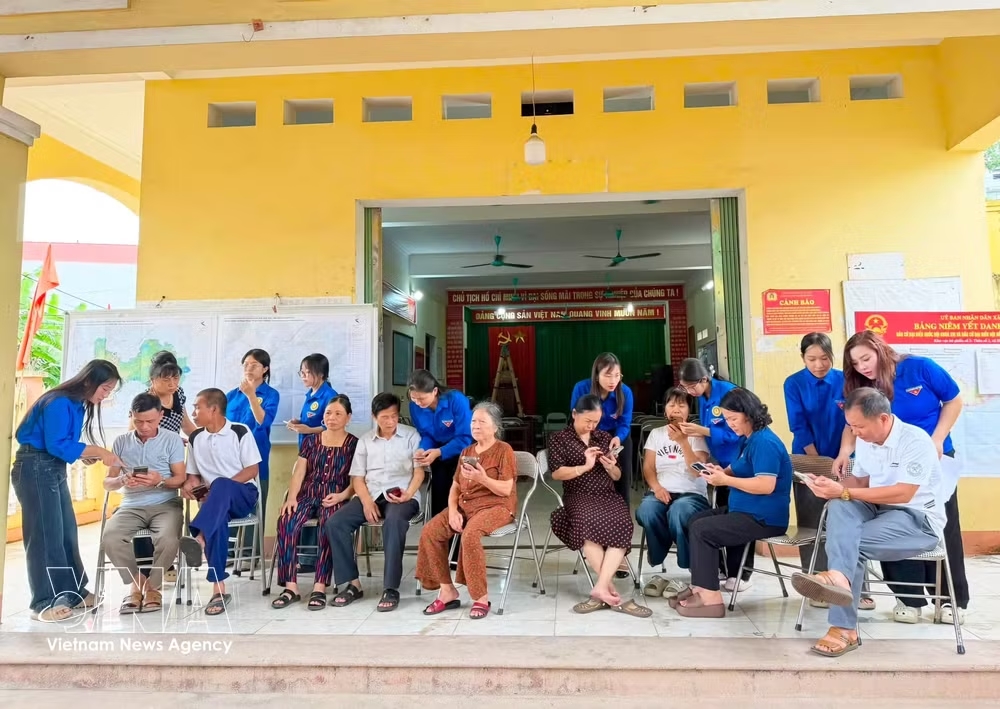
Public access to and use of digital services are another direct measure of the effectiveness of digital transformation. Thanh Hoa province launched a 60-day campaign to encourage residents to install its Thanh Hoa Digital Application, running from November 2 to December 31, 2026. The campaign covers 166 communes and wards and aims to have 40% of the adult population install the application.
Local authorities are combining installation drives with direct guidance on how to use its practical functions. In Hoang Giang hamlet, Trung Chinh commune, local officials and grassroots forces have helped residents register accounts and become familiar with the application.
So far, all civil servants and public employees in the commune have installed it. A total of 6,459 adults have also done so, accounting for more than 26% of the adult population.
In Quang Yen commune, Party members, mass organisations and community digital technology teams are helping residents use features such as submitting feedback and proposals, accessing online public services, tracking administrative dossiers and looking up essential information.
These results show that Resolution No.57-NQ/TW is being translated into action across public administration, research and business activities. Sustaining and expanding these efforts will be essential to generating wider socio-economic benefits.
As science, technology and digital transformation become increasingly integrated into production, governance and daily life, they can help create new drivers of growth and advance the development goals set out in the resolution./. VNA

