 Vietnamnet.vn

 Podcast


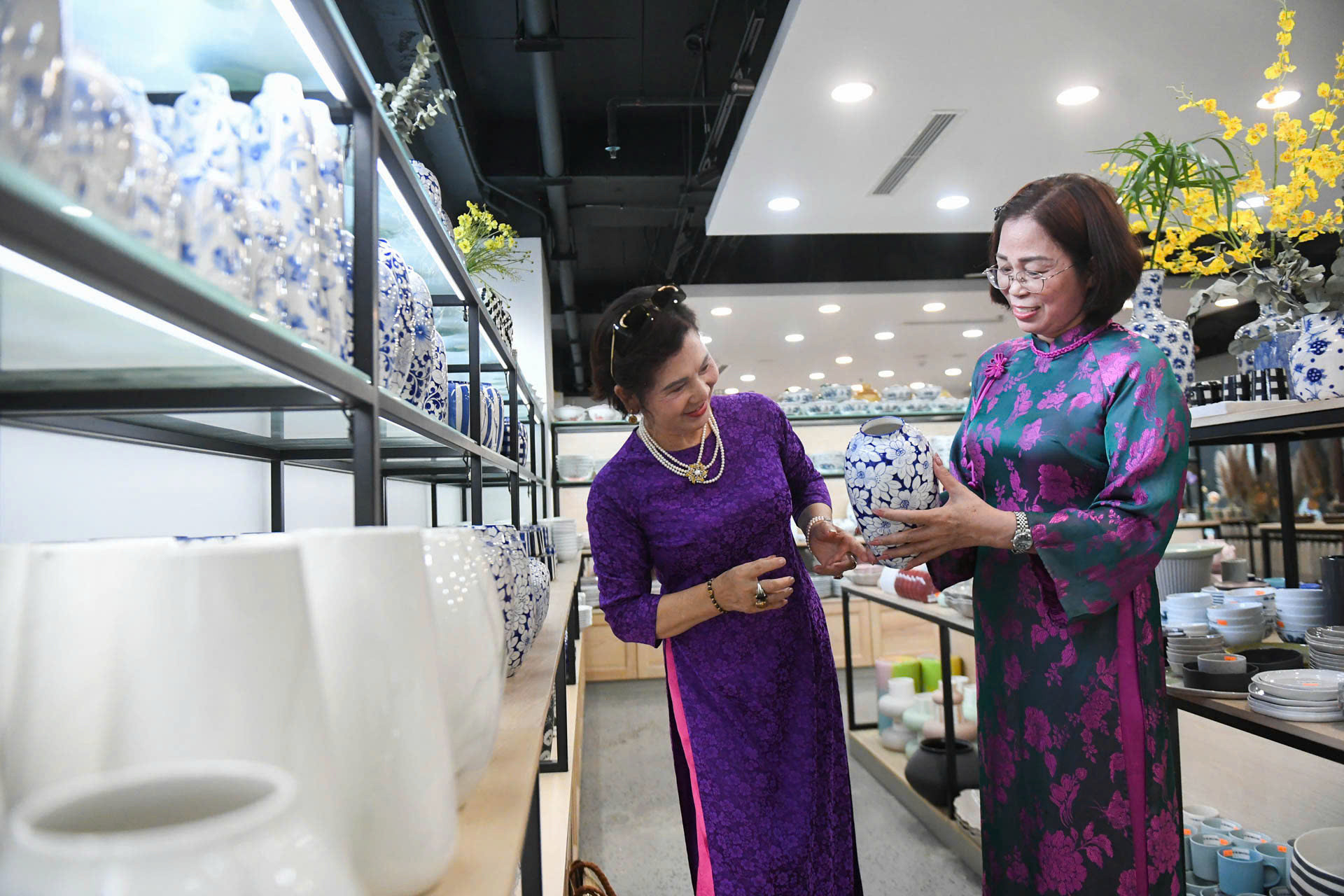
With use of scientific analysis in traditional craft villages, the establishment of a Vietnam ceramic raw-material database enables artisans to pinpoint specific clay deposits for international production.
“We want to know which clay deposit, region, or mine to choose for specific product lines, along with exact aluminum and iron content, so we can start production immediately without trial and error,” noted artisan Ha Thi Vinh, Chair of the Hanoi Handicraft and Craft Villages Association.
Her remarks were delivered during a seminar titled “Assessing the Current Status and Refining Criteria for Clay Raw Materials Used in Key Traditional Ceramic Craft Villages in Vietnam,” chaired by the Institute of Geosciences under the Vietnam Academy of Science and Technology.
Applying scientific rigor to raw material selection
One of the key topics at the workshop was research into the characteristics of clay materials and recommendations on suitable supply areas for different groups of craft villages.
Nguyen Anh Duong, M.Sc., from the Institute of Geosciences, outlined criteria for three core product categories: fine ceramics, stoneware, and earthenware.
Evaluation parameters extended beyond chemical compositions such as silica, aluminum, and iron to include mineral composition, particle size, plasticity, drying shrinkage, firing shrinkage, and water absorption capacity. These factors directly dictate shaping, firing processes, and finished product quality.
Addressing supply logistics, Dr. Pham Thi Dung and her research team presented findings from 170 raw material samples analyzed using X-ray diffraction (XRD), X-ray fluorescence (XRF), thermal analysis, and physical testing.
Drawing from over 1,000 mineral points and mines, the team standardized 438 deposit profiles to evaluate raw material supply capabilities for craft villages.
The research group proposed constructing a WebGIS digital mapping system integrating mine locations, geological characteristics, material compositions, and recommended applications. This tool allows producers to cross-reference data and select suitable clay sources scientifically rather than relying purely on trial-and-error experience.
Le Ngoc Thach, a 16th-generation potter from Bat Trang, emphasized that raw material stability remains vital for product quality.
Clay bearing identical commercial labels sourced from different deposits or batches often exhibits varying plasticity and heat resistance, leading to high post-firing defect rates.
He proposed establishing professional supply entities, quality grading systems, and shared technical testing services, enabling small-scale artisan workshops to access analytical technology without building private laboratories.
Dr. Nguyen Van Anh from VNU University of Social Sciences and Humanities highlighted the diversity of Vietnam’s traditional ceramic products, which is closely linked to generations of accumulated knowledge about selecting and processing raw materials.
However, local clay deposits face depletion, while traditional processing knowledge risks fading. Therefore, scientific research must accompany efforts to preserve artisan knowledge and cultural identity.
Practical application for craft villages
Praising the practical value of the study, Tran Nhat Lam from the Ministry of Agriculture and Environment noted that criteria must be cross-referenced with existing standards and verified through trial production.
He recommended integrating raw material analysis into digital platforms formatted clearly “similar to a blood test report”, allowing artisans to evaluate clay quality and product suitability instantly.
Ngo Quoc Trinh, Deputy Head of the Bat Trang Economic Division, expressed hope that digital maps will guide raw material selection, trace product origins, and enhance market value.
Nguyen Thanh Cong, a lecturer in Silicate Engineering at Hanoi University of Science and Technology, urged scientists to translate chemical and mineral parameters into direct technical instructions. For example, clay should specify plasticity indices and kaolin should detail aluminum content and whiteness, while feldspar should indicate fluxing performance and temperature reduction capabilities.
He noted that survey results should also identify high-value raw materials suitable for ceramic glaze production, optimizing natural resource utility.
Dr. Nguyen Xuan Anh said that developing the ceramic sector requires a value-chain approach, connecting raw material solutions with materials science, manufacturing technology, and innovation.
Regarding the Geographic Information System (GIS), he proposed implementing a pilot phase, collecting direct feedback from the craft villages to further refine it before putting it into widespread use.
Endorsing the research, artisan Ha Thi Vinh expressed desire for rapid implementation across craft communities.
She emphasized that enabling artisans to identify suitable raw materials matching design concepts eliminates costly trial-and-error phases. Using a Vietnam ceramic raw material database streamlines artistic experimentation.
The female artisan also proposed establishing a Design and Innovation Center serving the Bat Trang, Kim Lan, and Giang Cao regions. This facility would allow artisans, enterprises, and scientists to collaborate on material research, apply modern equipment, and develop novel export products using the Vietnam ceramic raw material database.
Thai An - Nga Thuy - Thach Thao

