 Vietnamnet.vn

 Podcast


Vietnam's marine tourism sector is entering a new phase of development, with opportunities to move beyond traditional beach holidays and establish a competitive, experience-based tourism economy.
For decades, the country's marine tourism advantages have largely been measured by the number of attractive beaches and annual visitor arrivals. However, as global tourism competition becomes increasingly fierce, natural attractions alone are no longer enough. The real value lies in turning landscapes into distinctive experiences that encourage longer stays, higher spending and sustainable livelihoods for coastal communities.
The challenge is therefore not simply to attract more visitors, but to generate greater economic value from each tourist while protecting marine resources.
Vietnam's tourism industry recorded strong growth in 2025, welcoming nearly 21.2 million international visitors, up 20.4% from the previous year and exceeding the pre-pandemic level in 2019. Domestic tourist arrivals reached approximately 137 million. Meanwhile, total tourism revenue stood at around 1 quadrillion VND (38.78 billion USD).
This growth provides a strong foundation for marine tourism, but also highlights the need to shift from growth driven by visitor numbers to growth based on service quality and spending.
The orientation is consistent with the Politburo's Resolution No. 26-NQ/TW, dated August 22, 2026, on developing tourism into a spearhead economic sector in the new era. The resolution emphasises improving service quality, strengthening cultural identity and enhancing visitor experiences while developing tourism into a high-value economic ecosystem.
From natural advantages to competitive strengths
Marine and coastal tourism has become a major component of the global tourism economy. According to the World Travel & Tourism Council (WTTC), the sector directly contributed approximately 1.5 trillion USD to global GDP, supported 52 million jobs, and accounted for around half of total tourism spending in 2023.
These figures demonstrate that marine tourism extends far beyond beaches and accommodation. It encompasses a broad economic ecosystem involving transport, aviation, hospitality, food services, retail, entertainment, water sports, healthcare, cultural industries, digital technology and financial services.
For Vietnam, this means that tourism performance should be assessed not only through visitor numbers but also through the average length of stay, spending per visitor, repeat visits and the proportion of economic value retained by local communities.
A destination attracting fewer visitors but encouraging longer stays and higher spending can generate greater economic benefits while placing less pressure on infrastructure and the environment.
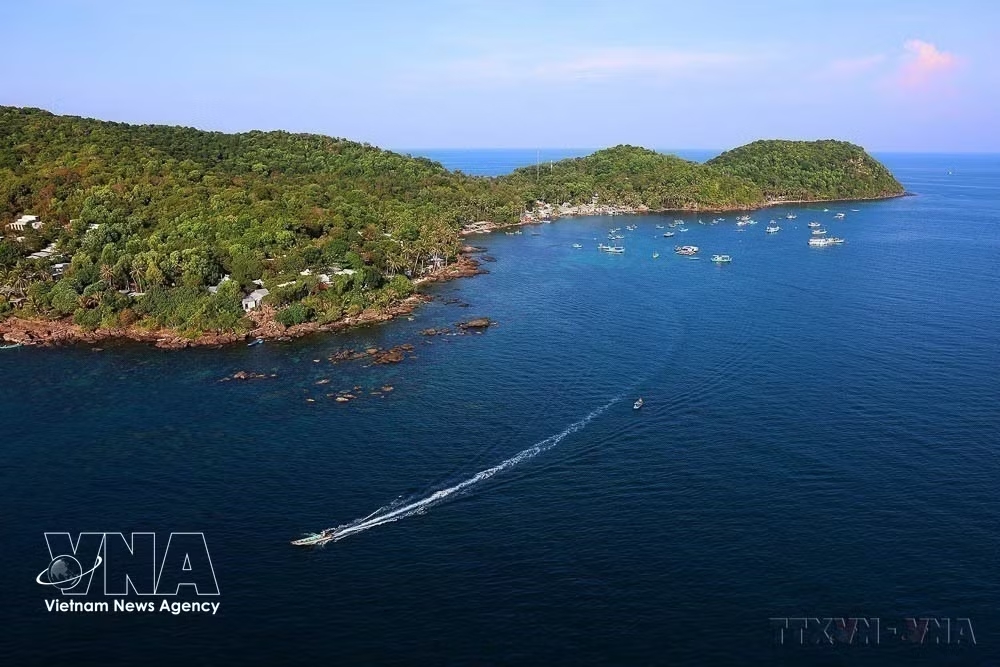
The potential of cruise tourism also remains considerable. In 2025, Vietnam welcomed approximately 273,900 international visitors arriving by sea, accounting for just 1.3% of total international arrivals. Developing passenger ports, marinas, supporting services and shore-based experiences could help the country expand this market.
Diversifying marine tourism experiences
One major limitation of Vietnam's marine tourism is its continued dependence on beach holidays and resort accommodation. As destinations become increasingly similar, their competitive advantages can diminish.
Vietnam has considerable potential to diversify its marine tourism products, including cruises, yachting, diving, marine wildlife observation, recreational fishing, water sports, island exploration, ecological tourism, wellness services, marine cuisine, festivals, cultural activities and meetings, incentives, conferences and exhibitions (MICE).
Developing these products requires closer links between marine spatial planning and tourism planning. According to the tourism system master plan for 2021–2030, coastal destinations should be organised into interconnected experience clusters rather than developed as isolated tourism sites.
For example, northern Vietnam could develop a connected tourism route linking Ha Long, Cat Ba, Hai Phong, Van Don and Yen Tu. In central Vietnam, Hue, Da Nang, Hoi An, Cu Lao Cham and Ly Son could be linked through different cultural, ecological and marine tourism themes.
Such connections should be supported by transport infrastructure, coordinated planning and assessments of environmental carrying capacity.
Marine culture as a distinctive tourism asset
Vietnam's coastal communities possess cultural assets that cannot easily be replicated elsewhere. These include fishing villages, whale-worshipping festivals, traditional fishing practices, shipbuilding, fish sauce production, seafood processing, pearl farming, traditional architecture, folk music and stories associated with the country's maritime history.
Rather than simply presenting these values to visitors, tourism operators should turn them into interactive experiences.
Visitors could join fishermen in pulling fishing nets, learn how to make fish sauce, participate in seafood preparation, take traditional basket-boat trips, enjoy meals with coastal families or join coral reef restoration and mangrove planting activities.
This approach would make local culture an integral part of tourism products while creating additional income opportunities for coastal communities.
Strategic priorities towards 2045
To realise its marine tourism potential, Vietnam needs a comprehensive strategy focusing on several priorities.
First, the sector should shift its performance indicators from visitor numbers to economic value per visitor, taking into account spending, length of stay, repeat visits, use of high-quality services and benefits retained by local businesses and communities.
Second, marine tourism spaces should be developed into interconnected clusters of experiences, supported by coordinated regional planning, transport links and infrastructure.
Third, investment in passenger ports and marinas should be promoted to serve higher-value market segments. Each cruise ship arrival should be connected with a range of shore-based experiences, including accommodation, dining, shopping, cultural activities and water sports.
Fourth, marine culture should become a central component of Vietnam's tourism brand, highlighting coastal communities, traditional occupations, cuisine, festivals and maritime heritage.
Fifth, digital technology and data should be used to manage environmental carrying capacity. Destinations need reliable information on visitor numbers, vessel traffic, freshwater consumption, waste generation and accommodation capacity to ensure that development remains within sustainable limits.
Sixth, green and low-emission tourism should be promoted through renewable energy, water conservation, wastewater treatment, reduced single-use plastics, circular economy models and clean transport.
Seventh, human resources should be developed to meet the requirements of an experience-based economy. Tourism workers need foreign language skills, international service standards and knowledge of marine culture, while rescue teams and destination managers must receive professional training. Local communities should play an active role in developing and benefiting from tourism.
Eighth, Vietnam should build its image as a high-quality marine tourism destination in Asia, recognised for diverse experiences, environmental responsibility and distinctive cultural identity.
Finally, marine tourism should become an integral part of the broader national marine economy, with stronger links to maritime transport, seaports, logistics, coastal cities, cultural industries, the night-time economy, the digital economy, science and technology, and marine conservation.
By 2045, Vietnam should aim to be recognised as one of Asia's leading destinations for high-quality, sustainable and culturally distinctive marine tourism.
Achieving this ambition requires a fundamental shift from simply attracting visitors to creating lasting economic value. By combining its natural advantages with cultural identity, modern infrastructure, digital technology and environmental protection, Vietnam can turn its coastline and islands into a long-term source of economic growth./. VNA

