 Vietnamnet.vn

 Podcast



Tran Thuong
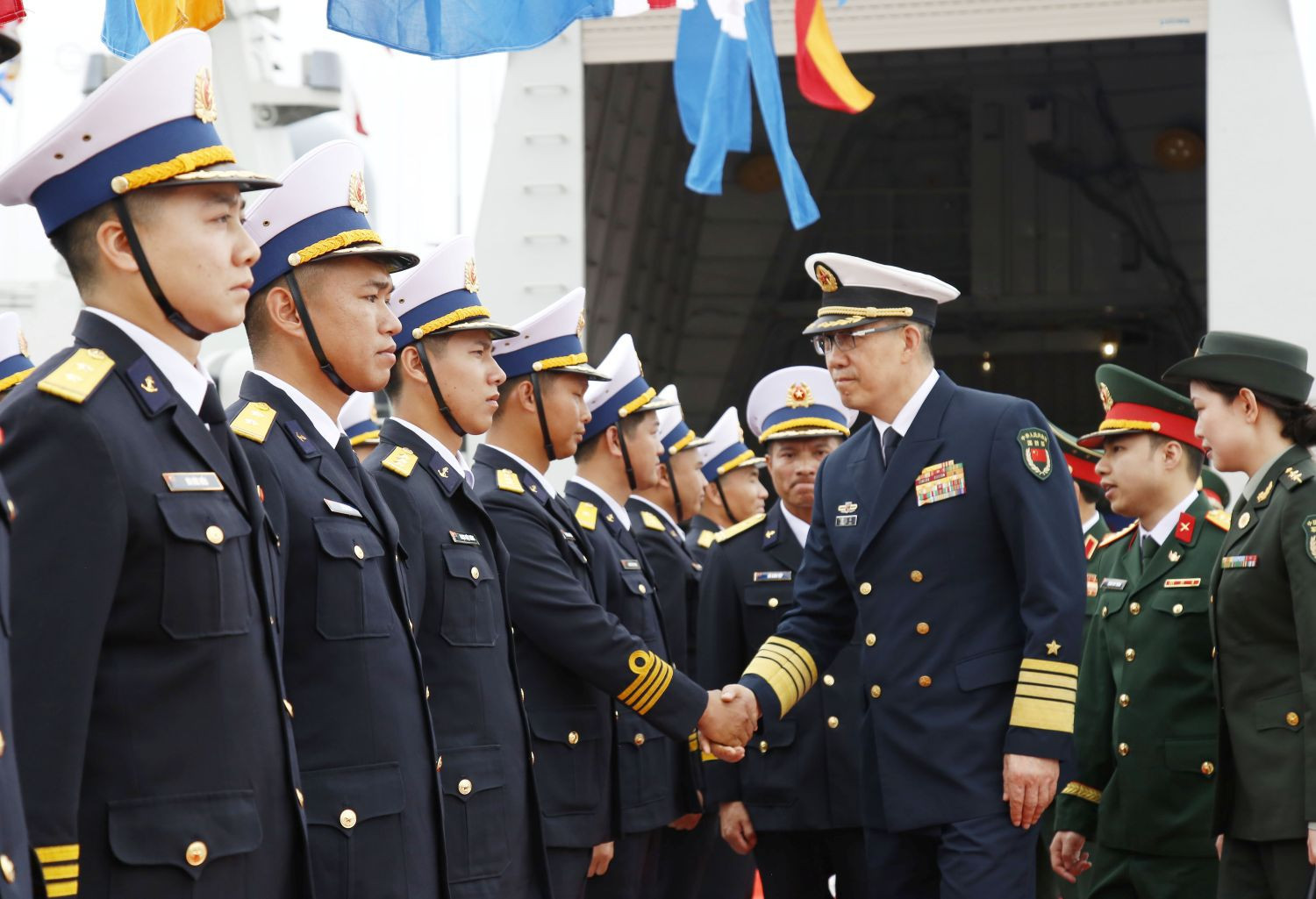
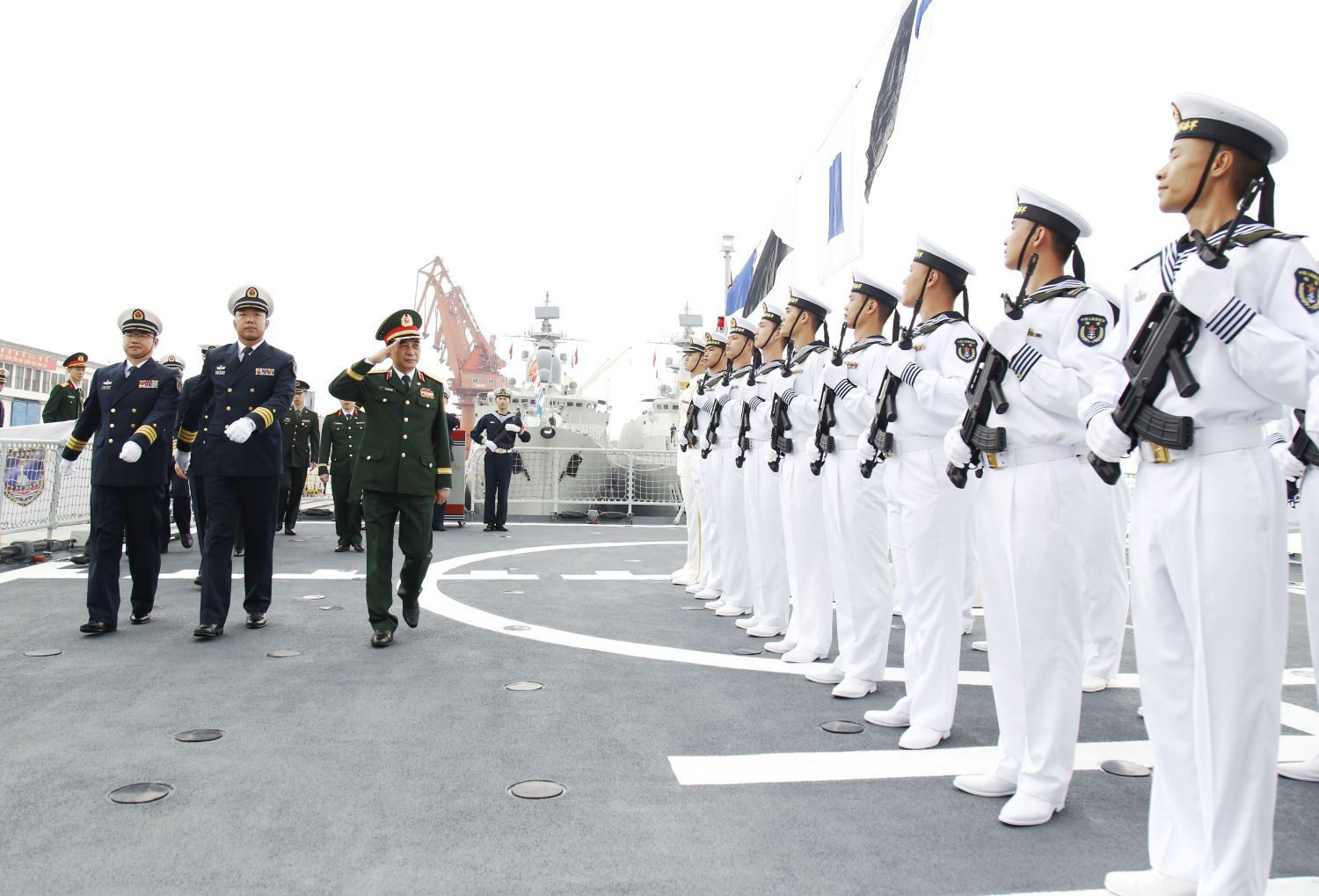
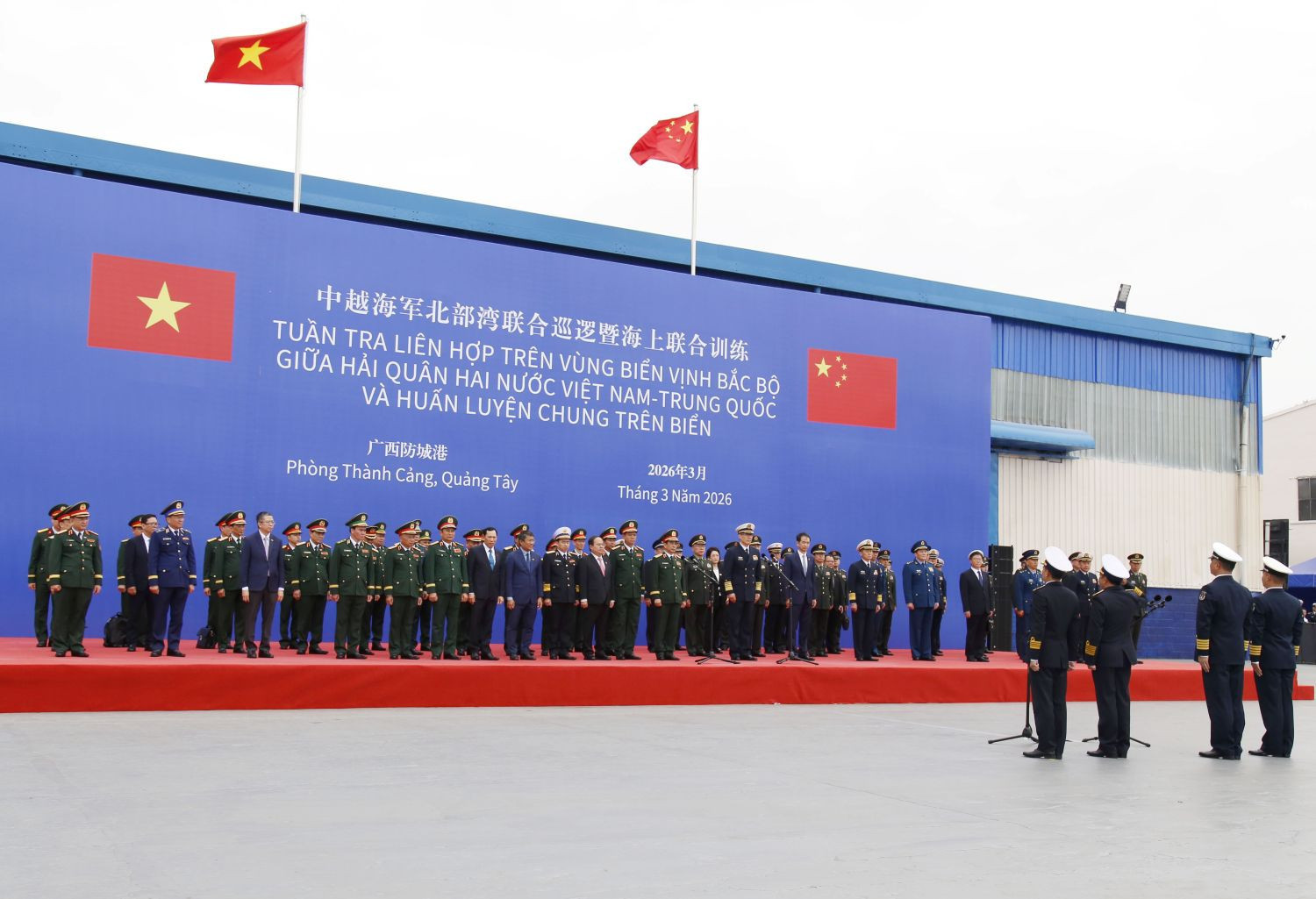
On the morning of March 19, at Fangcheng Port in Guangxi, General Phan Van Giang, Vietnam’s Minister of National Defense, and Senior Lieutenant General Dong Jun, China’s Minister of National Defense, presided over the launch of the joint patrol and training exercise between the Vietnam People’s Navy and the People’s Liberation Army Navy.
Naval units prepare for coordinated mission
Upon arriving at Fangcheng Port, the two ministers visited an exhibition showcasing previous joint patrol missions between the two navies. They also toured Chinese naval ship 568 and Vietnamese naval ship 015, meeting and encouraging officers and sailors from both sides.
Commanders of the participating task groups reported that personnel from both countries had successfully completed cultural and sports exchanges, as well as coordination preparations for the joint patrol.
In this mission, Vietnam has deployed ships 015 and 012, while China has assigned ships 568 and 627.
Patrol to cover multiple routes and operations
The joint patrol will cover eight routes, passing through nine designated points, with a total distance of 247 nautical miles over approximately 28 hours.
All vessels and technical equipment are reported to be in good operational condition, with officers and sailors fully prepared to carry out their duties.
During the mission, the two naval task groups will conduct a range of training activities, including formation maneuvers, maritime escort operations, signal communication using light, anti-piracy drills involving live-fire exercises with light weapons, search and rescue operations, and damage control training to maintain vessel survivability.
Building trust through sustained cooperation
Prior to this mission, Vietnam and China had successfully conducted 39 joint patrols in the Gulf of Tonkin, along with multiple joint training activities at sea within the framework of these patrols.
The joint patrol mechanism has contributed to maintaining security and order in the Gulf of Tonkin, enhancing the ability of both navies to respond to non-traditional security challenges, and strengthening mutual trust and understanding between the two naval forces and their respective militaries.
After receiving final instructions and approval from both defense ministers, the naval formations departed Fangcheng Port in coordinated formation to begin the mission.
Weather conditions at sea during this period are assessed to be favorable for the patrol.




.svg)
