 Vietnamnet.vn

 Podcast


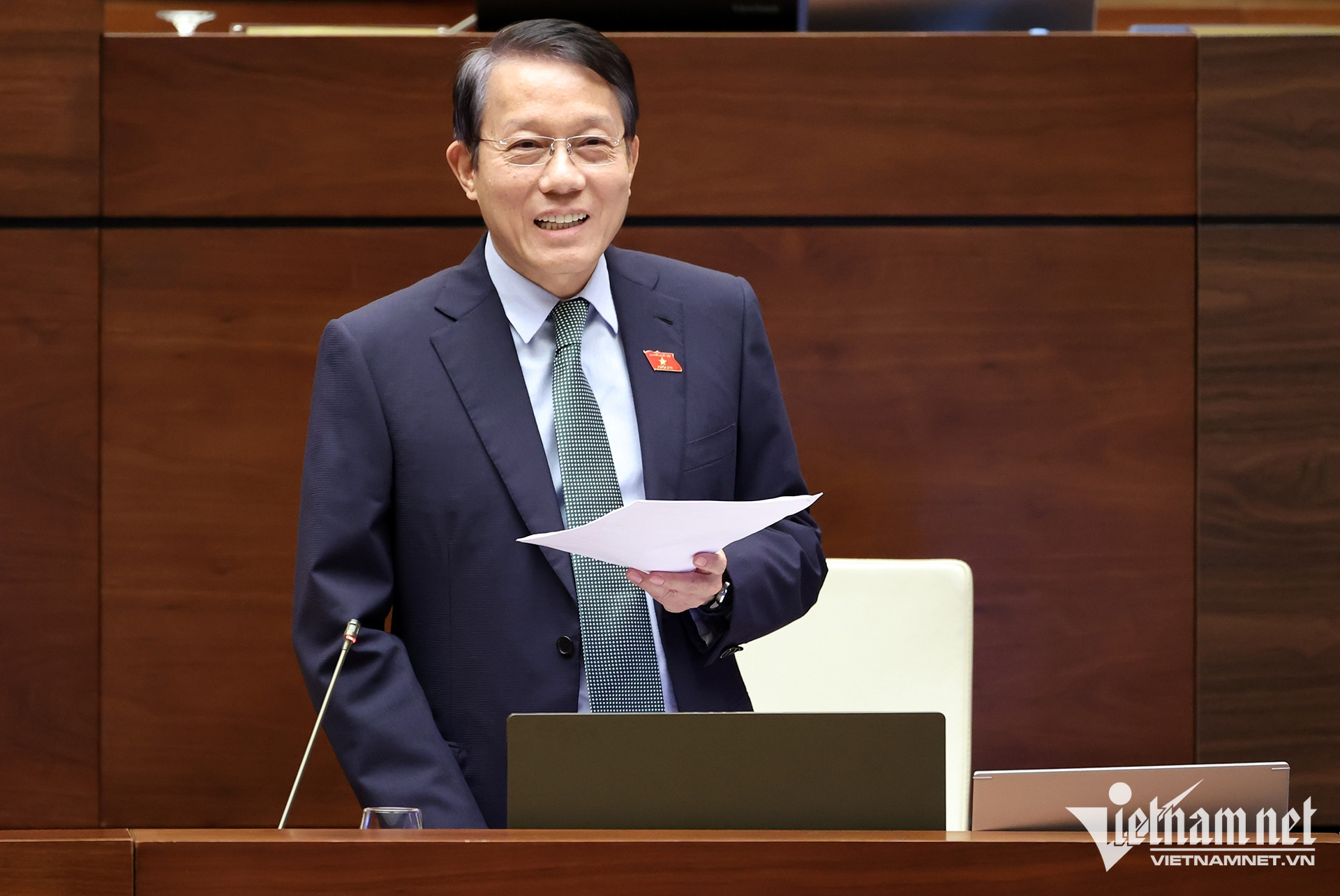
Regarding maximum monetary penalties, the minister said the drafting agency would review proposed limits for individual sectors to ensure they reflect the nature, severity, scale and consequences of violations.
Under the proposal, maximum fines of VND1.5 billion (approximately $57,000) for individuals and VND3 billion ($114,000) for organizations would apply only to specified sectors.
These include supplementary pension fund management and credit rating services; technical standards, regulations, measurement and product quality; electronic identification and authentication; environmental protection; and food safety.
Quang said these higher limits were justified by the complexity and seriousness of violations in these sectors, particularly their potential effects on the environment, public health and people's safety.
The drafting agency also proposed removing provisions allowing cities to impose fines higher than the general national levels, up to twice the standard amount.
The change would establish a uniform penalty framework nationwide for the same administrative offense.
Quang emphasized that the amounts specified in the draft law represent maximum penalties rather than automatic fines for every violation.
The Government would establish detailed penalty levels according to the nature and severity of individual offenses.
He said these regulations would address lawmakers' concerns while ensuring that administrative penalties remain humane, proportionate, deterrent and sufficiently strict.
Suspension of electricity and water services not to be classified as coercive measures
Addressing measures used to enforce administrative penalty decisions, Quang said the drafting agency proposed revising the provisions on temporary exit bans.
Under the proposed changes, temporary restrictions on leaving Vietnam would no longer be classified as coercive enforcement measures but as safeguards to ensure compliance with enforcement decisions.
Such restrictions could apply to individuals subject to enforcement or representatives of organizations facing enforcement when authorities determine that preventing their departure is necessary to avoid evasion.
The provisions would be aligned with Vietnam's Law on Exit and Entry of Vietnamese Citizens.
The minister also addressed proposals involving the suspension of electricity and water supplies, vehicle inspections and registrations, driving permits, internet services, telecommunications services and digital infrastructure services.
He said the drafting agency would revise the provisions so that these restrictions would not be classified as coercive enforcement measures.
Instead, they would be treated as preventive measures designed to ensure the handling of administrative violations.
The revised legislation would establish stricter requirements governing the conditions, authority, principles, procedures and scope of these measures to safeguard human rights and citizens' rights.
The Government would issue detailed regulations appropriate to the practical circumstances, sectors, nature and severity of violations.
Community service proposed as an alternative to monetary fines
Responding to lawmakers who suggested introducing penalties other than monetary fines, Quang said the Ministry of Public Security would study the possibility of community service as an alternative administrative sanction.
The ministry would report its findings to the Government for consideration of supplementary provisions in decrees or resolutions, or submit proposals to the National Assembly Standing Committee.
The minister said specific regulations would be needed to determine what types of community service could be imposed and how the required duration would be calculated.
These details could be established through Government decrees or resolutions, or submitted to the National Assembly Standing Committee for consideration.
Tran Thuong

