 Vietnamnet.vn

 Podcast



Families with two daughters could receive tuition waivers, health insurance support, school milk subsidies and other incentives under a draft proposal by Vietnam's Ministry of Health aimed at addressing the country's persistent gender imbalance at birth.
Incentives to promote gender equality
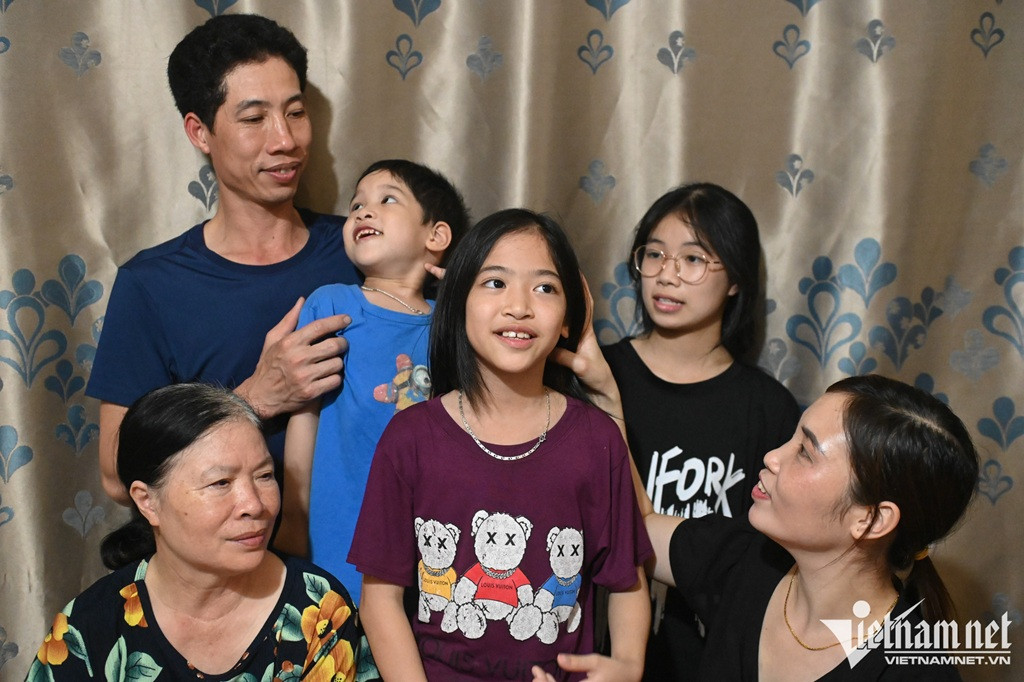
The proposal is included in a draft circular providing guidance on population policies that encourage and reward individuals, families and communities for helping reduce the imbalance in Vietnam's sex ratio at birth.
Under the draft, provincial and local authorities would have the flexibility to determine which support measures are appropriate based on local demographic conditions and population policy goals.
The proposed benefits would also extend to girls from poor and near-poor households, ethnic minority and mountainous communities, especially disadvantaged villages, coastal and island areas, and communes along Vietnam's land borders.
Possible forms of support include public recognition for families raising healthy, well-educated and successful daughters, tuition waivers or reductions, subsidies for student health insurance, school milk programs and assistance for women participating in economic development initiatives.
The Ministry of Health also proposes rewarding communes where every village has incorporated commitments into local community regulations to reject son preference, oppose prenatal sex selection and support efforts to control gender imbalance at birth. Provincial governments could grant one-time awards in cash or in kind to qualifying communes.
According to the ministry, pilot initiatives introduced by several localities have already helped improve public awareness of gender equality.
In Tay Ninh Province, gender balance targets have been incorporated into village conventions. During 2023 and 2024, the province rewarded 448 villages with total funding exceeding VND 1.3 billion (USD 50,000).
Meanwhile, Hung Yen Province has honored more than 100 families raising daughters who excel academically, while Hai Phong has awarded VND 5 million (USD 190) to families whose daughters have achieved notable success.
A growing demographic challenge
The Ministry of Health considers a birth sex ratio of 104 to 106 boys for every 100 girls to be the natural biological range.
However, Vietnam has experienced an increasingly imbalanced ratio since the early 2000s, with the trend accelerating after 2005.
Between 2021 and 2024, the country's birth sex ratio averaged nearly 110 boys per 100 girls. In 2024 alone, the figure reached 111.4 boys per 100 girls.
The imbalance is particularly severe in several northern provinces, where some localities have reported ratios approaching 120 boys per 100 girls. Southern Vietnam has generally remained closer to the natural range.
According to the United Nations Population Fund (UNFPA), if Vietnam's birth sex ratio continues to rise, the consequences will be especially significant for boys born after 2005 as they reach adulthood.
Vietnam has set targets to reduce the birth sex ratio to below 109 boys per 100 girls by 2030 and below 107 by 2035.
Experts acknowledge that achieving those goals will be difficult. Between 2017 and 2024, the ratio declined by only 0.7 percentage points, highlighting the slow pace of change.
Health officials have repeatedly warned that Vietnam is facing the dual challenge of declining fertility alongside a growing surplus of men.
According to Vietnam's population projections for 2024-2074, the country currently has approximately 415,200 more men than women in the prime marriage age group of 20 to 39 years old.
By 2034, that surplus is projected to increase to 711,700 men.
The imbalance is expected to peak around 2049, when Vietnam could face a shortage of approximately 1.3 million women of marriageable age.
The Ministry of Health warns that today's birth sex imbalance will shape Vietnam's demographic structure for decades, creating unprecedented social challenges.
One major consequence is what experts describe as a "marriage squeeze" - a situation in which there are significantly more potential grooms than brides.
Many men may struggle to find partners, delay marriage or remain unmarried altogether.
Experts also caution that a prolonged gender imbalance could contribute to higher risks of gender-based violence, human trafficking, prostitution, social instability and economic losses.
Vo Thu
.svg)
