 Vietnamnet.vn

 Podcast


November 2026 marks a turning point as workers will, for the first time, be entitled to a day off with full pay on Vietnam Culture Day. This decision does more than add another holiday to the work calendar. It conveys a strategic political and social message from the Party and State for the new era.
Culture was once narrowly viewed as a "money-spending field" or as superficial activities of "flags, lights, drums". Such an approach effectively relegated culture to a passive position, dependent on downstream budget allocations and receiving less investment than its potential warrants.
Looking back 80 years, on November 24, 1946, amid the immense hardships of the pre-war period, the First National Cultural Conference took place. There, President Ho Chi Minh articulated an epochal principle: "Culture lights the way for the nation."
Eighty years later, codifying November 24 into a public holiday extends that aspiration, marking a fundamental leap in developmental thinking. Culture is no longer an auxiliary element, but officially asserts its status as a spiritual foundation, an endogenous driver, and a pillar of development on equal footing with economy, politics, and society.
Former Deputy Minister of Culture, Sports and Tourism Ho Anh Tuan recounted that during the review process summarizing 15 years of implementing the 8th Central Committee's 5th Resolution to draft Resolution No. 33-NQ/TW on building and developing Vietnamese culture and people, the drafting team proposed placing culture on equal footing with the economy, politics, and society.
This viewpoint initially sparked extensive debate among veteran researchers and experts. He noted that practical realities at the time revealed culture had not been restored to its proper position and intrinsic role.
Regulatory budget allocations for culture stood at roughly 1.8 percent of the national budget; in practical summaries, very few localities allocated around 1 percent of their funds to culture.
"Therefore, placing culture on equal footing with economy and politics was the most practical step to ensure culture is not marginalized, receiving appropriate attention and investment. However, in its long-term essence, culture retains its role as a foundation, guiding and illuminating the way," Tuan emphasized.
The inception of Vietnam Culture Day in 2026 dispelled that prejudice. When the State grants the entire populace dedicated time alongside economic guarantees to rest and engage in cultural life, citizens' rights to access, enjoy, and create spiritual values are institutionalized in the most substantive way.
The significance of this institutional turning point extends beyond policy documents to reach individual cultural actors at the grassroots level.
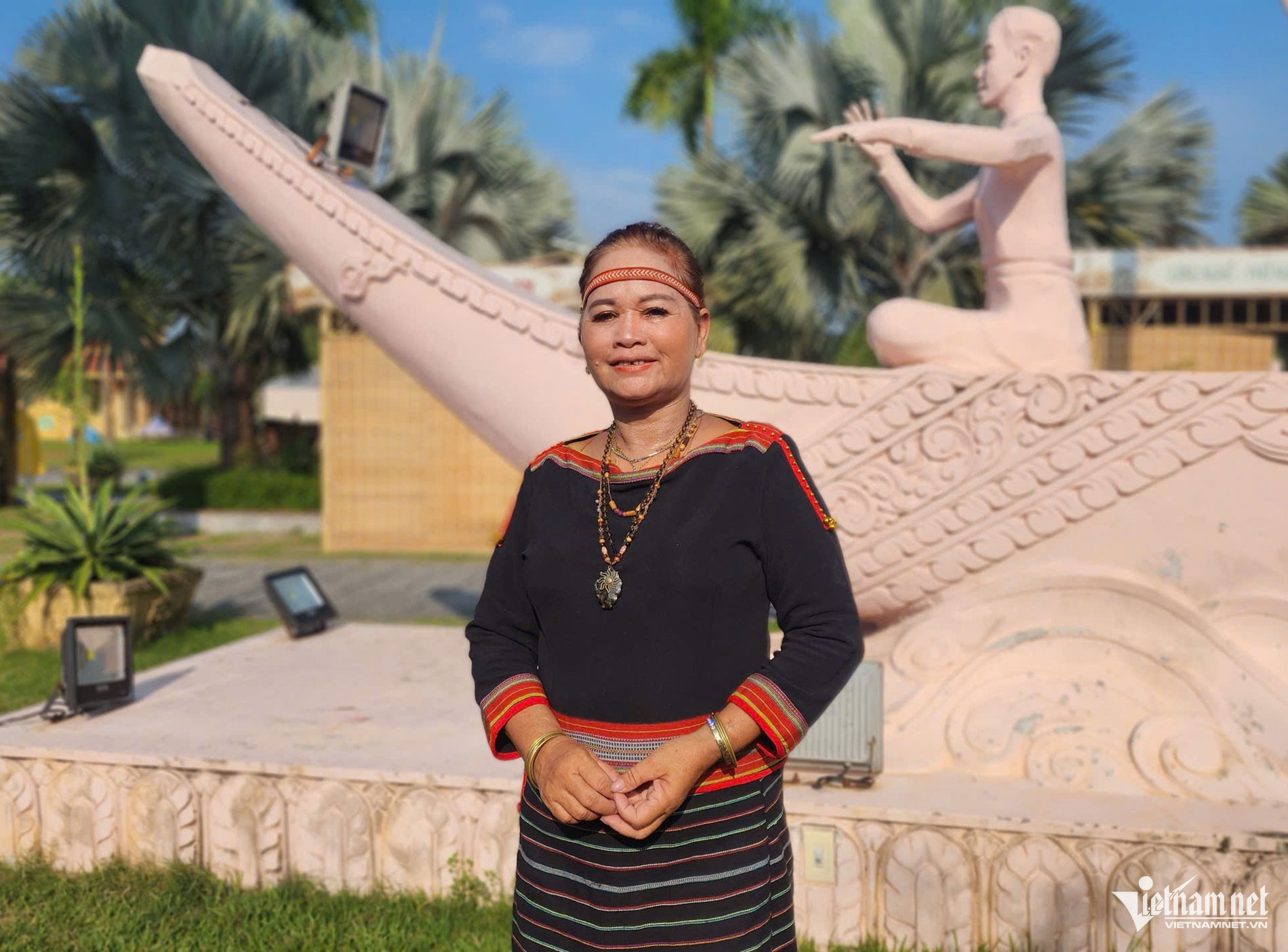
At the launch ceremony responding to Vietnam Culture Day organized by Hanoi City, artisan H’Hoa Nie KSor (an Ede ethnic woman from Dak Lak province) expressed deep emotion to VietNamNet reporters.
Through events held on Vietnam Culture Day, her passionate aspiration is to ensure Ede culture is not confined within provincial boundaries, but widely promoted to citizens across all regions of the Fatherland.
“I hope to introduce everything from gong and drum sounds, folk melodies, and traditional musical instruments to our ethnic group's unique matriarchal culture,” H’Hoa Nie KSor shared.
Global integration
Around the world, designating a day each year to celebrate and bring together the spiritual strength of an entire population is not a new idea. It has proved successful in many developed countries.
Japan has observed Culture Day since 1948, using the occasion for the government to honor artistic contributions while opening museums nationwide free of charge to encourage creative thinking.
South Korea maintains a regular Culture Day policy and helps people access arts and cultural venues at minimal cost, laying the groundwork for the Hallyu wave to emerge as a major export industry worth tens of billions of US dollars.
Vietnam's establishment of Culture Day is a step toward aligning with global civilizational trends. It also offers a way to strengthen the country's soft power and turn its millennia-old heritage into a resource for future development.
Associate Professor and Doctor Bui Hoai Son, deputy head of the Central Propaganda Department of the Communist Party of Vietnam, commented: “The decision to grant workers a full-paid day off on Vietnam Culture Day is a historic step forward. The key message is that the State places people and their spiritual lives at the center of all development policies. A paid day off is not simply a privilege; it is a strategic investment in restoring the workforce and improving people's quality of life.”
Tinh Le

