 Vietnamnet.vn

 Podcast



For decades, traveling to Thailand represented one of the most intimidating assignments in Vietnamese football. That sense of fear has faded.
Vietnam return to Bangkok for the first leg of the ASEAN Cup 2026 final on August 22 as defending champions, unbeaten in the tournament and convinced they have the personnel and tactical flexibility to defeat Thailand again.
Two years ago, Kim Sang Sik’s side won 3-2 at Rajamangala Stadium to complete a 5-3 aggregate victory over Thailand and lift the ASEAN Cup.
Now Vietnam have an opportunity to do something they have never done before: successfully defend the Southeast Asian title.
Strongest attack, tightest defense
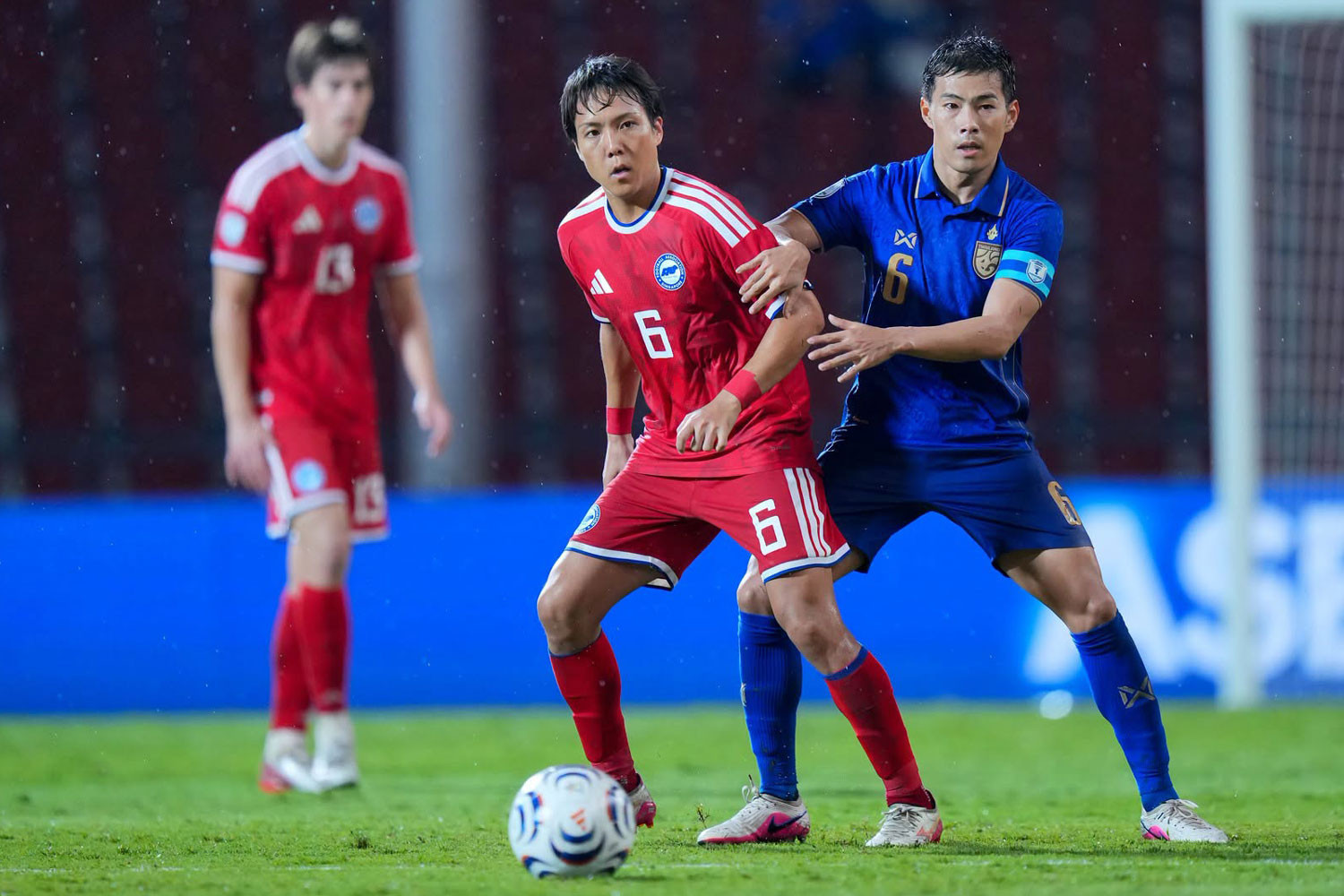
The numbers provide ample reason for confidence.
Vietnam have scored 17 goals at ASEAN Cup 2026, giving them the strongest attack in the tournament. They have conceded only once and kept five clean sheets.
Thailand, meanwhile, have conceded three goals. The hosts also arrive at the final after a less convincing semifinal.
Thailand defeated Singapore 3-1 in the first leg but lost the return match 2-1 at Rajamangala, their first home defeat to Singapore in nearly 17 years.
Vietnam’s semifinal against Malaysia told a different story.
Kim’s team controlled the tie and won 2-0 at My Dinh in the second leg despite the coach changing five positions from his first-leg lineup.
The performance demonstrated one of Vietnam’s most important developments under Kim: the team no longer depends on a fixed starting XI.
Quang Hai, Hai Long, Hoang Hen, Tai Loc, Xuan Son and Dinh Bac give the coach several attacking combinations.
The system can change, but the overall structure remains intact.
Hoang Duc vs Sarach
One of the most important battles at Rajamangala is likely to take place in midfield.
At 34, Sarach Yooyen remains fundamental to Thailand’s game. The midfielder links defense with attack, controls the tempo and distributes possession from central areas toward the flanks. The more time Sarach has on the ball, the easier it becomes for Thailand to dictate a match.
Vietnam have Nguyen Hoang Duc. Hoang Duc has completed 307 passes at ASEAN Cup 2026, more than any other midfielder, with an accuracy rate of 92.7%.
Sarach is close behind with 290 completed passes at 89.2%.
But the Vietnamese midfielder has also contributed four assists, the highest total at the tournament and twice Sarach’s tally.
If Hoang Duc can prevent Sarach from controlling the rhythm, Thailand could find it much harder to impose themselves.
Where Thailand can be hurt
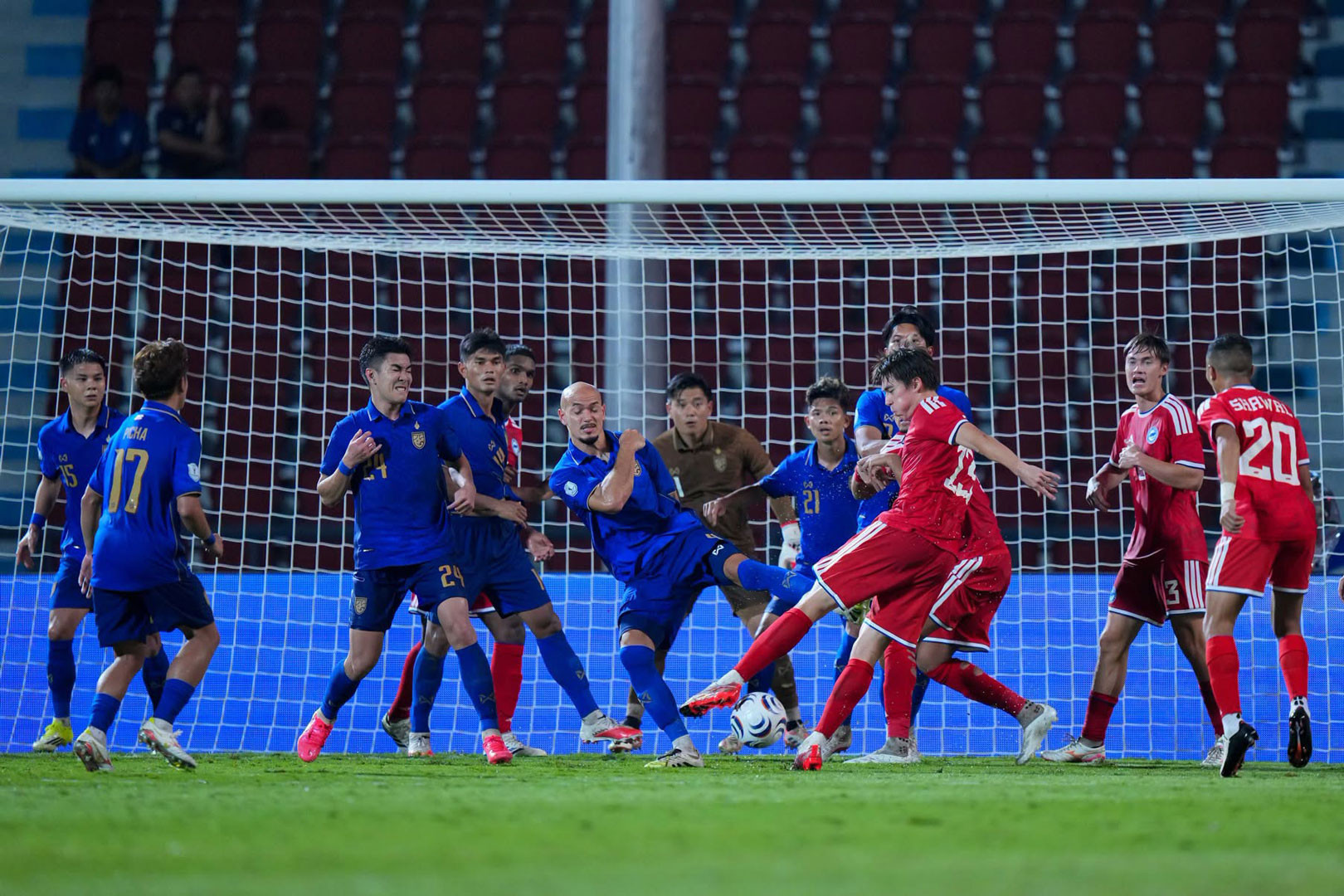
Thailand’s attacking flexibility is one of their strengths. Eight different players have scored for Hudson’s team during the tournament. But that willingness to send numbers forward also creates space.
Singapore demonstrated the problem in the semifinals.
Thailand can become vulnerable in front of their penalty area when the distance between midfield and defense grows too large.
Vietnam therefore have an opportunity to attack directly through central areas after winning possession. Quick combinations and one-touch passing could prevent Thailand from reorganizing defensively. That approach would suit Xuan Son particularly well.
The striker has five goals in the tournament, including three across the two semifinal matches against Malaysia.
Kim has even challenged him to score three more across the two final legs. Vietnam, however, do not need to rely exclusively on their center forward.
Commentator Quang Huy believes the visitors should remain patient if Thailand attempts to dominate possession at home.
“Thailand may attack and try to impose themselves because they are at home,” he said. “We should use transitions. If they attack impatiently, they can leave spaces. Vietnam can slow the game down and do not need to go toe-to-toe with them.”
Thailand’s multiple threats
Vietnam’s defense will face a very different challenge.
Thailand are not dependent on one attacking player.
Teerasak Poeiphimai is one of their most dangerous forwards, particularly when given space to accelerate behind the defense.
Seksan Ratree can move into central positions and operate between the lines, while Yotsakorn Burapha can drop deeper to create chances and also poses a threat from set pieces.
Kakana Khamyok gives Hudson another attacking option.
Vietnam therefore cannot simply assign defenders to individual opponents. Kim needs his defensive unit to remain compact, maintain positional discipline and keep the lines connected.
That organization has largely worked throughout the tournament, with Vietnam conceding just one goal.
The psychological balance has changed

History still gives Thailand an overall advantage in one of Southeast Asian football’s defining rivalries. From the mid-1990s through much of the 2000s, Thailand repeatedly defeated Vietnam in regional competition.
The 2008 ASEAN Cup final provided Vietnam with one of the first major breakthroughs.
Thailand regained the upper hand in the 2022 final, winning 3-2 on aggregate. But the 2024 championship shifted the balance again.
Vietnam won both legs, including the historic 3-2 victory at Rajamangala.
Kim believes that experience matters. “Playing away is always difficult, but we lifted the championship trophy here before, and that gives the whole team confidence that we can beat Thailand,” he said.
Vietnam’s ambition this time is not merely to secure a draw before the return leg at My Dinh.
Kim wants a victory. “This is another opportunity for Vietnam to write a new chapter in history, and we certainly do not want to miss it,” he said.
Two teams under different pressures
Thailand coach Anthony Hudson believes Vietnam enter the final with significant expectations.
“On paper, you could say they are the favorites,” he said. “The expectation and pressure that they have to win this game is on Vietnam.”
Thailand themselves are under considerable pressure following criticism from supporters during the tournament, particularly after their home defeat to Singapore.
Hudson nevertheless believes his players have demonstrated resilience.
“When you get to a final, anything can happen,” he said. “One thing the Thailand players have shown me is that they can get through extremely difficult moments in this tournament.”
Thailand also had an extra day of recovery before the final.
Vietnam had only two days to rest after eliminating Malaysia, and Kim acknowledged that managing his players’ physical condition would be important.
“The ASEAN Cup schedule is very demanding,” he said. “With such limited time, physical preparation is extremely important.”
Still, Vietnam arrive in Bangkok with depth, momentum and a recent memory that fundamentally changes the psychology of this rivalry.
Rajamangala is no longer simply a difficult away ground.
It is also the stadium where Vietnam became champions.
Another victory there would put them within touching distance of something the national team has never achieved before: back-to-back ASEAN Cup titles.
The first leg kicks off at 8 p.m. on August 22 at Rajamangala Stadium. The return leg will be played at My Dinh Stadium on August 26.
Dai Nam - Ngoc Huy - Duy Nguyen
.svg)
