 Vietnamnet.vn

 Podcast


Health Minister Dao Hong Lan explained the government's decision during a National Assembly discussion on amendments to the Law on Prevention and Control of Tobacco Harms on November 9.
Speaking at the end of the session, Lan emphasized that revising the legislation was necessary after 13 years of implementation.
She said the government had carefully reviewed the law's implementation, consulted relevant ministries and agencies, and discussed the proposed amendments before submitting the draft to the National Assembly.
The government would consider lawmakers' recommendations as it finalized the legislation, she added.
During the discussion, deputies raised concerns about the minimum legal age for tobacco use, a generational tobacco ban, completely smoke-free locations, tobacco advertising on digital platforms, protecting children from tobacco-related imagery and prohibited activities.
Government retains proposed minimum tobacco age of 18
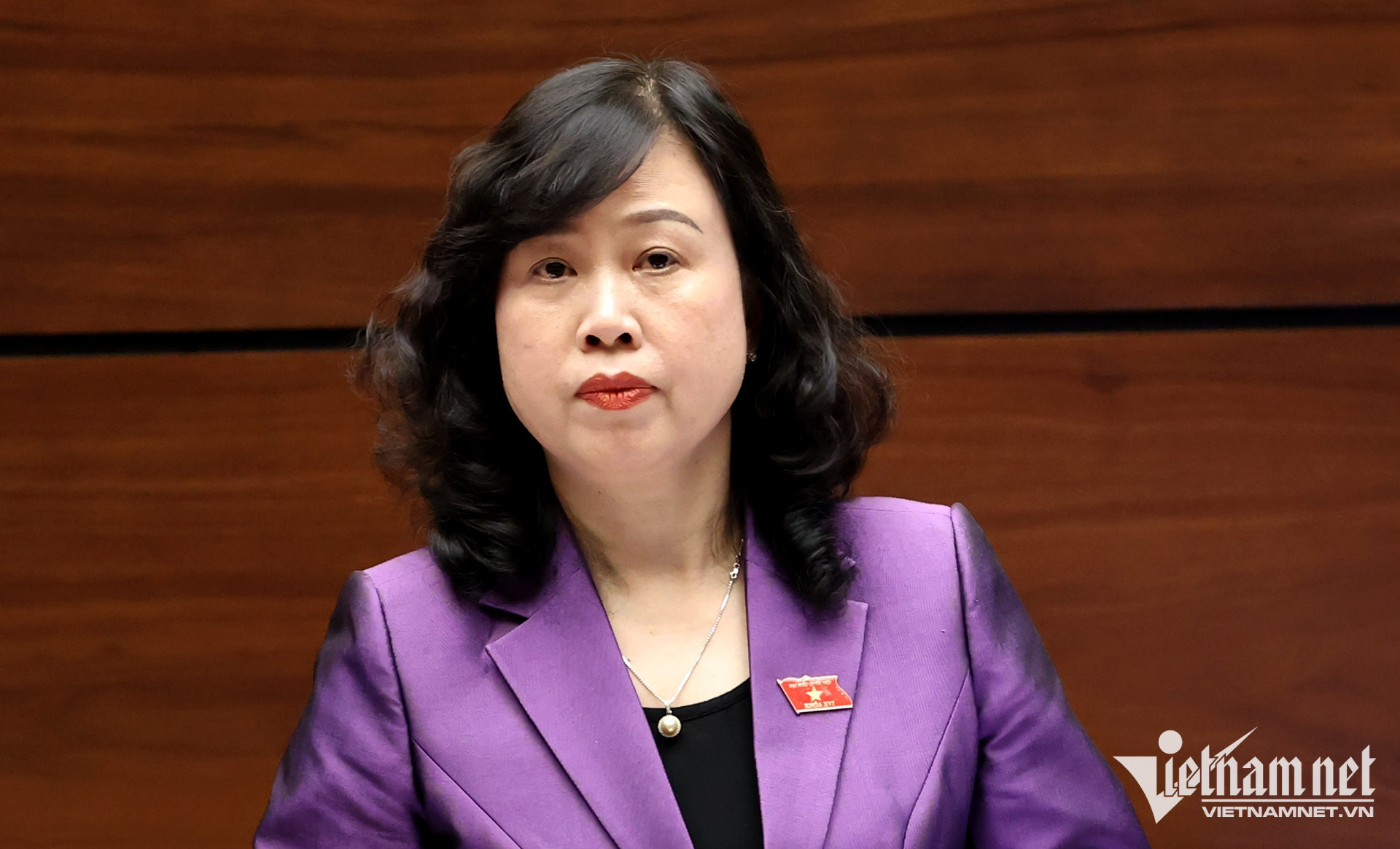
The draft law proposes prohibiting people under 18 from using, buying or selling tobacco products, although some lawmakers have called for raising the minimum age to 21.
Explaining the government's position, Lan said the proposed age threshold was based on the Civil Code's provisions concerning legal capacity and the exercise of individual rights.
The approach was intended to maintain consistency across Vietnam's legal framework.
According to the minister, an estimated 140 countries have adopted a minimum tobacco age of 18, making it the most common standard across Europe, Asia, the Americas and other regions.
Meanwhile, 16 countries have set the minimum age at 21, including the United States, Singapore, Indonesia, Kuwait, Mongolia and Sri Lanka.
Lan said the government had reviewed international practices during the drafting process and found that the 18-year threshold remained the most widely adopted.
Insufficient evidence to assess generational tobacco ban
The Ministry of Health previously proposed a generational tobacco ban that would prohibit people born on or after January 1, 2010, from purchasing and using tobacco products.
The proposal appeared in the ministry's May submission but was subsequently removed from the draft law.
Lan said the policy had been considered during the drafting process and discussed with all government members.
However, most members viewed the measure as a relatively new policy approach.
She emphasized that the ministry had clearly explained the decision in its official report and that there had been no attempt to conceal the discussions.
Referring to international experience, the minister noted that New Zealand passed generational tobacco prohibition legislation in 2022 but repealed it before the measures took effect.
The Maldives became the first country to implement such a policy in November 2025, applying it to people born in 2007 or later.
However, Lan noted that the Maldives is a small island nation with a population of approximately 530,000.
She also referred to the United Kingdom's Tobacco and Vapes Bill, which, according to her remarks, included provisions introduced in April 2026 to prohibit tobacco sales to people born from January 2009 onward, with implementation expected in 2027.
Given the limited international experience, the minister said there was not yet sufficient evidence to comprehensively assess the policy's impact or effectiveness.
For that reason, government members agreed not to include the generational tobacco ban in the current draft.
Minister rejects concerns over vested interests
Responding to questions about whether vested interests had influenced the decision, Lan cited Regulation No. 178 of the Politburo on controlling power and preventing corruption and misconduct in lawmaking.
She also referred to the National Assembly's Resolution No. 110 of 2023, which calls for preventing group interests and narrow institutional interests from influencing the development of laws and policies.
"It is impossible for businesses to approach every government member to insert vested interests into this policy," she said.
The minister stressed that legislation must be practical and enforceable once adopted.
She reiterated that the decision to exclude the generational tobacco ban was based on the novelty of the policy and the lack of sufficient evidence to evaluate its implementation.
Government considers stronger health warnings on cigarette packaging
Regarding locations where smoking would be completely prohibited, Lan said the government would introduce regulations according to an appropriate roadmap, taking actual conditions into account.
Lawmakers also proposed increasing the size of health warnings on tobacco packaging.
Under the existing law, health warnings must occupy at least 50% of each of the two principal display surfaces on cigarette packs, bags and boxes.
Some deputies suggested expanding that proportion to strengthen public health protection.
Lan said the government considered the proposal appropriate.
However, she explained that matters falling within the government's regulatory authority were generally not included in legislation submitted to the National Assembly.
She therefore proposed that the National Assembly authorize the government to determine the appropriate size and proportion of health warnings after further review and assessment.
"The question of how much the warning area should be increased, and to what proportion, should be left to the government to decide based on a thorough review and evaluation," she said.
Tran Thuong

