 Vietnamnet.vn

 Podcast



Vietnam has nearly covered the entire global map with its agricultural exports, which now reach 190 countries and territories. The country ranks second worldwide in rice and coffee exports, and leads in spice vegetables.
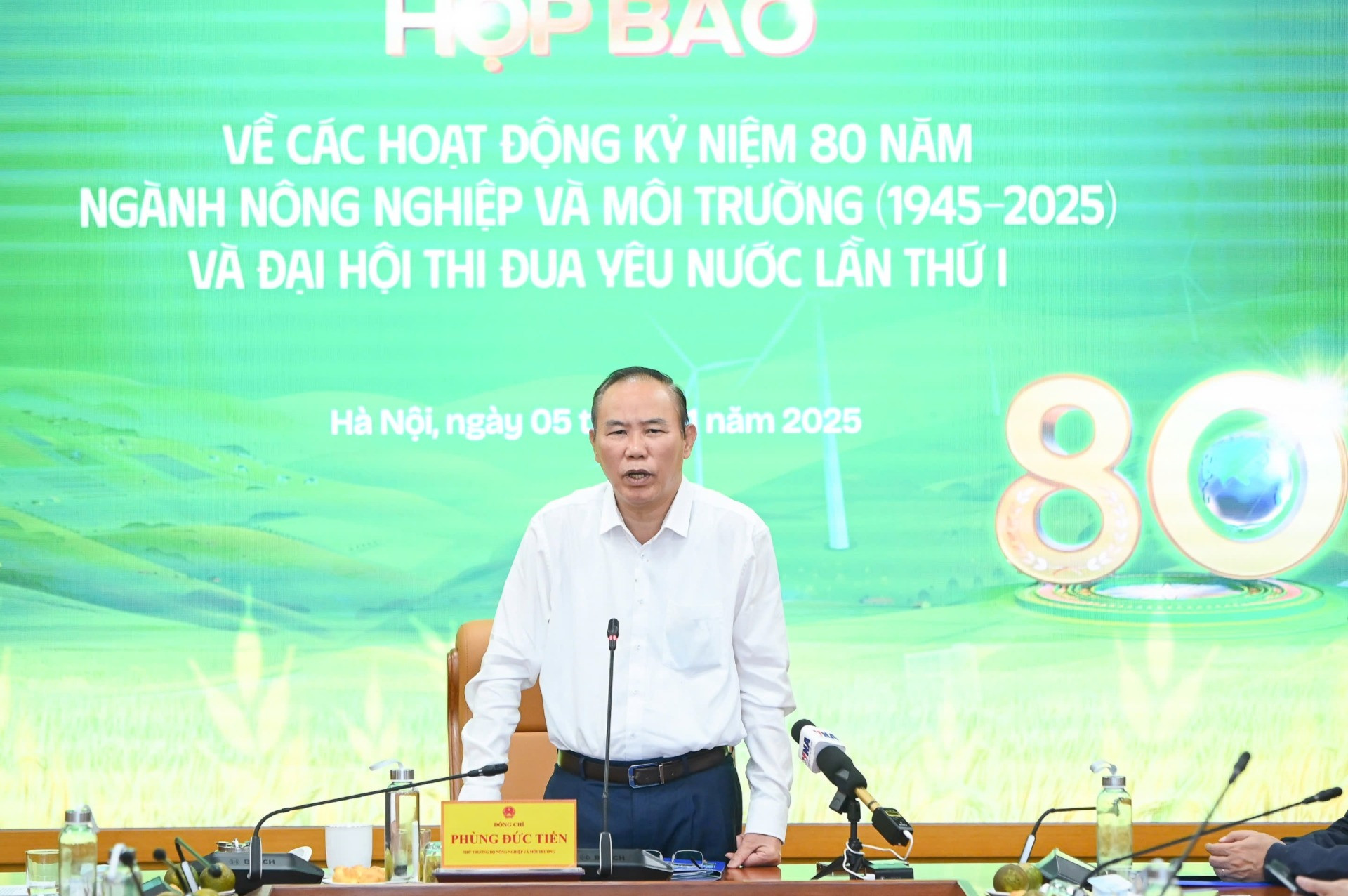
At a press briefing on October 5 to mark the 80th anniversary of Vietnam’s agriculture and environment sectors, Pham Van Duy, Deputy Director of the Department of Quality, Processing, and Market Development under the Ministry of Agriculture and Environment, announced that Vietnamese agricultural products are now exported to 190 countries and territories, essentially spanning the globe.
According to Duy, by the end of 2024, Vietnam's key agricultural commodities such as rice, coffee, seafood, fruits, and spices have achieved impressive rankings in international markets.
In particular, Vietnam exported 9.15 million tons of rice in 2024, placing it among the top three global rice exporters, behind only India (17 million tons) and ahead of Thailand.
Seafood exports exceeded USD 11 billion in 2024, securing Vietnam's position in the global top three, trailing only China and Norway.
Coffee maintained its second-place ranking worldwide, while fruits placed 15th. Remarkably, Vietnam holds the top position globally in the export of spice vegetables.
“These figures show that, metaphorically speaking, ‘Vietnam is feeding the world’ – meaning we play a critical role in the global food and agricultural supply chain,” emphasized Duy.
Deputy Minister of Agriculture and Environment Phung Duc Tien noted that Vietnam's agricultural exports are expanding beyond traditional products. Meat, eggs, and dairy are also entering international markets, with export growth reaching 19% over the past year.
He added that there remains vast potential for further development, particularly as Vietnam enhances its use of science and technology, embraces digital transformation, and implements traceability systems. These advances aim to build a high-tech, sustainable agricultural sector.
“Looking back, it’s clear that Vietnamese rice, fish, coffee beans, and vegetables have made their way to dining tables across the world – from Asia to Europe, the U.S. to the Middle East,” said Deputy Minister Tien.
“We are not merely exporting goods, but also exporting the identity, intellect, and creativity of the Vietnamese people in every grain of rice, every fish, and every drop of coffee.”
Tran Cong Thang, Director of the Institute of Agricultural and Environmental Policy and Strategy, said Vietnam must shift from a production mindset focused on “increasing volume” to one that prioritizes “increasing value,” integrating production with market demand, technology, and sustainable development.
Stressing the role of science and technology, Deputy Minister Tien added that enhancing the value of agriculture must align with green production, circular economy principles, and emissions reduction.
He concluded that when science, technology, and people converge, Vietnamese agriculture will go even further – not only “feeding the world” metaphorically, but also genuinely contributing to future global food security.
Vu Diep
.svg)
