 Vietnamnet.vn

 Podcast



Digital trust as the foundation of a modern digital economy
In the emerging data-driven era, information is not just a resource - it’s a strategic asset. Against this backdrop, blockchain technology has emerged as a key solution to building digital trust, the core element for a transparent, efficient, and sustainable digital economy.
Once seen merely as the backbone of cryptocurrencies, blockchain has now evolved into strategic infrastructure recognized in Vietnam’s Resolution 57 by the Politburo and Decision 1131 issued by the Prime Minister on June 12.
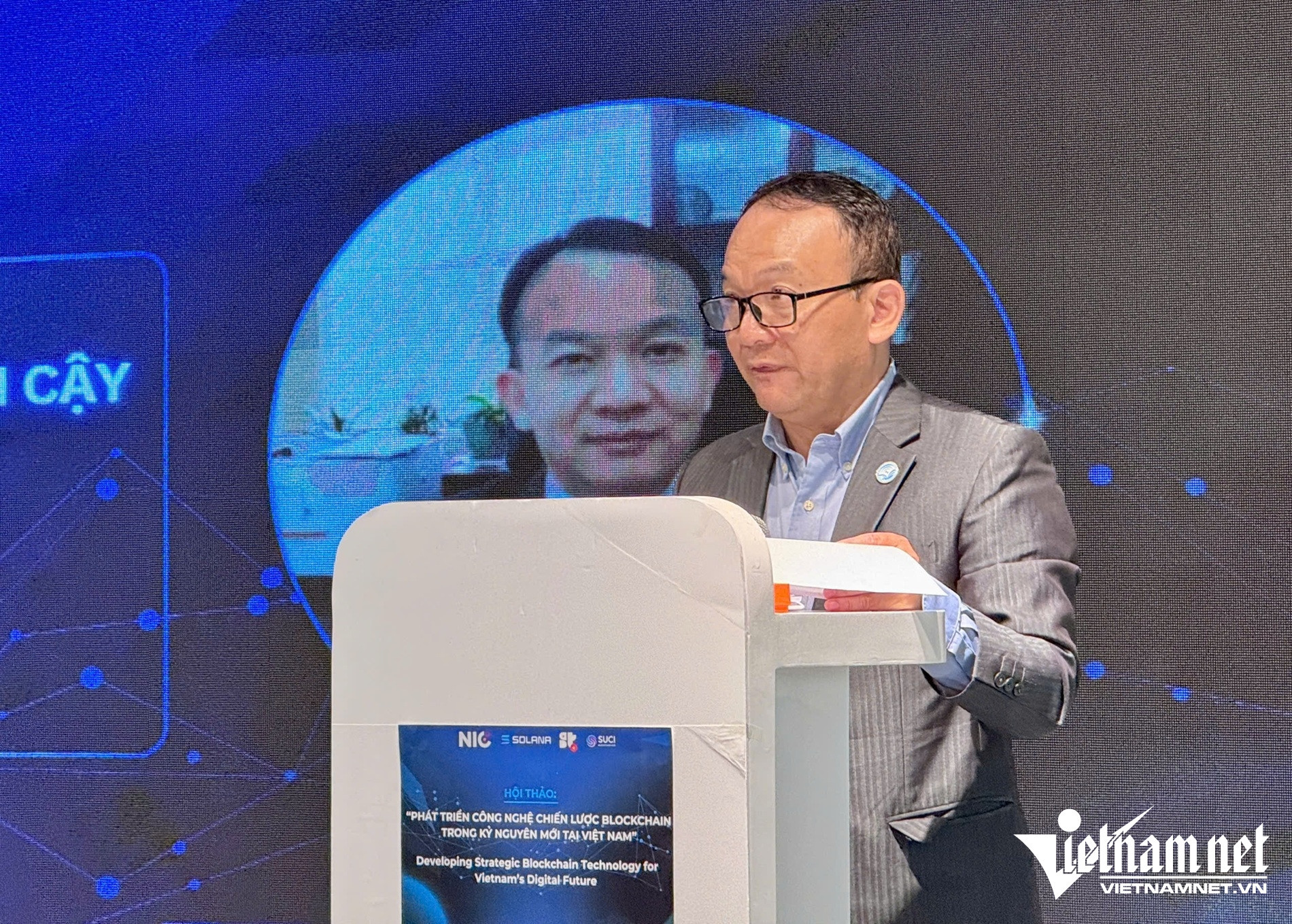
Speaking at the recent seminar “Developing strategic blockchain technology in Vietnam’s new era,” co-hosted by the National Innovation Center (NIC) and the Ministry of Finance on August 2, Nguyen Thanh Tuyen, Deputy Director General of the Department of IT Industry (Ministry of Science and Technology), emphasized blockchain’s growing practical applications in Vietnam’s economy.
In agriculture and exports, blockchain enables transparent product traceability - from Central Highlands coffee to Mekong Delta shrimp - enhancing the global value of Vietnamese produce.
In finance and banking, it reduces intermediary costs while increasing speed and security for transactions. In securities, blockchain supports instant settlement (T+0), digital securities issuance, and improved oversight and fraud prevention.
In supply chain and logistics, it allows transparent tracking from production to consumption, cutting costs and losses.
In public administration, blockchain enhances integrity and transparency, curbs corruption, and reduces bureaucratic procedures - key to building a modern and ethical digital government.
National strategy and legal framework take shape

Vietnam has enacted a National Strategy for Blockchain Development through 2025 with a vision toward 2030, aiming to establish the country as a regional leader in blockchain research and application.
Key goals include developing at least 20 reputable regional blockchain brands and setting up three blockchain testing centers in Hanoi, Ho Chi Minh City, and another province.
Concurrently, the new Law on Digital Technology Industries will, for the first time, regulate digital and tokenized assets, clearly defining ownership rights, business conditions, and data security requirements.
This marks a major step toward a transparent legal environment that encourages blockchain-based research, development, and business innovation.
One standout initiative is Vietnam’s vision of becoming an “on-chain nation” – a digitally governed country powered by transparent, decentralized infrastructure.
Vietnam will also introduce a regulatory sandbox model to support innovation while managing risks effectively.
Countries like South Korea, the UAE, and China have successfully integrated blockchain into sectors ranging from education and healthcare to public governance and finance.
In Dubai, blockchain digitization of public records has saved an estimated $1.5 billion annually. China has developed its national blockchain infrastructure (BSN) and digital currency (e-CNY), while South Korea has applied blockchain in education, healthcare, and smart city development in Sejong.
These global models provide valuable inspiration as Vietnam adapts blockchain to its own socioeconomic conditions - particularly in agriculture, traceability, finance, e-commerce, and public administration.
According to Vo Xuan Hoai, Deputy Director of NIC, blockchain is a core technology driving competitiveness and digital sovereignty. Vietnam is proactively crafting supportive regulatory frameworks and incentives to fuel innovation.
“Blockchain is a foundational technology that strengthens national competitiveness and digital sovereignty,” Hoai said, adding that NIC will continue creating favorable policy environments for sustainable, healthy development of new technologies.
Meanwhile, Nguyen Thanh Tuyen reiterated that Vietnam lacks neither vision nor technological capability. The challenge now is to transition from awareness to action - by investing in digital infrastructure, localizing blockchain technology, scaling real-world pilot projects, and building real value chains.
“Blockchain is not just a trend - it’s a fundamental infrastructure for transparency, anti-corruption, supply chain optimization, agricultural value enhancement, and innovation,” he stressed. “If we act quickly and build the right legal corridors, blockchain can absolutely become a strategic pillar in Vietnam’s digital economy and national digital sovereignty.”
He urged businesses, banks, and research organizations to collaborate with the Ministry of Science and Technology to establish Vietnam as a regional blockchain hub.
“Vietnam has the vision, policies, and a young, creative tech talent pool. Now is the time to shift from awareness to action, from strategy to implementation. Blockchain is not just a technology - it’s an opportunity and a part of the future of Vietnam’s digital economy,” he concluded.
Du Lam
.svg)
