 Vietnamnet.vn

 Podcast


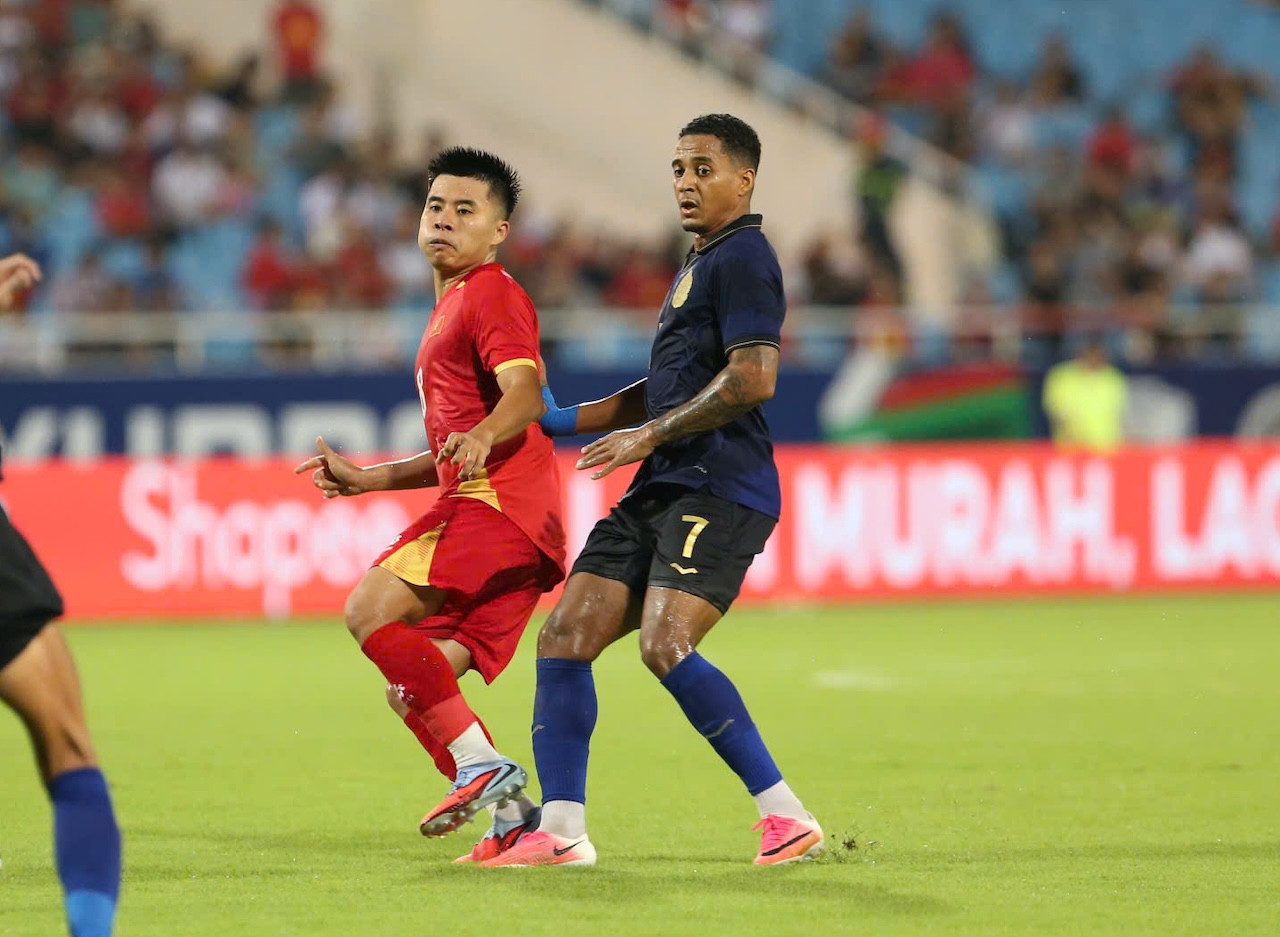
A midfield out of balance
Questions about the balance of Vietnam's midfield had emerged well before the team's disappointing FIFA ASEAN Cup 2026 campaign. The warning signs were already there during the ASEAN Cup, when Kim Sang Sik's side successfully defended their title.
Vietnam have no shortage of midfielders capable of creating attacking opportunities or dictating the tempo of a match. What they lack is sufficient ball-winning ability and defensive support in front of the back line, making it difficult for Kim to build a truly effective midfield unit.
That imbalance made several of Vietnam's victories at the ASEAN Cup more nerve-racking than they needed to be. Subsequent defeats to Thailand and Malaysia at the FIFA ASEAN Cup only deepened the coach's concerns.
Vietnam enjoyed plenty of possession but struggled to turn it into effective attacks. When opponents counterattacked, dangerous gaps quickly appeared. The first goal conceded against Thailand offered a particularly clear illustration.
Without enough control in midfield, the defense came under greater pressure, while the forwards were frequently left relying on long balls or individual efforts to create chances.
Of course, Vietnam's FIFA ASEAN Cup defeats cannot be blamed entirely on the midfielders. Yet their contribution remains impossible to overlook, particularly when the squad has an abundance of creative players but lacks a genuine ball-winning midfielder to operate alongside Hoang Duc.
What Kim Sang Sik needs to do
Kim has almost certainly been aware of these problems for some time and has experimented with different combinations in an attempt to restore balance to his midfield.
However, moving Hoang Hen and then Tai Loc into deeper positions produced little improvement. An experiment with Quang Vinh also failed to deliver the desired results, leaving the South Korean coach to rely on Hoang Duc and Thanh Long as his central midfield pairing.
To his credit, Thanh Long has performed reasonably well in supporting attacks alongside Hoang Duc. Defensively, however, he has yet to provide the kind of security that Doan Ngoc Tan offered during the ASEAN Cup two years earlier.
This has also prevented Hoang Duc from fully expressing his creativity. He has had to shoulder several responsibilities at once, controlling the tempo, helping protect the defense and moving the ball forward.
Looking ahead, Kim must not only identify another player capable of supporting Hoang Duc or partnering Thanh Long but also address a broader tactical problem.
He needs to establish a clear vision for how Vietnam should operate in midfield, rather than simply selecting players in good form and hoping they will develop an understanding on the pitch.
Vietnam still need to experiment with personnel, especially given that the 2027 Asian Cup will present a much higher standard of competition than regional tournaments.
But those experiments must help answer a fundamental question: how can the midfield function as a cohesive unit that controls matches, sustains attacking pressure and keeps the defensive structure organized?
It is far from a simple challenge. Kim must now demonstrate a clearer tactical identity and greater adaptability with the national team, rather than continuing to struggle whenever a particular player is unavailable.
Duy Nguyen

