 Vietnamnet.vn

 Podcast



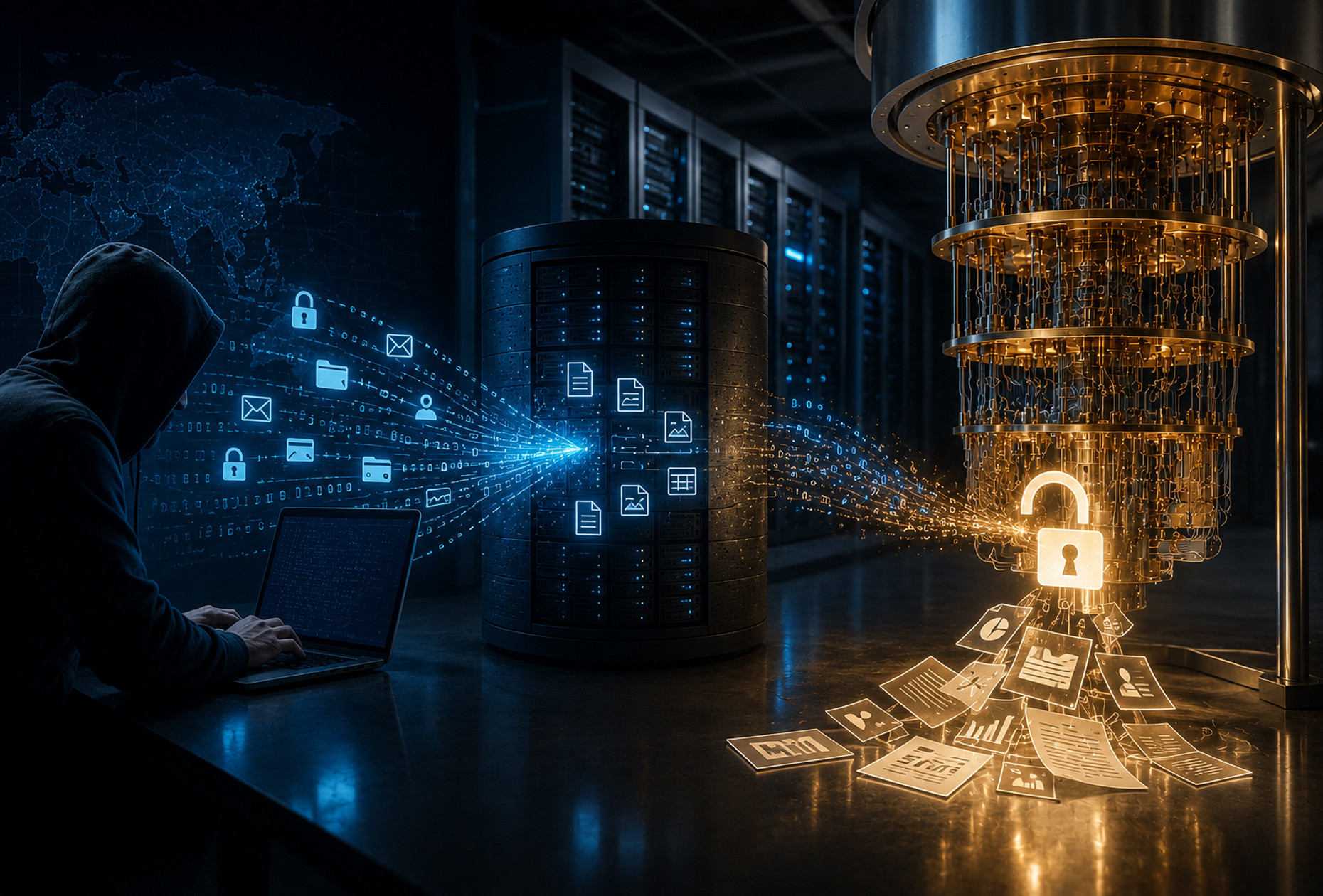
The concern centers on a strategy known as "Harvest Now, Decrypt Later" (HNDL), in which hackers or state-sponsored cyber espionage groups quietly collect encrypted data today, store it for years without using it, and wait until quantum computing becomes powerful enough to break today's widely used encryption algorithms.
The "harvest now, decrypt later" strategy
Experts say the greatest cybersecurity concern is not that quantum computers will immediately defeat existing encryption systems, but that organizations and businesses may have their data stolen long before they realize the true consequences.
Unlike conventional cyberattacks, where the damage often occurs shortly after a breach, the quantum era introduces a delayed threat. Sensitive digital assets may already have been copied and archived by attackers, only to be decrypted years later when quantum technology reaches the necessary level of maturity.
Information with long-term value is expected to become the most attractive target. This includes proprietary technologies, product designs, manufacturing formulas, research and development (R&D) data, customer records, commercial contracts, financial information and strategic business documents. For many organizations, such information can remain valuable for decades.
The risk also extends beyond individual companies. As businesses become increasingly interconnected with suppliers, financial institutions, government agencies and other partners through digital platforms, a breach at a single point in the supply chain could expose sensitive information belonging to multiple organizations.
Experts therefore warn that quantum-related cyber risks could spread across entire digital ecosystems rather than affecting only isolated companies.
While quantum computing promises revolutionary advances in computational capability, it also introduces unprecedented cybersecurity challenges. Specialists argue that Vietnam must prepare early to avoid being caught unprepared.
Vietnam cannot afford to stay on the sidelines
Quantum technology is increasingly viewed as one of the world's most strategic emerging technologies, with the potential to reshape science, technology and the global economy over the coming decades.
However, it is also among the most technically demanding fields, requiring long-term investment in scientific research, technology development, infrastructure and workforce training.
According to Tran Hong Thai, President of the Vietnam Academy of Science and Technology, many quantum research directions worldwide remain in the experimental stage and are not yet ready for widespread commercial deployment.
Even so, he stressed that Vietnam cannot afford to remain outside the global race. Early participation in quantum research and development will allow the country to gradually master core technologies instead of relying solely on imported solutions once the technology matures.
Quantum computing could challenge today's encryption
Beyond creating new opportunities, quantum computing also poses significant challenges to modern cybersecurity.
Tran Hong Thai noted that once sufficiently powerful quantum computers become available, many of today's commonly used cryptographic systems may no longer provide adequate protection. The greatest concern is that sensitive information could already be collected today and stored until future quantum machines are capable of decrypting it.
According to Senior Colonel Nguyen Hong Quan, Deputy Director of the Department of Cybersecurity and High-Tech Crime Prevention (A05) under Vietnam's Ministry of Public Security, digital transformation is rapidly making digital technologies the foundation of modern society. At the same time, cyberattacks are becoming increasingly sophisticated, larger in scale and more transnational.
He said cybercriminal groups are already using artificial intelligence to conduct fraud, impersonation, malware distribution and highly targeted attacks against government agencies, businesses and individuals.
Against this backdrop, the rapid development of quantum computing creates an additional layer of risk for traditional cybersecurity systems. Many encryption methods currently in widespread use may eventually prove incapable of protecting sensitive information against future quantum computing capabilities.
Nguyen Hong Quan argued that Vietnam must look beyond today's cyber threats and begin preparing the country's cybersecurity capabilities for the post-quantum era.
Echoing that view, Major General Nguyen Tung Hung, Deputy Commander of the Cyber Warfare Command under the Ministry of National Defence, said the world is entering an era defined by artificial intelligence and quantum technologies.
He warned that Vietnam must also prepare for the possibility that countries possessing advanced quantum capabilities could employ "Harvest Now, Decrypt Later" strategies.
According to Hung, government agencies, cybersecurity forces and businesses should begin adopting new security approaches, investing in post-quantum cryptography, and strengthening national cyber defense capabilities to safeguard Vietnam's digital infrastructure in the years ahead.
Thai Khang
.svg)
