 Vietnamnet.vn

 Podcast


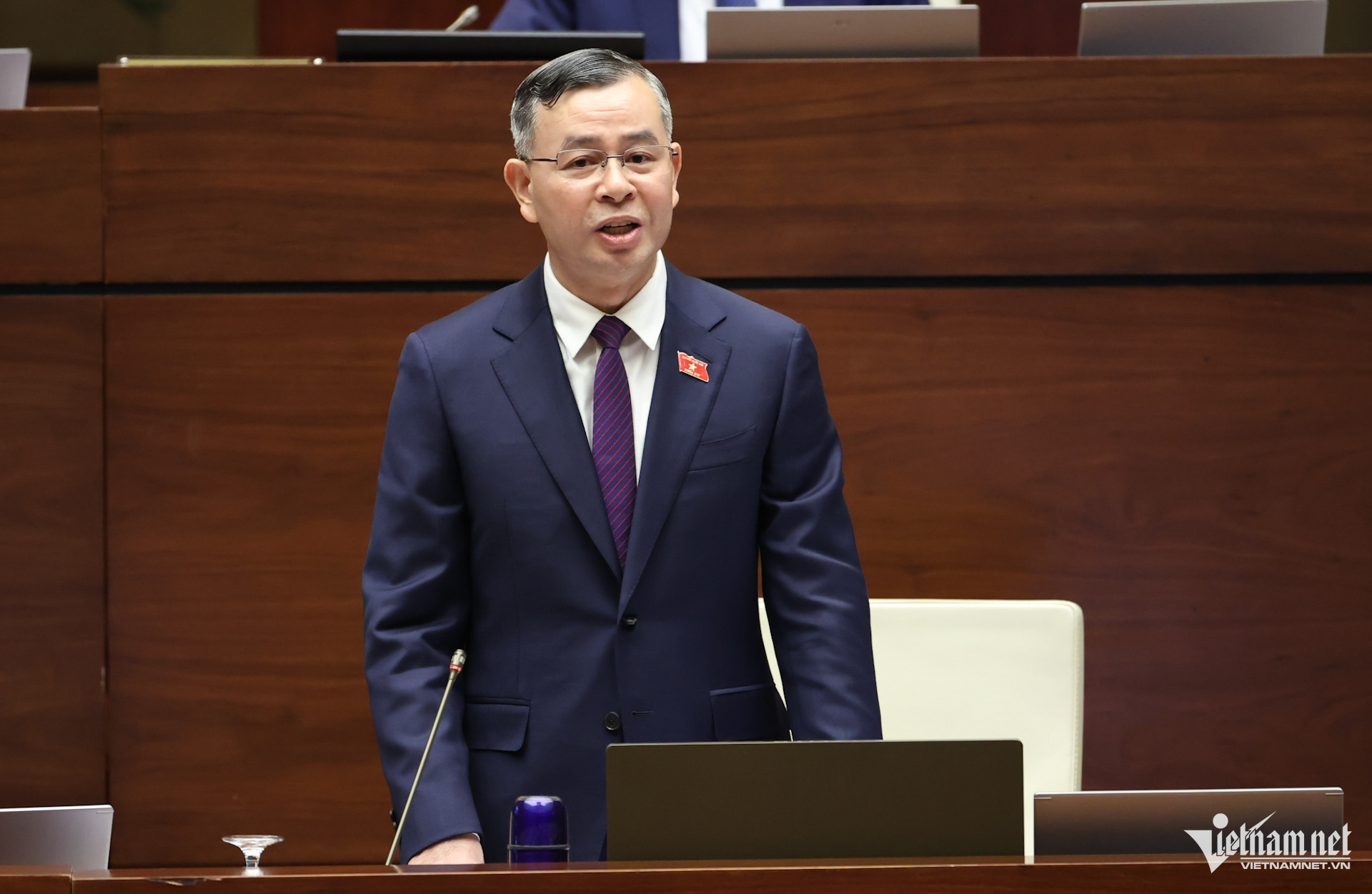
At a National Assembly question-and-answer session on November 12, lawmakers pressed Finance Minister Ngo Van Tuan on tax administration, fraudulent invoices, e-commerce taxation and delays in tax refunds.
Deputy Ha Duc Minh of Lao Cai province said voters remained concerned about illegal invoice trading despite the nationwide rollout of electronic invoices. He asked the minister to explain the causes and clarify the tax authorities' responsibility for monitoring and supervising their use.
Tuan acknowledged that fraudulent businesses, including shell companies, continued to exploit the system to trade invoices illegally.
According to the minister, tax authorities issued and circulated more than 10 billion invoices in the first 10 months of 2026, including 5.2 billion electronic invoices and 5.5 billion paper invoices.
He said the Ministry of Finance would expand the use of digital technology and work with the Ministry of Public Security's A05 Department to verify the identities of individuals registering as business owners.
Tax authorities will also strengthen inspections of companies' actual operations, particularly in high-risk sectors and among businesses considered vulnerable to tax fraud.
Alongside improvements to regulations and public awareness of tax laws, enforcement measures will be stepped up to curb illegal invoice trading, he said.
E-commerce tax revenue reaches VND241 trillion
Deputy Ma Thi Thuy of Tuyen Quang province raised concerns that tax policies were struggling to keep pace with the rapid growth of e-commerce, potentially resulting in lost government revenue.
She also warned that inflexible tax administration could increase compliance costs for household businesses and small enterprises.
Thuy asked the minister how Vietnam planned to ensure fair tax obligations for businesses operating on digital platforms, including foreign suppliers, while reducing administrative burdens on smaller operators.
Tuan said Vietnam's e-commerce sales were growing by an average of around 20% annually, making the country Southeast Asia's second-fastest-growing e-commerce economy.
By the end of 2025, Vietnam's e-commerce sales had reached approximately $37 billion, he said.

Tax revenue from e-commerce activities totaled VND241 trillion (approximately $9.2 billion) in the first 10 months of 2026, up around 42% year on year.
The tax authorities currently manage information on more than 140,000 businesses and over one million household and individual online sellers.
According to Tuan, the authorities are focusing on identifying market participants and collecting transaction data to improve oversight.
He emphasized the need to closely monitor sellers, key opinion leaders (KOLs), key opinion consumers (KOCs), e-commerce platforms and supporting service providers, including payment companies, logistics operators and delivery workers.
The ministry plans to strengthen the responsibility of digital platforms and service providers for withholding, collecting and remitting taxes on behalf of sellers.
Where a platform has already paid taxes on behalf of a household or individual seller, that seller will not be required to pay the same tax again.
Tax authorities will also connect their databases with agencies overseeing e-commerce and cybersecurity, as well as payment and logistics providers.
Tuan said better data sharing would allow businesses to declare and update their information only once while enabling authorities to trace transactions through electronic wallets and verified bank accounts.
About 2.5 million tax identification numbers still need review
Deputy Hoang Ngoc Dinh of Tuyen Quang province cited a report from the Tax Department showing that more than 2.5 million tax identification numbers still required review and data standardization.
Some of the businesses involved had reportedly ceased operating at their registered addresses decades earlier.
Dinh asked the minister to clarify the Ministry of Finance's responsibility for the backlog and explain how it would be resolved.
Tuan said tax authorities had cleaned up records associated with 777,000 tax identification numbers since the beginning of the year.

However, approximately 2.5 million tax identification numbers remain under two categories: businesses that have ceased operations and those no longer operating at their registered addresses, corresponding to tax status codes 03 and 06.
The minister described the cleanup as mandatory, noting that its outcome could influence whether Vietnam is removed from an international tax cooperation monitoring list during an OECD assessment scheduled for the second quarter of 2028.
He said he had signed a proposal on the evening of November 11 requesting that the National Assembly Standing Committee add procedures for cleaning up tax identification records to the current legislative session.
Under the proposal, the Ministry of Finance would consider writing off certain outstanding financial obligations of businesses and household enterprises that have ceased operations.
These include business license fees incurred before January 1, 2026, when the fee was abolished, as well as outstanding penalties and late-payment charges.
Once those obligations have been addressed, tax authorities would close the relevant tax identification numbers to prevent them from being misused for tax evasion or other fraudulent activities.
Thousands of citizens affected by fraudulent business registrations
Deputy Duong Minh Tuan of Ho Chi Minh City raised concerns about approximately 4,000 citizens whose personal information had allegedly been misused to register businesses, establish companies, issue invoices and evade taxes.
He said some affected individuals had subsequently faced enforcement measures by tax authorities, seriously affecting their freedom of residence, employment opportunities and personal reputations.
The lawmaker called for clear accountability, effective remedies and a timetable for resolving the cases to prevent prolonged injustices.
Responding, Finance Minister Ngo Van Tuan said a review had identified approximately 8,000 outstanding cases in which citizens' personal documents had been misused to establish businesses.
He explained that the companies involved had been established many years ago, when information technology was less developed and tax and police databases were not interconnected.
According to the minister, improvements in digital technology and data sharing between government agencies have since prevented new cases of fraudulent business registration using stolen identity information.
For the outstanding cases, the Ministry of Finance will continue working with the Ministry of Public Security to verify information and review the businesses involved.
Tuan also urged citizens to take greater care in protecting their personal information.
Finance minister addresses responsibility for delayed tax refunds
Deputy Tran Anh Tuan of Ho Chi Minh City questioned the fairness of tax refund procedures, pointing out that businesses face a late-payment charge of 0.03% per day when they fail to pay taxes on time.
He noted that Vietnam's 2019 Law on Tax Administration required the state to pay interest at the same rate for delayed tax refunds, but the provision was no longer included in the 2025 law.
The lawmaker asked whether the minister supported the principle that the state should pay interest on delayed refunds at the same rate imposed on businesses for late tax payments.
Responding, Tuan emphasized that responsibility should rest with whoever was at fault.
He said that when taxpayers had submitted complete and valid applications but tax officials failed to process them, the officials concerned should be held accountable, potentially including financial compensation for affected citizens.
"We will carefully study this issue in the coming period. The principle is that whoever is at fault must bear responsibility. If the fault lies with the state or tax officials, those officials must be held accountable under the principle of equality before the law," the minister said.
National Assembly questions finance and technology ministers
Under the agenda for its second session, Vietnam's 16th National Assembly allocated November 12 to questioning ministers on two major areas: finance and science and technology.
Finance Minister Ngo Van Tuan was tasked with addressing four main issues: the management and effective use of public investment capital; the mobilization and use of official development assistance (ODA); tax administration aimed at ensuring fair competition and preventing revenue losses in e-commerce; and resource mobilization to support the country's double-digit economic growth target.
The session also reviewed implementation of Resolution No. 263, dated December 11, 2025, concerning the National Assembly's thematic supervision and questioning resolutions from its 14th and 15th terms.
Over nearly a year, ministries and government agencies have made progress in improving financial and investment policies, issuing a list of shared national digital platforms and standardizing mobile subscriber information.
Work remains underway on developing capital markets, expanding credit for priority sectors, improving databases, reforming salaries and addressing complaints and denunciations.
Thanh Hue

