 Vietnamnet.vn

 Podcast



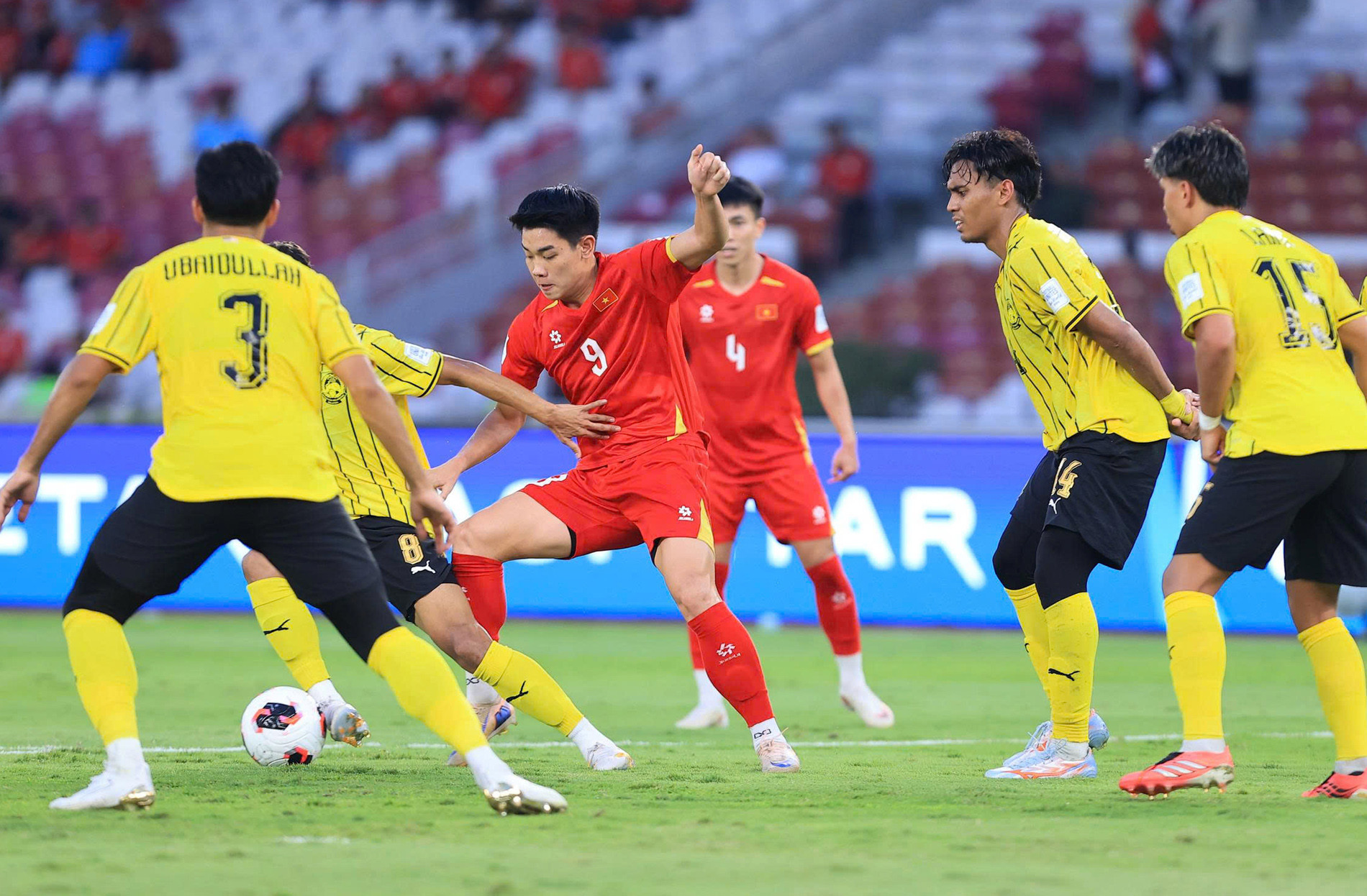
Vietnam's campaign ended with a 1-0 defeat to Malaysia in the third-place playoff at Gelora Bung Karno on Oct. 5, their first loss to the Malaysians in an official competition in 12 years.
Fergus Tierney scored the only goal in the 62nd minute, securing third place for Malaysia and leaving Vietnam fourth after an uneven tournament marked by injuries, fatigue and problems converting chances.
Vietnam had more possession and twice as many attempts as Malaysia, but those numbers concealed their biggest weakness.
According to statistics cited by Thai newspaper Thairath, Vietnam had 51% possession and attempted 14 shots, with only four on target. Malaysia produced seven attempts but put three on target.
That meant Vietnam converted only around 29% of their attempts into shots on target, compared with almost 43% for Malaysia.
It was a familiar problem. Against Thailand earlier in the tournament, Vietnam had managed just four shots on target from 12 attempts, while Thailand put seven of their nine efforts on target.
Without striker Nguyen Xuan Son, Vietnam struggled to turn periods of territorial dominance into goals.
They started brightly against Malaysia, with young attackers Khoa Ngo and Minh Hoang playing energetically and midfielders Nguyen Hoang Duc and Nguyen Thanh Long providing a platform behind them. But the attack lacked the cutting edge normally offered by Xuan Son or Nguyen Dinh Bac.
After Tierney put Malaysia ahead, Kim introduced Dinh Bac as Vietnam pushed for an equalizer. Much of the final half-hour was played in Malaysia's half, but the pressure produced little reward.
Malaysia dropped deep and defended in a compact block, forcing Vietnam toward the flanks. Crosses repeatedly failed to find their target, while attempts from outside the penalty area were often rushed or inaccurate.
Malaysia, by contrast, created fewer opportunities but posed a greater threat when they did attack.
Tierney's winner illustrated the difference. Vietnam failed to close him down effectively before the naturalized Scotland-born player turned and finished past goalkeeper Patrik Le Giang.
Vietnam thought they had been given an opportunity to equalize in the 72nd minute when Le Van Do went down in the penalty area following a challenge from Harith Haiqal.
The referee initially awarded a penalty but reversed the decision after reviewing the incident on the VAR monitor, ruling that the Malaysian defender had played the ball first.
Kim refused to blame the officiating.
"Overall, I think the referee did a good job," he said. "We have some regrets, but we don't blame the referee for the defeat. I think we lost because we still have shortcomings."
The South Korean coach instead accepted responsibility for Vietnam's disappointing tournament.
"I want to apologize to everyone," Kim said. "The result did not meet the expectations of Vietnamese supporters. As head coach, I feel a great responsibility."
Kim pointed to fatigue after a demanding period for his players but acknowledged that the team needs improvement before its next major challenge.
"I have to find more players, develop the younger ones and give them opportunities to play and mature," he said. "Then we can build a national team with a better combination of generations. Competition will make Vietnam stronger."
Injuries expose Vietnam's attacking problem
Vietnam's injury problems became one of the defining themes of their campaign.
The most damaging absence was Xuan Son, who left the tournament just as Vietnam approached their important meeting with Thailand.
Vietnamese football commentator Quang Huy described the striker's injury as his biggest regret of the tournament.
Although Xuan Son had not been in his best form, Huy said he remained Vietnam's leading center-forward and his absence immediately changed the team's attacking threat.
The problem was particularly evident against Thailand and Malaysia. Vietnam were still able to construct attacks and apply pressure, but lacked a striker capable of turning that pressure into goals.
"Against Thailand, Vietnam lost, but the way the team attacked and pushed Thailand back was something viewers could enjoy," Huy said. "There were also periods against Malaysia when Vietnam applied pressure in a very organized way. But we lacked a top center-forward."
The commentator believes the tournament nevertheless offered valuable experience for younger forwards such as Khoa Ngo and Minh Hoang.
Dinh Bac remains one of Vietnam's most promising attacking players, but Huy cautioned against expecting him to perform at his peak in every match after competing in two consecutive tournaments.
Goalkeeper Patrik Le Giang offered a similar assessment of the campaign.
Playing despite needing two stitches in his arm, Patrik said representing the national team mattered enough that he would have been prepared to play "with one arm."
But he acknowledged that injuries had taken a significant toll on the squad.
"Our biggest challenge was the number of injuries," Patrik said. "We lost many players, and that left the team short of energy."
He nevertheless saw one positive consequence: replacement players were given opportunities and demonstrated that they could contribute at international level.
Hoang Duc also rejected injuries as an excuse, saying players who stepped in for absent teammates performed their roles well.
He acknowledged his own shortcomings during the tournament and said Vietnam must return as a more cohesive side.
"I hope Vietnam will become more connected and coherent, with a clearer style of play, so that we can come back stronger," he said.
Malaysia end a 12-year wait
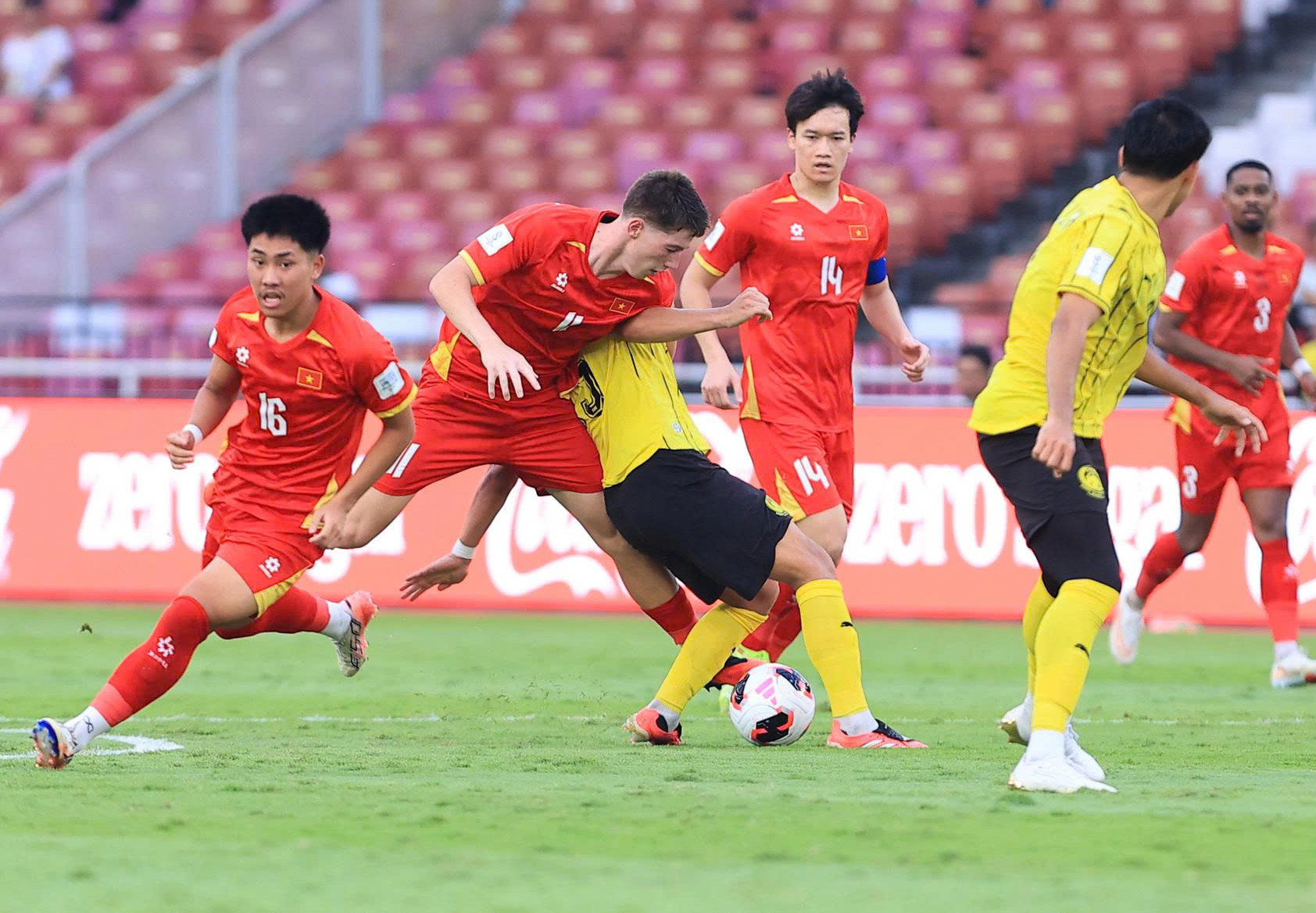
For Malaysia, the result carried significance beyond a third-place finish.
It was their first victory over Vietnam in 12 years, ending a long winless run against one of their major Southeast Asian rivals.
Malaysia coach Tan Cheng Hoe attributed the victory to unity, discipline and commitment after a demanding schedule.
"We knew we had to play four matches in a short period, and they were all very difficult games," Tan said. "Fitness was therefore a challenge. But mentally, we stayed together and fought together. This was a good opportunity to get a positive result and beat Vietnam after more than 10 years."
Tan said Malaysia's players had competed as a unified group and described the squad as a family with a shared desire to win.
The result was celebrated by Malaysian supporters, although many acknowledged how difficult Vietnam had made the match.
Regional reaction also reflected how Southeast Asian football has become increasingly competitive.
Some supporters viewed Malaysia's victory as evidence that the traditional gaps between Vietnam, Thailand, Malaysia and Indonesia are narrowing.
Huy reached a similar conclusion, arguing that Vietnam can no longer consider themselves clearly superior to their regional rivals.
"Vietnam are not ahead of Thailand or opponents such as Indonesia and Malaysia," he said. "Competitions like this help football across the region develop together."
A different Vietnam under Kim Sang Sik
Despite the fourth-place finish, Huy believes there are reasons to remain positive about the direction of the national team.
He sees a tactical difference between Kim's Vietnam and the side previously coached by Park Hang Seo.
Under Park, Vietnam were often prepared to retreat, absorb pressure and make avoiding goals the first priority. Kim has sought a more open approach, with greater tactical flexibility and more ways of attacking.
That evolution carries risks, particularly when Vietnam lack an elite center-forward to finish the moves the system creates.
But Huy believes the approach offers potential.
Vietnam's ability to transition quickly remains a strength, while the return of the domestic V-League could reveal additional players capable of competing for national-team places.
Xuan Son is also expected to return to the attack, while young players who gained experience at the FIFA ASEAN Cup will have further opportunities to develop.
Kim now has time to reassess his squad and refine his ideas ahead of the 2027 Asian Cup, Vietnam's next major target.
"We still have many reasons to be optimistic about the future," Huy said. "The more competition there is in Southeast Asia, the better, because Vietnam's goal is to reach a higher level."
Hoang Duc echoed that message.
Vietnam are expected to regroup in November, and the midfielder believes the lessons from the FIFA ASEAN Cup can provide the foundation for a stronger team.
For a side that finished the tournament with defeats to both Thailand and Malaysia, fourth place was clearly below expectations.
But the tournament also clarified what Vietnam need: greater depth, more competition for places, healthier key players and, above all, more efficiency in front of goal.
The disappointment in Indonesia may therefore prove useful if Vietnam can turn those lessons into progress before the 2027 Asian Cup.
Dai Nam - Ngoc Huy - Duy Nguyen - An Nhi
.svg)
