 Vietnamnet.vn

 Podcast



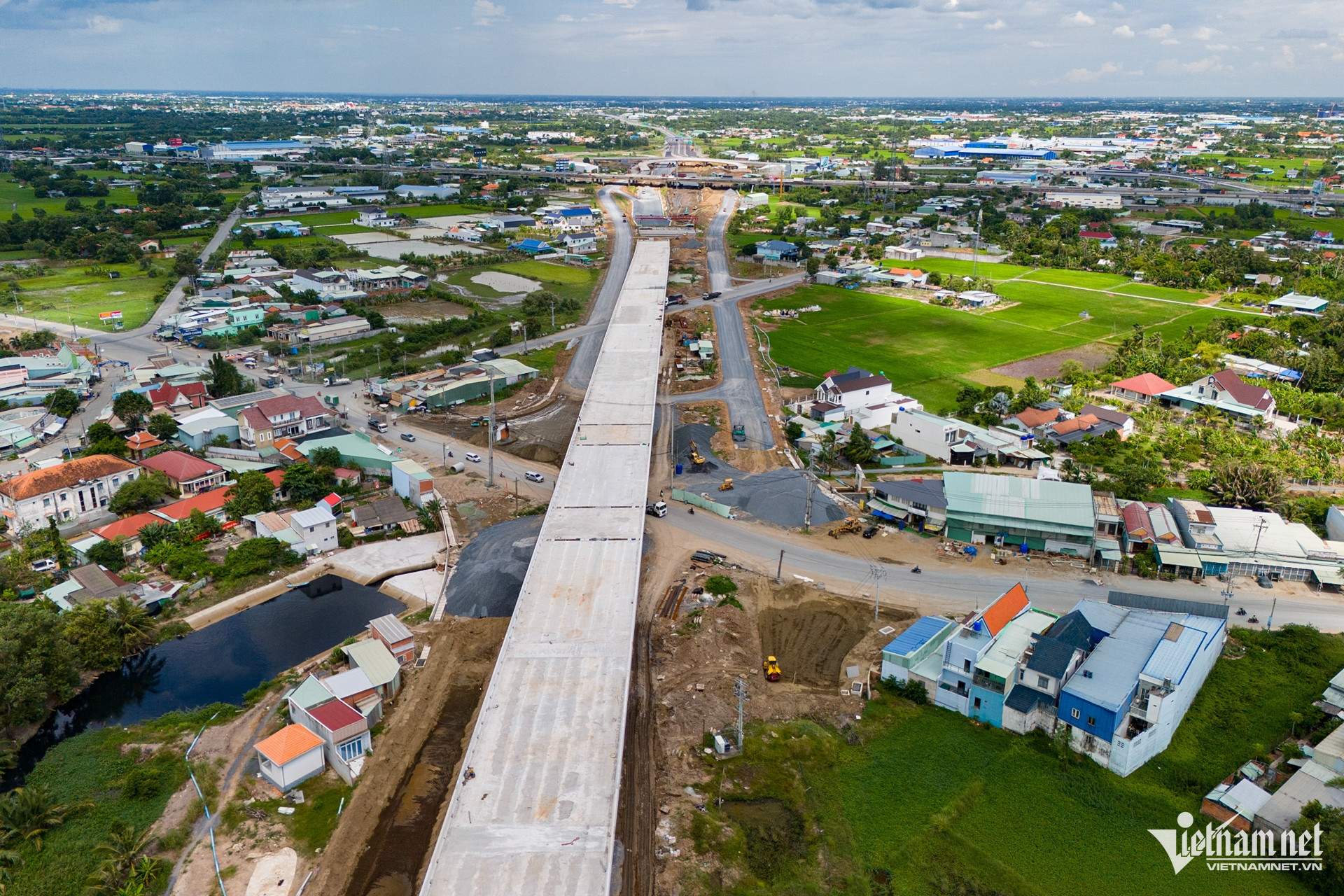
Prime Minister Pham Minh Chinh has signed a decision to form eight task forces headed by government leaders to address challenges in investment, production, trade, infrastructure development, and social housing, aiming to exceed 8% GDP growth in 2025 and reach double-digit growth in the years to follow.
These task forces are tasked with accelerating public investment disbursement, unlocking economic bottlenecks, and driving forward national target programs and key infrastructure projects.
According to the decision, each task force will be responsible for specific ministries, sectors, and localities:
Task Force 1
Led by Prime Minister Pham Minh Chinh
Responsible for Hanoi, Ho Chi Minh City, and Can Tho.
Task Force 2
Led by Standing Deputy Prime Minister Nguyen Hoa Binh
Oversees central agencies including the National Assembly Office, Government Office, Supreme People's Court, Supreme People's Procuracy, Ministry of National Defense, Ministry of Public Security, Ministry of Home Affairs, Government Inspectorate, and Vietnam Cooperative Alliance.
Also monitors: Thua Thien Hue, Da Nang, Quang Ngai, Gia Lai, Bac Ninh.
Task Force 3
Led by Deputy Prime Minister Tran Hong Ha
Oversees the Ministry of Agriculture and Environment, Ministry of Construction, Central Party Office, President’s Office, and mass organizations such as the Vietnam Fatherland Front, Farmers' Union, General Confederation of Labor, Women's Union, and Ho Chi Minh Communist Youth Union.
Monitors: An Giang, Ca Mau, Dong Thap, Vinh Long.
Task Force 4
Led by Deputy Prime Minister Le Thanh Long
Oversees the Ministry of Justice, Ministry of Education and Training, Ministry of Health, and major cultural and legal associations.
Monitors: Dak Lak, Khanh Hoa, Lam Dong.
Task Force 5
Led by Deputy Prime Minister Ho Duc Phoc
Oversees the Ministry of Finance, State Bank of Vietnam, Vietnam Development Bank, Vietnam Bank for Social Policies, and the State Audit Office.
Monitors: Dong Nai, Hung Yen, Quang Ninh, Hai Phong.
Task Force 6
Led by Deputy Prime Minister Bui Thanh Son
Oversees the Ministry of Foreign Affairs, Ministry of Industry and Trade, and Vietnam Electricity (EVN).
Monitors: Tuyen Quang, Cao Bang, Lang Son, Thai Nguyen, Phu Tho.
Task Force 7
Led by Deputy Prime Minister Nguyen Chi Dung
Oversees the Ministry of Science and Technology, Vietnam Academy of Science and Technology, Vietnam Academy of Social Sciences, and national science-technology associations.
Monitors: Ninh Binh, Thanh Hoa, Nghe An, Ha Tinh, Quang Tri.
Task Force 8
Led by Deputy Prime Minister Mai Van Chinh
Oversees the Ministry of Culture, Sports and Tourism, Committee for Ethnic Minority Affairs and Religion, Ho Chi Minh National Academy of Politics, Vietnam News Agency, Voice of Vietnam, and Vietnam Television.
Monitors: Tay Ninh, Dien Bien, Lai Chau, Son La, Lao Cai.
Each task force will include vice heads from the Ministry of Finance and members from relevant ministries and agencies. The Ministry of Finance will also serve as the permanent secretariat.
Public accountability for low public investment disbursement
A key feature of this initiative is the public listing of ministries, sectors, and localities with low public investment disbursement rates on the National Public Investment Information System and the Ministry of Finance’s portal.
The task forces are assigned to review and analyze barriers, propose solutions, and urge the implementation of projects, especially major infrastructure and public investment programs. They will assess progress toward the government’s 2025 GDP growth target of over 8%, and double-digit growth in the following years.
They are also tasked with identifying and evaluating leadership responsibilities related to delays in investment disbursement and difficulties in business, trade, infrastructure development, social housing, and national programs.
The task forces are empowered to request reports, data, and cooperation from relevant ministries, agencies, and localities. Each task force leader will devise a work plan that specifies problems, authority, and timelines, adhering to the principle of "six clears": clear personnel, clear tasks, clear deadlines, clear responsibility, clear outputs, and clear authority.
Thanh Hue
.svg)
