 Vietnamnet.vn

 Podcast



According to the Import-Export Department under the Ministry of Industry and Trade, Vietnam's fruit and vegetable exports were estimated at USD 2.98 billion in the first five months of this year, up 29.4% compared to the same period in 2025.
Statistics also show that the share of processed products increased from 29.33% in the first four months of 2025 to 35.82% during the same period in 2026, helping reduce dependence on the seasonal nature of fresh fruit.
Meanwhile, products exported through official channels under bilateral protocols with China continued to record stable growth.
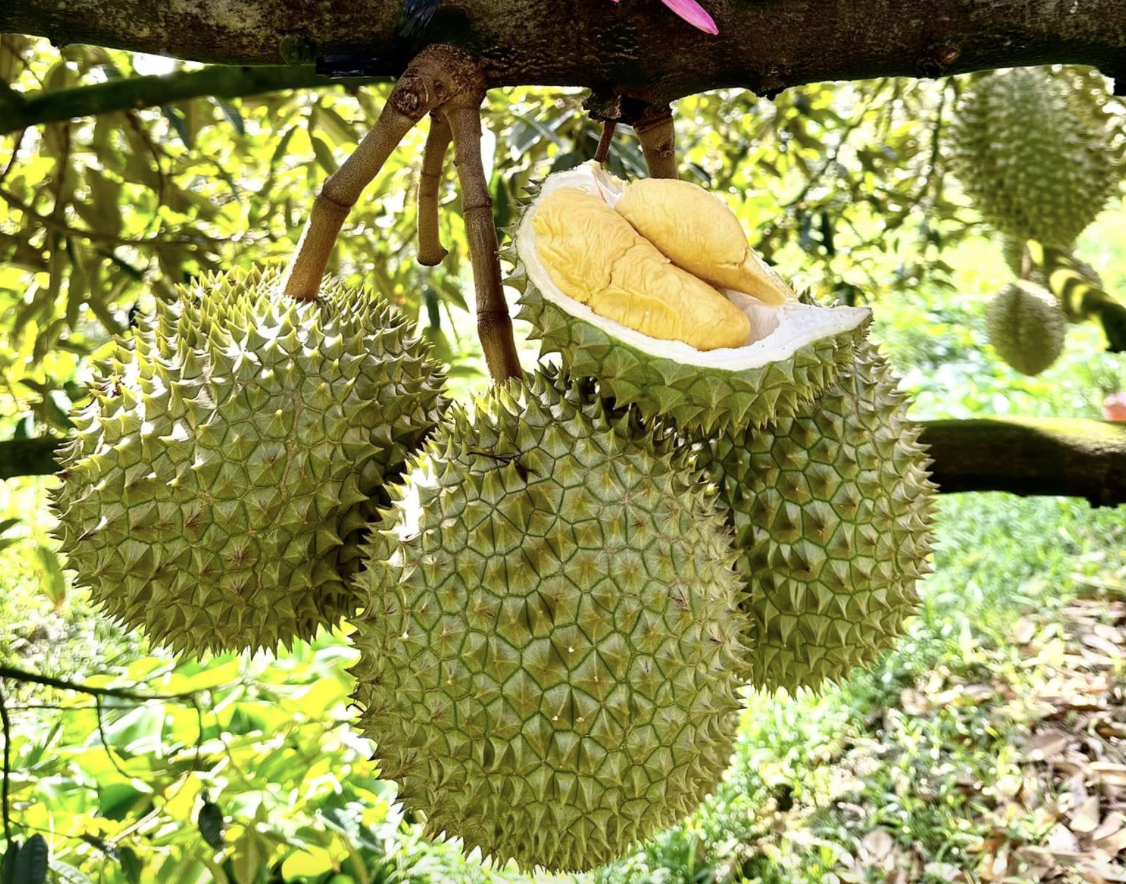
Fresh and frozen durian remained the industry's leading export category, accounting for 14.26% of total fruit and vegetable export value. Vietnam's durian exports surged 59.7% year-on-year to USD 293.13 million in the first four months of 2026.
China remains the largest buyer of Vietnamese fruit and vegetables, accounting for 49.5% of the sector's total export value during the first four months of this year.
Notably, according to the China Agricultural Outlook Report 2026-2035, consumer demand in the market has become increasingly segmented following the Lunar New Year spending peak.
While demand for some mainstream products has slowed, tropical fruits such as durian, fresh coconut and jackfruit - categories in which Vietnam has strong production capacity - along with premium fruits such as blueberries, remain highly popular among consumers.
As a result, China's demand for high-quality imported tropical fruits continues to grow strongly.
In the first four months of 2026, China's imports of fruit, vegetables and processed products reached USD 8.04 billion, up 3.7% year-on-year. Durian, bananas, dragon fruit and fresh coconuts were among the most imported products.
China spent USD 1.7 billion importing nearly 356,300 tonnes of durian alone, representing a remarkable increase of 253.8% in volume and 207.2% in value compared with the same period last year.
Thailand remained China's dominant durian supplier with 288,550 tonnes, followed by Vietnam with 62,880 tonnes.
Among China's three largest fruit and vegetable suppliers, imports from Chile declined while purchases from Thailand and Vietnam rose sharply.
Thailand's share of China's fruit and vegetable imports increased from 18.44% to 26.82%, while Vietnam's share climbed from 11.71% to 14.54%.
However, from June 1, 2026, China's General Administration of Customs (GACC) officially implemented Order 280, introducing new documentation requirements for 2,589 products across 20 agricultural categories, including all fruits, fresh vegetables and spices such as chili, pepper and cinnamon.
Under the new rules, imported goods can only clear customs if they are accompanied by confirmation letters and foreign enterprise registration codes that precisely match customs declarations.
The implementation of Order 280 signals a shift by Chinese customs authorities from quantity-based inspections toward stricter risk-based quarantine assessments at border checkpoints.
The Import-Export Department noted that risk assessments under Order 280 focus on areas such as raw material sourcing, production and processing procedures, transportation and storage conditions, compliance records and international regulatory practices.
Agricultural trade experts forecast that China's fruit imports will approach 15 million tonnes in 2026.
At the same time, China is continuing to diversify its supply sources by signing additional phytosanitary protocols with exporting countries.
For example, GACC approved official imports of fresh Vietnamese jackfruit from June 1 and is accelerating reviews for fresh coconut and frozen durian imports from neighboring countries.
The Import-Export Department believes China will remain a major potential market for fruit and vegetable exporters, including Vietnam, through the end of 2026.
However, the market is becoming increasingly demanding regarding product quality and compliance standards.
As a result, export prospects in the coming months will depend heavily on exporters' ability to meet GAP standards, control pesticide residues and ensure transparency throughout packaging and processing operations.
Tam An
.svg)
