 Vietnamnet.vn

 Podcast



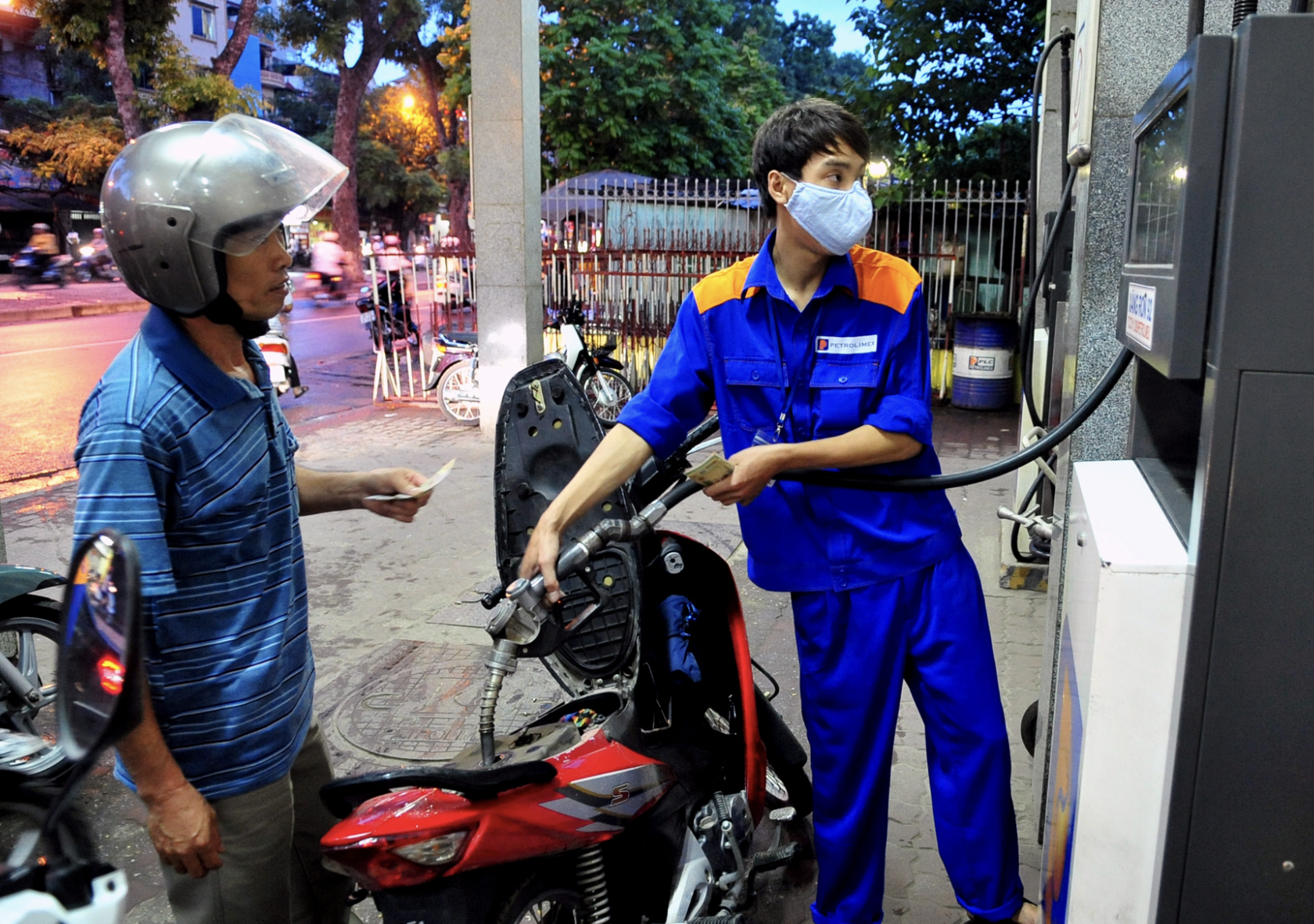
On the evening of Sept. 24, after learning that gasoline and diesel prices had risen sharply across the board, Nguyen Cong Bac, director of Loc Phat BLLT Livestock Company in the northern province of Son La, told VietNamNet: “Every time fuel prices go up, animal feed companies raise their prices too.”
Animal feed prices have increased three times in the past 20 days, rising by about $0.03-0.04 per kilogram. That has pushed up the production cost of live hogs by roughly $0.08 per kilogram.
Bac’s farm, which raises about 10,000 pigs, consumes around 700 tonnes of animal feed each month. Every increase in feed prices therefore adds to the pressure on the business.
Live hog prices currently stand at only about $2.15-2.19 per kilogram, while production costs have climbed to around $2.31. Bac estimates that the farm is losing roughly $0.12-0.15 on every kilogram of live hog sold.
Fuel prices have risen repeatedly in Vietnam’s latest adjustment rounds. In the Sept. 24 adjustment, E5RON92 gasoline climbed to about $1.02 per liter, E10RON95-III to $1.04 per liter, diesel to $1.17 per liter and fuel oil to about $0.75 per kilogram.
Gasoline prices have now increased for four consecutive adjustment periods, with E5 rising by about $0.18 per liter and E10 by about $0.17 per liter over that period. Diesel has risen for three consecutive rounds, adding roughly $0.11 per liter.
E5 gasoline is now only about $0.14 per liter below its late-March peak of roughly $1.16, while E10 is about $0.26 below its peak of around $1.30. Diesel remains about $0.55 per liter below the peak recorded in early April.
The repeated increases have fueled concerns that higher gasoline prices will feed through into the cost of goods, particularly toward the end of the year.
A report from the Statistics Office under Vietnam’s Ministry of Finance showed that the consumer price index rose 0.47% in August from the previous month, largely because domestic fuel prices increased in line with global energy prices. Transportation prices rose 4.09% month on month, adding 0.41 percentage points to the overall CPI increase.
The agency said the rise was driven mainly by a 22.15% increase in the diesel price index and a 9.53% increase in gasoline prices following domestic fuel price adjustments.
Vietnam’s average CPI for the first eight months of 2026 rose 4.45% from the same period in 2025. Housing, utilities, fuel and construction materials recorded the largest increase, at 6.71%, followed by transportation at 5.38%, food and catering services at 4.76%, and other goods and services at 4.46%.
Year-end inflation could exceed target
Nguyen Tu Anh, director of macroeconomic policy research at Green-X Center at VinUniversity, told VietNamNet that the latest fuel price increases were substantial, driven not only by higher crude oil prices but also by a sharp rise in refined petroleum product prices.
Oil supplies through important maritime routes remain disrupted. In particular, supplies passing through the Strait of Hormuz remain partially blocked, while developments in the Red Sea continue to be complicated, increasing the risk of supply disruptions compared with February and March 2026.
The price increases have also coincided with maintenance cycles at many refineries around the world, tightening supplies of refined petroleum products and driving prices sharply higher.
“Brent crude is only around $99 a barrel, but gasoline products have risen to $141-146 a barrel, while diesel has reached $182-183 a barrel,” Anh said. “The gap between refined product prices and crude has widened to around $80 a barrel, compared with just a few dozen dollars under normal conditions.”
Some countries have also stepped up restrictions on exports of refined petroleum products, further tightening international supplies, particularly of diesel.
The surge in refined fuel prices, however, could benefit Vietnam’s domestic refineries. Anh said wider margins between refined products and crude oil could provide significant gains for the Nghi Son and Binh Son refineries.
Turning to the impact of higher fuel prices on consumer goods, Anh said Vietnam has increasingly limited policy room to contain fuel costs. The scope for further tax reductions is narrowing, while some tax relief measures are due to expire on Sept. 30 and the country’s fuel price stabilization fund has little capacity left.
Extending tax reductions for three months alone has reduced state budget revenue by about $592 million. The fuel price stabilization fund is borrowing around $308 million from the state budget, and the loan must be repaid within the fiscal year.
Anh said the current fuel price surge was putting significant pressure on inflation. Without appropriate support measures, year-end inflation could exceed the 4.5% target.
Calls to prioritize diesel support
With limited policy room available, Anh said Vietnam should move away from broad-based fuel price support and toward more targeted measures.
Diesel should be the priority, he said, because it is a critical input for road, rail and maritime transport as well as a wide range of machinery used in production.
Higher diesel prices directly increase transportation and production costs, creating greater inflationary pressure, while gasoline is used primarily for personal travel and consumption.
Anh also proposed extending fuel tax reductions beyond Sept. 30 to ease cost pressures.
Under Resolution 34, exemptions or reductions covering most-favored-nation import tariffs, environmental protection tax and value-added tax on petroleum products are scheduled to remain in effect until Sept. 30. Special consumption tax rates currently stand at 8% for E5 gasoline and 7% for E10.
Anh particularly emphasized that if diesel prices continue to rise sharply, policymakers could consider providing additional resources to the fuel price stabilization fund. One option, he said, would be to raise funds through short-term bonds.
Once the market stabilizes, revenue flowing into the fund could be used to buy back and repay the bonds.
He cautioned, however, that price stabilization policies should not seek to eliminate market forces altogether. Instead, they should focus on “smoothing” price increases and preventing sudden spikes that could undermine confidence among businesses and consumers.
“We need to accept inflation above the target within a reasonable range, but it must be kept from rising excessively,” Anh said.
Tam An
.svg)
