 Vietnamnet.vn

 Podcast



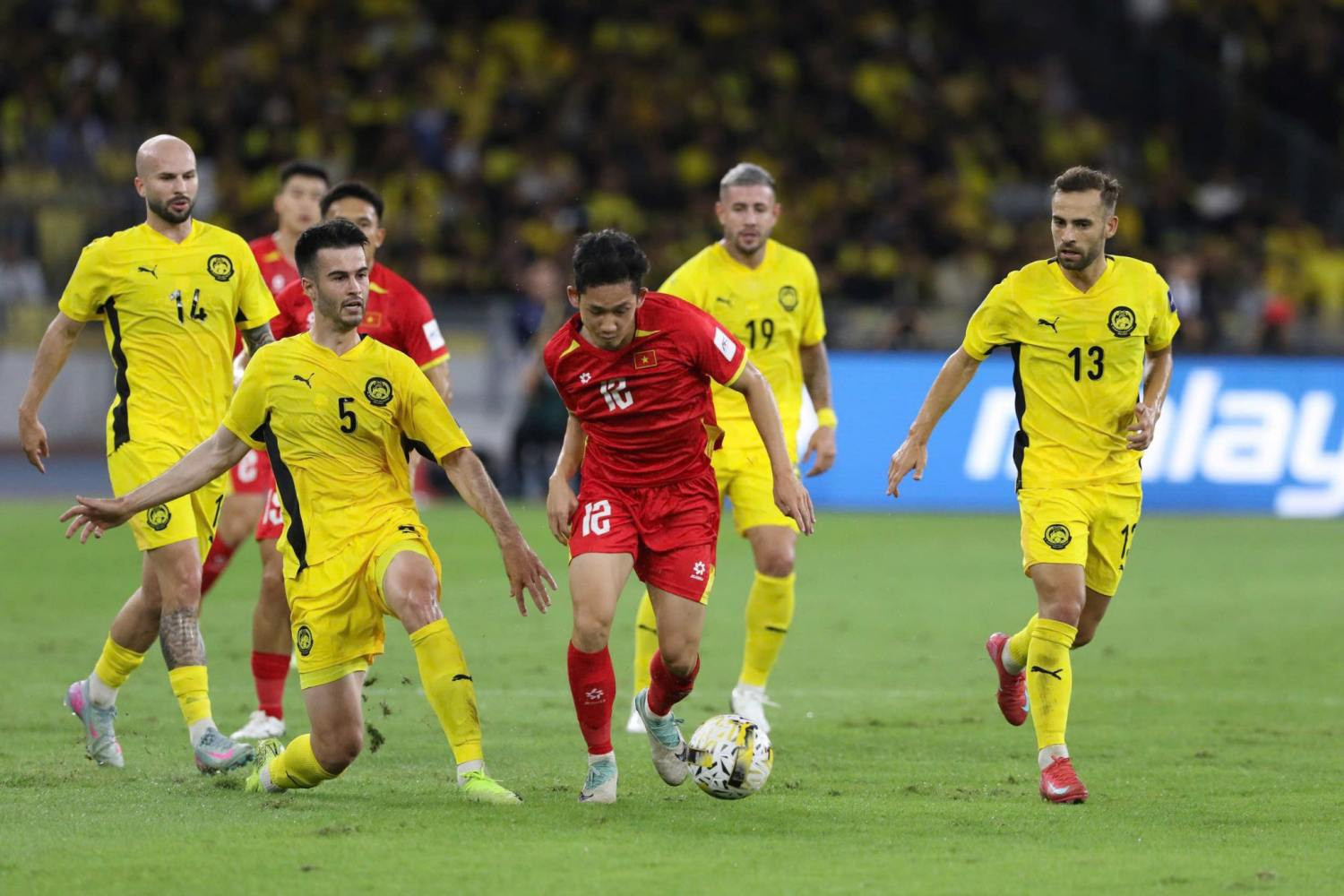
Vietnam will face Malaysia in the ASEAN Cup 2026 semifinals, with the first leg away on August 16 before the return fixture at My Dinh Stadium on August 19.
The matchup brings together the Group A winners and Group B runners-up, with history firmly favoring Kim Sang Sik's side.
Over the past 12 meetings between 2014 and 2026, Vietnam have beaten Malaysia 10 times, drawn once and lost only once, in the 2014 AFF Cup semifinals.
Recent encounters have also highlighted the contrast between the two teams. Vietnam have generally displayed greater consistency, control and defensive solidity, while Malaysia remain a difficult opponent thanks to their physical strength and powerful style of play.
Vietnam also defeated Malaysia 3-1 at Thien Truong Stadium in March during Asian Cup qualifying. But Kim and his coaching staff know that Malaysia are now a different proposition, both in terms of personnel and the way they operate.
An impressive group stage, but not a perfect one
Vietnam reached the semifinals after finishing top of Group A with 10 points from four matches, recording three wins and a draw.
The defending champions scored 13 goals and conceded just once for a goal difference of +12, earning the advantage of playing the decisive second leg of the semifinal at home.
Their 3-1 victory over Cambodia in the final group match extended Vietnam's unbeaten run under Kim Sang Sik to 22 matches, comprising 19 victories and three draws.
Among their most impressive performances was a 3-0 away victory over Indonesia, a match in which Vietnam demonstrated highly effective defending, transitions and finishing.
Yet their group-stage campaign also exposed areas that still need improvement.
Against Singapore at My Dinh Stadium, Vietnam controlled possession and created opportunities but were held to a 0-0 draw by a disciplined defense.
Even the 3-1 victory over Cambodia was less straightforward than the scoreline suggested. Vietnam had 75% possession, attempted 16 shots and recorded an expected goals, or xG, figure of 2.27, yet still allowed Cambodia to create dangerous opportunities and had to wait until the closing stages to put the match beyond reach.
Vietnam were good enough to finish top of their group, but their performances were not always as convincing as the results suggest.
For Kim, greater efficiency in front of goal could prove crucial as Vietnam move into the knockout stage and attempt to defend their ASEAN Cup crown.
Kim Sang Sik faces a selection puzzle
One of the biggest positives from the group stage was the depth Kim discovered after experimenting with his squad across four matches.
Thanh Long has emerged as one of the most notable examples.
The Quang Ngai-born midfielder had not initially appeared central to Kim's plans, particularly as the Korean coach wanted Vietnam to attack aggressively from the outset, potentially reducing the need for a specialist defensive midfielder.
But strong performances against Indonesia and Cambodia may have changed that assessment.
The CAHN (Hanoi Police FC) midfielder impressed not only with his ball-winning ability but also with his capacity to dictate play and create opportunities for teammates.
Viet Anh and Hai Long have similarly made an impact after coming off the bench, giving Kim additional high-quality options for his tactical plans.
After four group matches, the coach has had an opportunity to assess which players are hungry, determined and capable of maintaining their form when given playing time.
Yet form alone may not determine his starting lineup against Malaysia.
Kim could prioritize players best suited to the tactical approach he intends to use rather than simply selecting those who performed best in the group stage.
That means players who did not fully meet expectations earlier in the tournament, including Quang Hai, Tai Loc, Hoang Hen and Xuan Son, could still start or feature prominently in the coach's plans.
Against a more resilient Malaysia side, experience, temperament and tactical suitability could carry as much weight as recent form.
Vietnam's discipline adds another advantage
Vietnam have also stood out as the tournament's most disciplined team.
Through four matches, they received just one yellow card, shown to Xuan Manh during the 0-0 draw against Singapore at My Dinh Stadium on July 31.
Kim's side were also called for only 24 fouls across four group matches, an average of six per game and the lowest total in the tournament.
The figures underline the defending champions' disciplined approach. Their ability to follow tactical instructions has also helped minimize bookings and injuries.
By comparison, Indonesia committed 56 fouls in four matches, an average of 14 per game, and received 10 yellow cards. Laos recorded the most cards, with 11 yellows and three reds.
Vietnam's defensive record has been equally impressive. Their only goal conceded in four group matches came during the 3-1 victory over Cambodia at My Dinh Stadium on August 7.
Malaysia embrace the underdog role
Malaysia secured their semifinal place with a 1-0 victory over the Philippines in their final Group B match on August 8.
They finished second with nine points behind Thailand, who completed a perfect group stage with 12 points, 10 goals scored and none conceded.
Malaysia coach Tan Cheng Hoe acknowledged that his team had come through a difficult route to reach the last four.
“Before the tournament started, expectations for us were not particularly high. Malaysia did not have our strongest squad for this tournament. Even so, the team persevered and took it one match at a time. Reaching the semifinals is a deserved reward for us,” Tan said.
He readily acknowledged Vietnam's status as favorites.
“They are clearly the favorites over Malaysia at this point. Vietnam have quality players, considerable squad depth and an extremely cohesive style under Kim Sang Sik,” Tan said. “I think Vietnam are one of the leading contenders for the title. Malaysia, meanwhile, still have to improve if we are to have a chance of reaching the final.”
But the Malaysian coach also suggested that being underdogs could work in his team's favor.
“In football, anything can happen. When you are considered the underdog, there is a certain psychological freedom,” he said. “Our task over the next few days is to help the players recover as well as possible, analyze Vietnam's style carefully and prepare our tactics for the match. I believe it will be a very interesting contest.”
Malaysia's home advantage in the first leg will be another factor Vietnam cannot overlook.
Tan has considerable ASEAN Cup experience, and his Malaysia side have shown resilience and stability, making them a potentially dangerous opponent despite Vietnam's overwhelming head-to-head record.
A place in the final at stake
The other semifinal will see Singapore host Thailand on August 15, with the second leg in Thailand on August 18.
Singapore finished second in Group A with eight points from two wins and two draws, while Indonesia missed out after finishing third with seven points.
Thailand dominated Group B, winning all four matches, while Malaysia took the remaining semifinal berth.
With Vietnam and Thailand both topping their respective groups, the possibility of a heavyweight final between the two regional powers remains alive. Before that can happen, however, both must overcome opponents capable of disrupting those expectations.
Vietnam enter their semifinal with the stronger record, deeper squad, an unbeaten run stretching to 22 matches and more than a decade of dominance over Malaysia.
But the group stage also showed that control does not always translate into goals.
For Kim Sang Sik and his players, the challenge now is to turn statistical superiority into knockout-stage efficiency.
The first test comes in Malaysia on August 16. The decisive second leg follows at My Dinh Stadium three days later.
Thien Binh - Duy Nguyen - Dai Nam
.svg)
