 Vietnamnet.vn

 Podcast



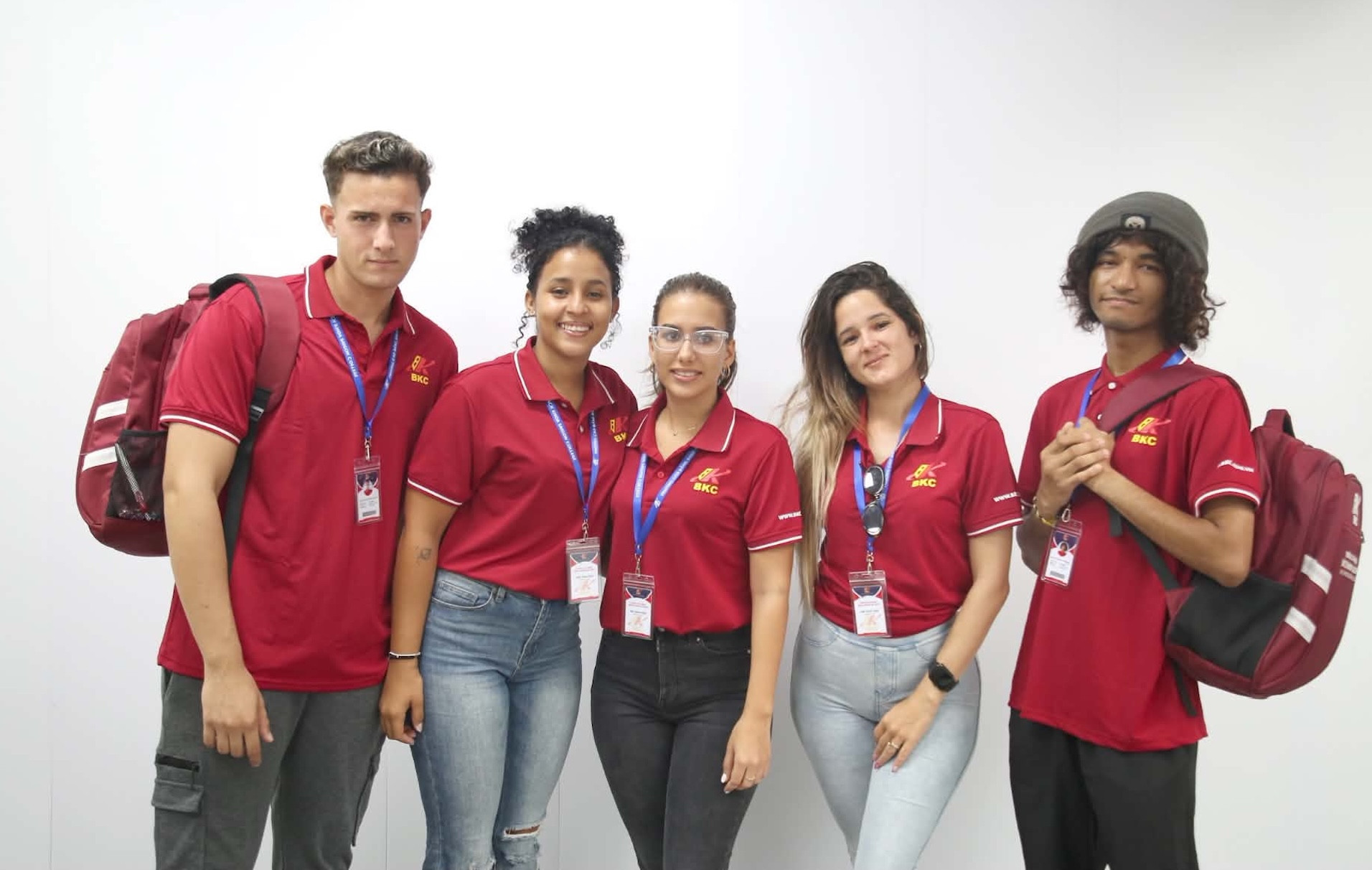
During the 2025-2026 academic year, approximately 22,000 international students were studying at educational institutions across Vietnam. Of these, around 4,000 students from 14 countries were studying under government scholarship agreements.
Vietnam also welcomed 965 new students under these agreements during the academic year.
The figures were released by the Ministry of Education and Training (MOET) at a recent higher education conference in Ho Chi Minh City.
However, the ministry acknowledged that it has yet to determine how many of these international students are enrolled in undergraduate, master's or doctoral programs.
The current statistics also do not separately identify those studying Vietnamese, undertaking internships, participating in short-term exchanges or attending non-degree programs.
According to the ministry, collecting more detailed data on students' academic levels is essential.
The number of postgraduate students, particularly doctoral researchers, provides a clearer indication of Vietnamese universities' research capabilities, academic quality and participation in international knowledge networks.
Such information would also help assess and compare the internationalization of Vietnam's higher education system with that of other countries in the region.
Vietnam aims to become a regional higher education destination
According to MOET, Vietnam needs to move beyond simply receiving international students and adopt a more proactive strategy to establish itself as a competitive higher education destination in the region.
Achieving this goal will require improvements in both the quality and number of foreign-language-taught programs, the development of competitive undergraduate and postgraduate courses, and more targeted scholarships and financial assistance.
Services for international students also need to be strengthened, including admissions procedures, visa support, accommodation, insurance, counseling and academic assistance.
The ministry also highlighted the importance of building international alumni networks and promoting Vietnamese education through global forums.
At the master's and doctoral levels, policies designed to attract international students should be closely linked to strong research groups, key laboratories, joint research programs and academic disciplines in which Vietnam has particular strengths or strategic advantages.
The report also noted that student exchanges are an important component of higher education internationalization, but remain inadequately reflected in national statistical indicators.
Attracting international students does more than demonstrate the appeal and standing of a country's higher education system.
It also contributes to people-to-people diplomacy, the development of international alumni networks and the promotion of Vietnam's image abroad.
The management of international students in Vietnam is currently governed by Circular No. 30/2018/TT-BGDDT.
MOET works with foreign embassies to advise international students on selecting courses that match their aspirations and the programs offered by Vietnamese educational institutions.
The ministry also coordinates the management of nearly 4,000 international students studying under government scholarship agreements.
Foreign investment in higher education remains below potential
Vietnam is stepping up efforts to promote international cooperation and attract foreign investment in higher education.
The approach is becoming more proactive, encompassing investment promotion, partner selection and stronger connections between Vietnamese universities, foreign educational institutions and international businesses.
According to the ministry's report, MOET has established a task force to participate in the Vietnam-Australia Joint Working Group, supporting Australian higher education institutions seeking to establish branch campuses in Vietnam during the 2024-2030 period.
The ministry has also surveyed investment opportunities for British and Australian partners in Hai Phong and worked with Ho Chi Minh City on measures to develop the city into a regional international education hub.
Notably, MOET is assisting the University of Southampton and education group Navitas in preparing applications to establish a branch campus in Ho Chi Minh City, with operations expected to begin in July 2029.
Alongside the promotion of specific projects, the ministry has completed guidance materials on foreign investment and the establishment of international university branch campuses in Vietnam.
It has also surveyed demand for research and training partnerships between foreign-invested enterprises and domestic higher education institutions.
Two additional publications are being developed.
The first is a Vietnam Education Country Profile designed to support international promotion, investment cooperation and the recognition of academic qualifications and professional skills.
The second is a Study in Vietnam handbook for international students, which is expected to be completed in 2026.
According to the report, Vietnam's investment promotion approach has begun shifting from primarily preparing guidance documents and conducting market surveys toward providing direct support for specific projects and international partners.
Nevertheless, foreign investment in higher education has yet to match Vietnam's potential and international standing.
The number of reputable foreign higher education institutions operating on a substantial scale in the country remains limited.
In particular, there are still relatively few investment projects capable of delivering significant improvements in high-tech workforce training, postgraduate education, research and innovation.
Le Huyen
.svg)
