 Vietnamnet.vn

 Podcast



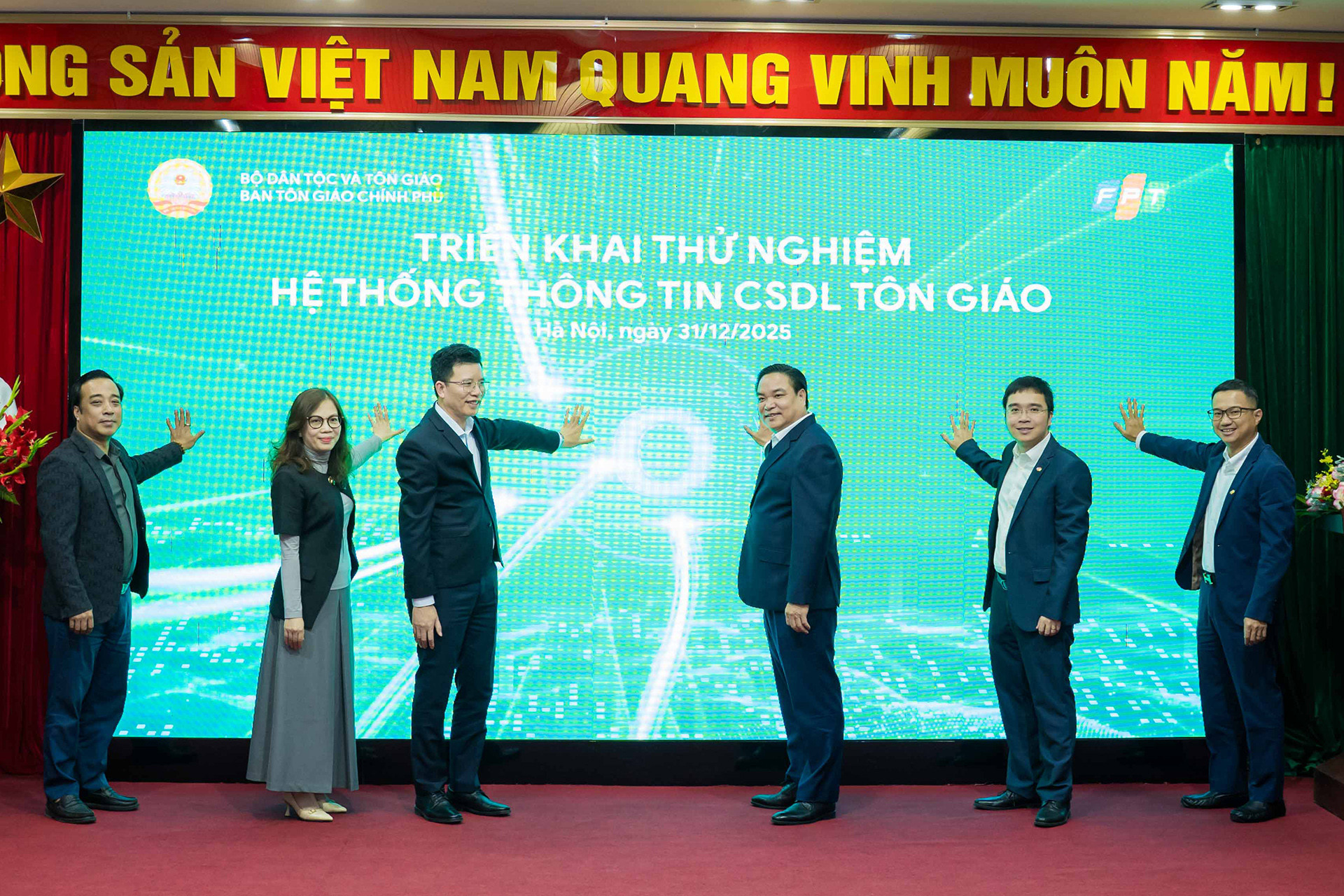
This marks an important step toward modernizing state governance in religious affairs, establishing a centralized and standardized national data platform to effectively support administrative management, policymaking, and strategic leadership.
Recognizing data as a core foundation for transforming operational methods and governance, the system aligns with major policy directives from the Party Central Committee and the Government, including Resolution No. 57-NQ/TW, Plan No. 02-KH/BCDTW, and Resolution No. 71/NQ-CP, along with existing legal frameworks such as the Law on Belief and Religion and its guiding documents.
In partnership with the private sector - particularly FPT Corporation - the Ministry and the Government Committee for Religious Affairs have developed a national strategy to build a religious database that meets the criteria of being accurate, complete, clean, live, unified, and shareable across the country.
Previously, religious data in Vietnam was fragmented, manually recorded, and inconsistently managed across various agencies. IT infrastructure was inadequate, security systems were only at level 2, and skilled IT personnel were limited - factors that hindered data analysis and decision-making.
The new system aims to address these issues comprehensively by centralizing and digitizing religious data nationwide, under the management of the Government Committee for Religious Affairs. It ensures consistency, accuracy, security, and confidentiality.
The system is designed to digitize, standardize, and integrate datasets relevant to religious governance, offering tools for aggregation, visualization, and interagency connectivity. It is also built on an open architecture with the capacity to interface with other systems across the Ministry and integrate with Vietnam’s National Population Database under Government Project 06.
This integration enhances data synchronization, improves administrative efficiency, and ensures clean, verified information for public service delivery in the religious sector.
The platform will also support transparency, providing official data on religious organizations, places of worship, and religious activities, as defined by law. This will improve both internal policymaking and external communication efforts by the Ministry.
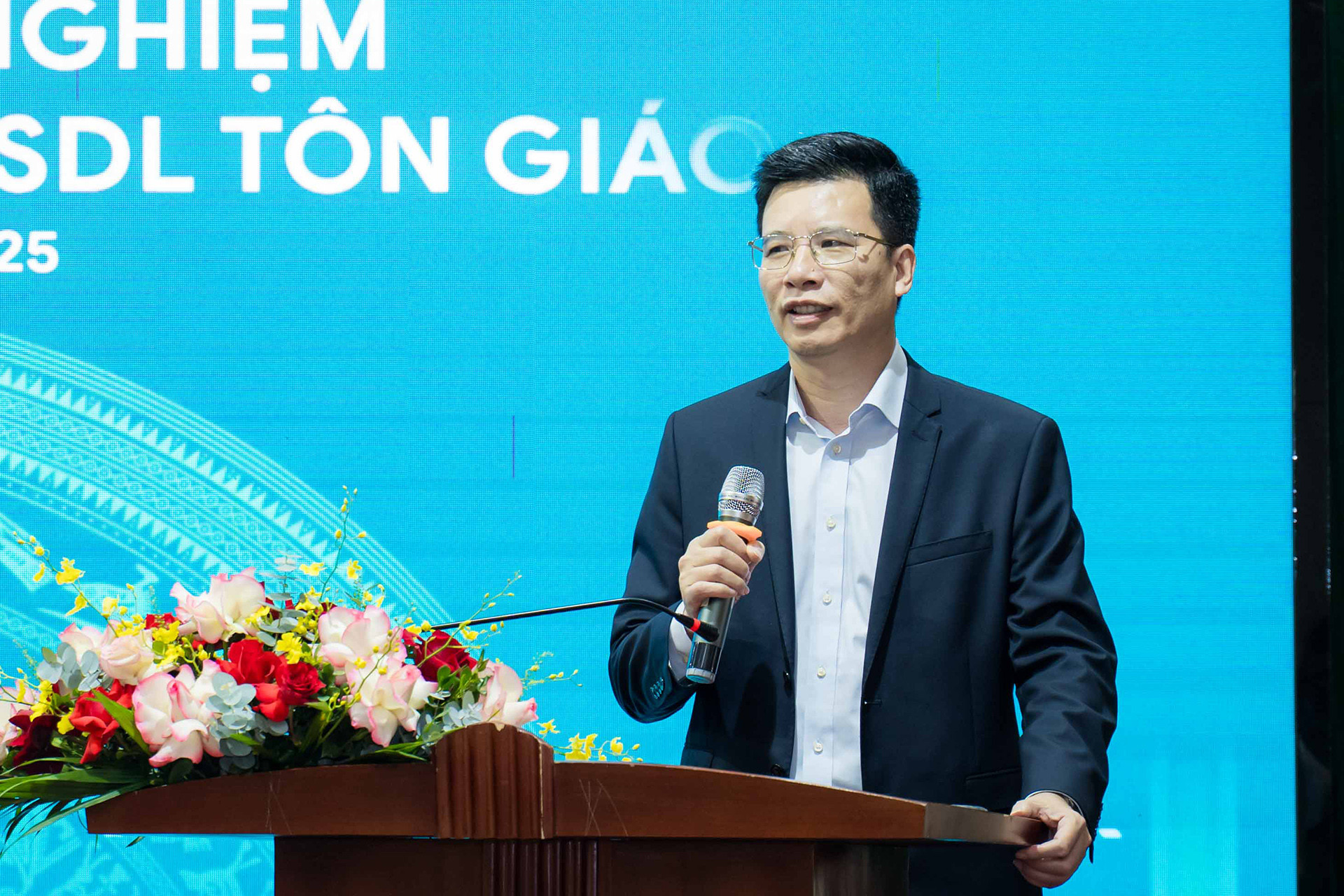
Nguyen Tien Trong, Deputy Head of the Government Committee for Religious Affairs, emphasized the challenge and significance of developing a nationwide religious database. Photo: VA
According to Nguyen Tien Trong, Deputy Head of the Government Committee for Religious Affairs: “This is a highly complex task with a large workload and tight deadlines. However, with support from FPT and close coordination among our internal departments, we’ve achieved the pilot launch on schedule and to a high standard. This marks both a technical and political milestone, laying the groundwork for a nationwide religious database system.”
Earlier, on December 9, 2025, the Committee issued an open call for capable and experienced organizations to propose solutions and carry out the pilot project for building the religious database. FPT Corporation was selected as the implementation partner.
Following approval, FPT rapidly developed a prototype and began testing and iterating system versions in collaboration with the Committee.
Leaders of the Committee commended FPT for delivering a well-structured system with a user-friendly interface and proposed additional features, such as data mapping and advanced statistical reporting.
Nguyen Hoang Minh, CEO of FPT IS, shared: “With our experience in digital transformation and data strategy across ministries, we worked closely with MERA from field assessments to strategy development and system implementation. This pilot is a pioneering result that brings strategic visions into tangible form. We remain committed to supporting MERA in enhancing the system and advancing broader digital transformation goals.”
The launch reflects the Ministry’s strong commitment to digital transformation, using data as the foundation for modern, transparent, and efficient governance.
More importantly, this is not just a technical initiative - it lays the institutional groundwork for a digital government, improves the quality of religious governance, and reinforces citizens’ right to freedom of religion in the digital age.
Thai Khang
.svg)
