Vietnam is shifting its technology strategy toward solving national challenges while creating commercially viable products and long-term innovation capacity.
Technological self-reliance cannot be achieved through a handful of individual research projects. It requires research infrastructure, data infrastructure, laboratories, testing centers, technical standards, highly skilled talent, and businesses capable of leading markets.
As global competition becomes increasingly intense, a nation’s capabilities are no longer measured solely by capital resources or workforce size.
Competitive strength now depends directly on the ability to master core technologies and develop high-value-added products.
To create new growth drivers, the government has recently issued Decision 21 on the List of Strategic Technologies and Strategic Technology Products, along with Decision 808 assigning development tasks for strategic technologies.
These two documents mark a significant strategic shift, aiming to transform Vietnam into a high-income developed nation by 2045 through technological self-reliance.
Strategic technologies are not about following trends
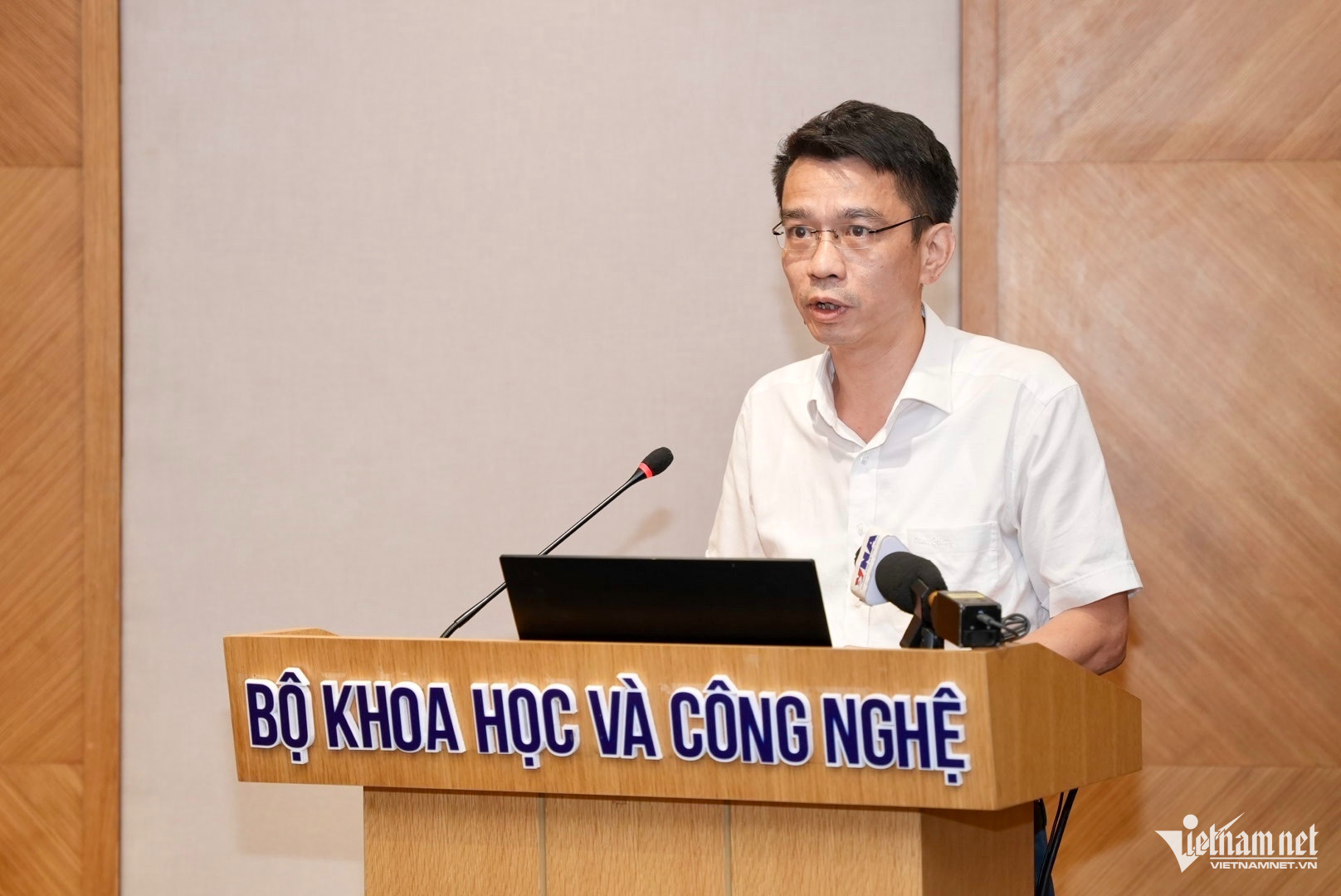
Luu Quang Minh, Deputy Director General of the Department of Science, Technology and Innovation at the Ministry of Science and Technology, speaks at a regular press briefing on June 1. Photo: Ministry of Science and Technology.
Replacing the previous Decision 1131, Decision 21 establishes a national priority framework for strategic technologies and technology products.
According to Luu Quang Minh, Deputy Director General of the Department of Science, Technology and Innovation under the Ministry of Science and Technology, the most significant breakthrough lies in a fundamental change in approach.
Rather than chasing global technology trends, Vietnam will select priority technologies based directly on major national challenges and practical issues facing specific sectors of the economy.
This approach helps avoid trend-driven technology choices and fragmented investments that fail to generate meaningful products or technological capabilities.
Strategic technologies aligned with national needs
The priority list focuses on sectors capable of delivering major productivity gains while strengthening national security and defense.
Key areas include artificial intelligence (AI), big data, cloud computing, semiconductor technologies and specialized chips, as well as next-generation telecommunications networks.
Other priority sectors include robotics and automation, digital twin technologies, cybersecurity, advanced microbiology, new energy technologies and materials, rare earth extraction, aerospace, and modern railway technologies.
Under this framework, technology development must be directly tied to clearly defined products and outcomes. Every project must identify capable implementation partners and demonstrate real market demand, ensuring that scientific research remains connected to practical applications.
Technology self-reliance requires an ecosystem, not isolated projects
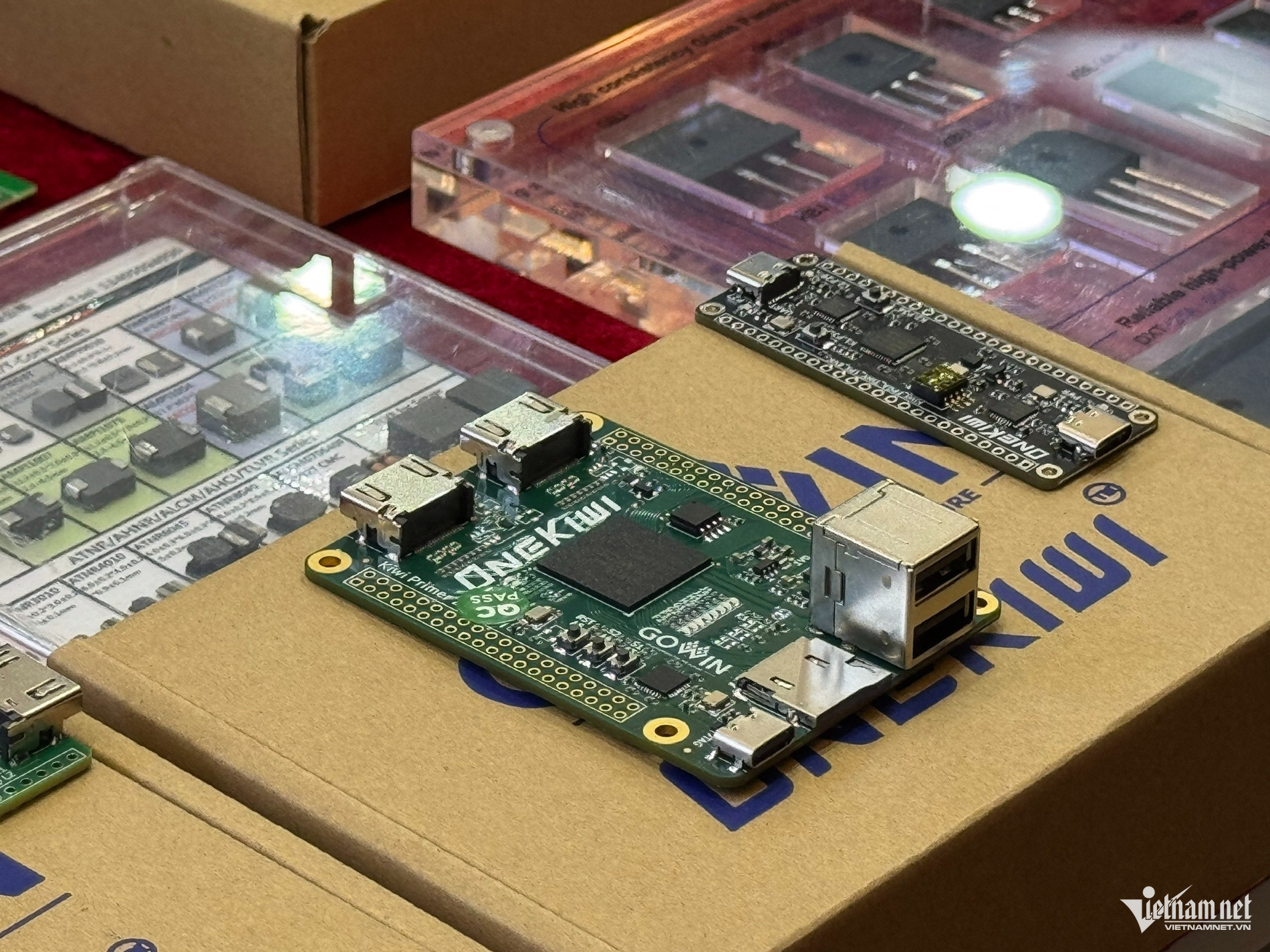
A semiconductor product displayed at SEMI Expo in November 2025. Photo: Du Lam.
Recognizing that a priority list alone is insufficient, the government subsequently introduced Decision 808 as a practical implementation roadmap.
“If Decision 21 answers the question of which technologies and products Vietnam should prioritize, Decision 808 explains how those priorities should be implemented, through which missions, linked to which national challenges, involving which stakeholders, and aiming for what outcomes. In other words, Decision 21 is the strategic framework, while Decision 808 serves as the action plan,” Luu Quang Minh said.
Decision 808 requires strategic technology development to be organized as a continuous value chain.
The process begins with identifying major national challenges, breaking them down into core technologies that need to be mastered, selecting research organizations, and ultimately bringing products to market.
Building the foundations for innovation
Within this framework, the Ministry of Science and Technology is responsible for building foundational capabilities to strengthen the country’s technology absorption capacity.
Core tasks include developing computing and data infrastructure for AI systems, establishing national laboratories and testing centers, issuing technical standards and regulations, strengthening connections among businesses, research institutes and universities, promoting intellectual property development, accelerating commercialization, attracting research investment, and creating market-support mechanisms for strategic technology products.
Emphasizing that technological self-reliance cannot emerge from a few standalone research projects, ministry representatives stated: “To master technology, a country must have research infrastructure, data infrastructure, laboratories, testing centers, technical standards, highly qualified talent, and businesses capable of leading markets.”
These foundational conditions are essential for transforming research outcomes into marketable products and enabling Vietnamese companies to participate more deeply in regional and global value chains.
At the same time, the new strategy clearly defines the role of each participant within the innovation ecosystem.
Government ministries and agencies are responsible for identifying major challenges, while local authorities provide testing environments. Businesses are tasked with leading markets and investing in commercialization. Research institutes and universities are expected to supply foundational knowledge and highly skilled human resources.
The coordinated operation of this ecosystem is expected to help Vietnam develop indigenous technological capabilities, increase localization rates, reduce dependence on imports, promote knowledge-based industries built on data, core technologies and innovation, and contribute directly to sustainable economic growth while strengthening the country’s position in the years ahead.
 Vietnamnet.vn

 Podcast



.svg)
