 Vietnamnet.vn

 Podcast



Orders and markets pose challenges across industries
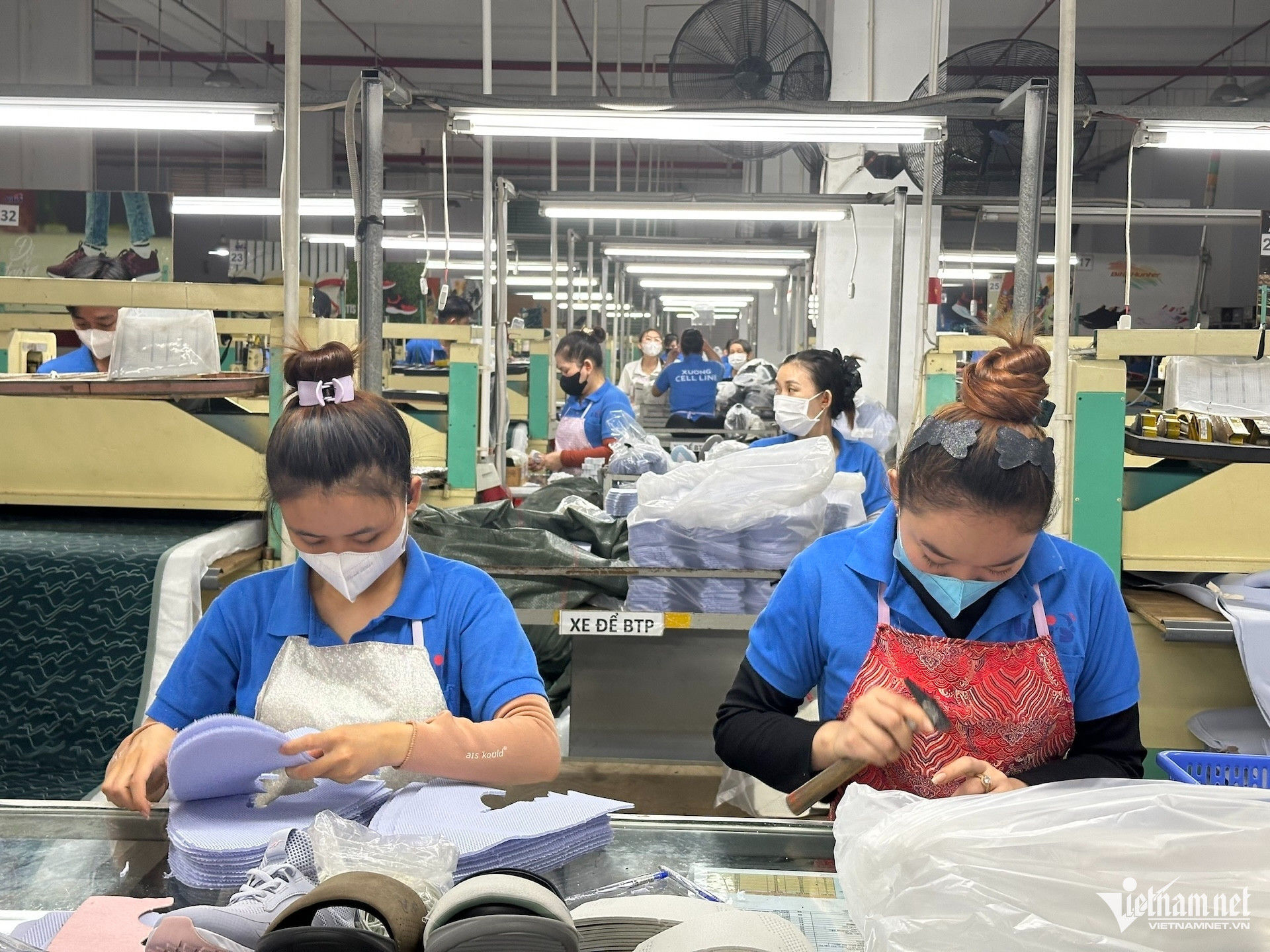
As the year-end production season gets underway, Viet Thang Jean Co. is having to rethink how it organizes manufacturing as large seasonal orders become increasingly scarce. They are being replaced by smaller orders or contracts delivered in stages, forcing the company to break production into smaller batches and shoulder additional costs.
Pham Van Viet, the company's general director, said raw material, labor and logistics costs have all risen, pushing total production costs up by more than 20%, while selling prices have remained unchanged. By August, the company had exported only about 14-15 million products, compared with annual export volumes of 40-50 million in previous years.
In response, the company is renegotiating delivery arrangements, looking for additional markets and proactively grouping promising orders for concentrated production runs. Through these measures, it hopes to improve productivity, cut costs and remain competitive.
At Dony Garment Co., orders for October are already full, but the outlook after the Lunar New Year remains difficult to predict. Pham Quang Anh, the company's director, compared the challenges facing the textile and garment industry since the Covid-19 pandemic to "a storm" that arrived with little warning.
To maintain growth, Dony is simplifying its designs and lowering production costs while maintaining quality. The factory is also accepting subcontracting orders with very thin profit margins to provide stable employment for its workers.
According to Quang Anh, the company is focusing its resources on the domestic and Southeast Asian markets, reducing its dependence on distant markets that carry greater risks. It has also paid off all bank loans and stopped taking orders involving excessively long payment terms to protect cash flow.
Instead of purchasing factories and machinery outright, the company now opts to lease them, avoiding tying up large amounts of capital when market conditions are volatile.
The difficulties surrounding orders and costs come as businesses enter their peak production period ahead of the 2027 Lunar New Year, the Year of the Goat.
Pham Van Xo, chairman of the Ho Chi Minh City Import-Export Association, said the final months of the year are typically when businesses ramp up production and exports to increase revenue. This year, however, many companies are simultaneously facing pressure from international markets and domestic challenges.
A shortage of production workers, coupled with rising recruitment and employee benefit costs, is among the issues companies must contend with. Global geopolitical instability is also disrupting maritime transport, making it more difficult to secure suitable vessels and shipping routes.
Higher logistics costs, combined with tighter spending by international consumers, continue to squeeze profit margins.
Industrial output grows, but performance varies widely
According to a report by the Ho Chi Minh City Department of Industry and Trade, the city's index of industrial production, or IIP, rose nearly 10.8% year on year in the first eight months. The department expects the nine-month figure to increase 11.1%, with full-year growth potentially reaching around 12.2%.
The momentum is expected to continue in the fourth quarter as companies step up production for year-end demand and the 2027 Lunar New Year. The outlook, however, differs markedly among industries.
Food and beverage processing still has room to increase output as demand rises for stockpiling ahead of year-end and Lunar New Year shopping.
Mechanical engineering, electrical equipment, machinery and vehicle manufacturing are being supported by the pace of public investment disbursement and demand for equipment used in infrastructure and energy projects. The pharmaceutical, chemical, rubber and plastics group is expected to improve as domestic and export demand recovers.
Traditional industries such as textiles, garments, leather and footwear, meanwhile, continue to struggle with orders and markets.
In the first eight months, garment production rose just 2.26%, while leather and related products increased 1.95%. Output of various types of clothing grew 1.23%, while sports footwear fell 2.09% and twisted yarn made from natural fibers plunged 27.33%.
Electronics production increased only 0.82%, falling short of its potential and anticipated demand in areas such as artificial intelligence, data centers, smart electronic devices and semiconductors.
Several other industries and products recorded declines. Metal production fell 8.62%, including an 8.68% drop in iron and steel products. Ready-mixed concrete declined 9.41%, paper packaging and bags 15.40%, bicycles 21.93%, television sets 4.65%, and motor vehicle production 0.61%.
According to the Department of Industry and Trade, the declines were primarily driven by higher prices for imported raw materials, fuel and other inputs, competitive pressure from similar imported products, and dependence on overseas supplies.
Businesses seek new markets and ways to cut costs
Beyond the challenges of costs and orders, exporters are also having to meet an expanding range of market requirements.
The Ho Chi Minh City Department of Industry and Trade said requirements relating to origin, the environment, carbon emissions, extended producer responsibility, or EPR, and the European Union Deforestation Regulation, or EUDR, being applied during 2026-2027 are putting significant pressure on the rubber and plastics, wood processing, textile and garment, and leather and footwear industries, particularly small and medium-sized enterprises.
Geopolitical volatility in the Middle East is also affecting industries including chemicals and petroleum products, electrical and electronic goods, garments and seafood, as well as sectors whose main consumer markets or sources of raw materials are linked to the Middle East and the European Union.
Against this backdrop, Van Xo called for additional government credit policies to support manufacturers and exporters, reduce capital costs and extend tax support measures.
He also proposed accelerating the digitalization of customs procedures and improving connections between labor supply and demand, particularly for labor-intensive industries during the year-end production peak.
The Ho Chi Minh City Department of Industry and Trade said it would continue supporting market expansion, promoting exports and strengthening links between lead companies, foreign-invested enterprises and domestic supporting industries.
Trade promotion, market diversification and greater use of free trade agreements will also be stepped up to help businesses secure more orders.
The department also plans to work with relevant agencies to improve infrastructure and strengthen the capacity of warehouses, distribution centers and supporting services, gradually reducing logistics costs for businesses.
Thu Ha
.svg)
