 Vietnamnet.vn

 Podcast



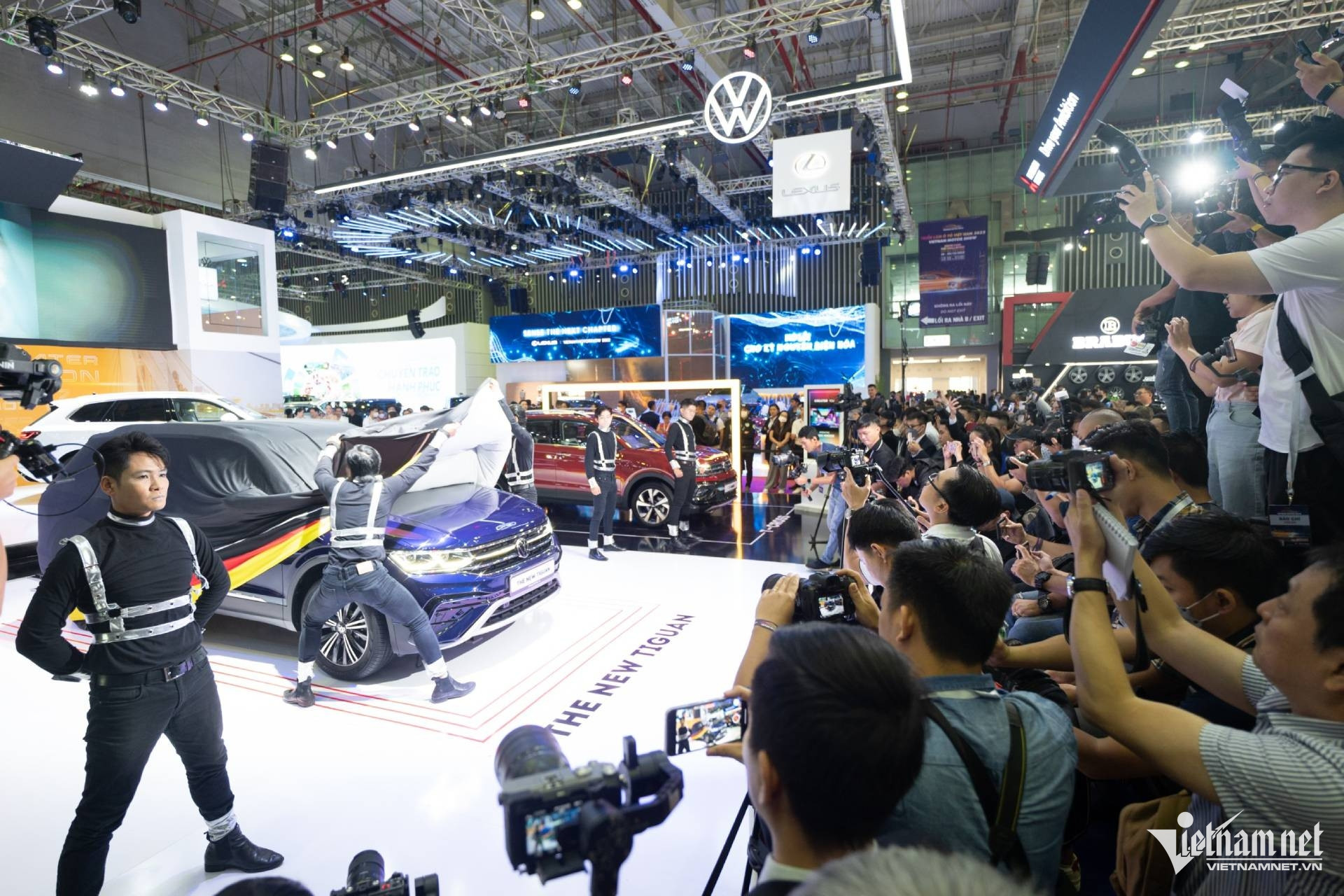
The news has left Vietnamese car enthusiasts disappointed, as VMS has long been regarded as the nation’s biggest automotive event.
The decision reflects the current difficulties and structural shifts in Vietnam’s automotive market.
Since its inception in 2004, VMS has been the most expected automotive event in Vietnam, gathering top brands such as Toyota, Honda, Mitsubishi, Suzuki, Ford, Mercedes-Benz, Lexus, Audi, Volkswagen, and Volvo, alongside major motorcycle manufacturers.
Held annually since 2004, the show was where domestic consumers could view and compare dozens of the latest market models.
Previously, the show was canceled in 2020, 2021, and 2023 due to COVID-19.
Explaining the cancellation in 2025, a representative of the Vietnam Automobile Manufacturers’ Association (VAMA), the main organizer, said most members are not ready to participate because of the lack of new models amid declining sales, high inventory, and cautious consumer attitudes.
“After assessing the current economic conditions, we found that 2025 is a difficult year for Vietnam’s automotive manufacturing and trading sectors. Additionally, many members are not ready enough and lack new products for a large-scale event like the Vietnam Motor Show,” the VAMA representative said on behalf of organizers.
Many automakers reportedly viewed the heavy investment, often tens of billions of dong per booth, including staffing, design, and marketing, as unjustifiable amid sluggish sales, high inventories, and cautious consumer sentiment.
Even with major promotional efforts, organizers doubted the show could recapture the excitement of the pre-pandemic “golden era” of Vietnam’s car market.
Beyond financial concerns, some manufacturers think that traditional exhibition formats are losing relevance: the short duration, limited space, and large but passive crowds, thus making it difficult to convert attention into actual sales.
This disengagement was evident in VMS 2024, the first time in history that all luxury brands, including Mercedes-Benz, BMW, Lexus, Land Rover, Audi, Volvo, and Volkswagen, were absent. Popular mass-market names such as VinFast, Hyundai, Ford, KIA, Mazda, and Peugeot were also missing.
VMS 2025 absence disappoints many Vietnamese customers. Each show is not just vehicle introduction but an emotional space, where consumers view new models, concepts, “touch” cutting-edge technologies from global brands.
It is also a rare chance for car enthusiasts to meet, exchange directly with experts, manufacturers, media, and celebrities in a colorful atmosphere.
Businesses shift direction, hope for revamped VMS 2026
No longer focusing on events costing tens of billions VND, many brands have shifted to more flexible communication strategies. Instead of spending lavishly on a single annual exhibition, many carmakers are pivoting to more flexible, targeted marketing strategies.
Rather than waiting until October to unveil new models at a shared event, mainstream brands (Toyota, Ford, Hyundai, Subaru, etc.) and luxury automakers (BMW, Porsche, Volkswagen, etc.) are organizing regional roadshows and test-drive events. These localized programs, often supported by digital campaigns, allow manufacturers to reach potential customers directly while reducing costs.
Social media platforms, video channels, and online experience content have also become the new “stages” where automakers promote their products.
Mercedes-Benz, meanwhile, continues to host its own high-profile exhibitions such as The Avantgarde and Live Rare in major cities – exclusive events that combine product launches with immersive brand experiences. With full creative control and customized spaces, the German automaker can deliver experiences that a shared “trade fair” like VMS cannot easily match.
Despite the pause, it’s undeniable that past VMS events provided valuable benefits: a shared stage for automakers to showcase innovations, boost competition, and strengthen connections with media and customers.
Still, this year’s darkened stage lights mark the industry’s ongoing transformation. The Vietnamese auto market is entering a new era shaped by electric vehicles, hybrid technologies, and agile young brands eager to make their mark.
Hopes for a breakthrough future show remain intact. For car lovers, Vietnam Motor Show is not just an event - it reflects pride in the Vietnam’s auto industry vitality.
Hoang Hiep
.svg)
