 Vietnamnet.vn

 Podcast



To stay competitive, the country must adopt a new economic framework - one rooted in institutional reform, technological breakthroughs, and long-term strategic vision.
This was the central message of the Vietnam Economic and Financial Forum 2025.
At the forum, Deputy Minister of Finance Do Thanh Trung emphasized that Vietnam stands at a pivotal crossroads, facing critical development choices.
The country has set strategic targets: becoming a modern industrial nation with upper-middle income by 2030, and reaching high-income developed status by 2045.

Achieving these goals requires Vietnam to reposition itself in a changing global landscape, effectively mobilize growth resources, innovate its development model, and prioritize sustainable growth.
With the forum’s theme - “Positioning Vietnam in the new context and building a strategic economic-financial vision for 2026–2030” - the Deputy Minister stressed the need for a fundamentally new growth model.
At the heart of this model must be gains in total factor productivity (TFP), investment efficiency, technological advancement, and innovation.
The strategy involves harmonizing traditional growth drivers - investment, exports, and labor - with emerging engines like the digital economy, green economy, knowledge economy, and circular economy.
The Deputy Minister also underscored the importance of synergy among economic sectors.
In this model, the State plays a guiding and enabling role, focusing on strategic infrastructure and establishing a transparent legal framework.
The private sector is positioned as the engine of innovation, especially in digital industries, manufacturing, and high-value services.
Foreign direct investment (FDI) is seen as a selective and strategic addition, with a strong emphasis on next-generation technology transfer and international standards, including ESG (environmental, social, governance) compliance.
The model also calls for tapping into new growth zones - such as regions, provinces, and growth poles - and fully leveraging their economic potential.
This is not just a technical restructuring, but a strategic shift necessary for realizing Vietnam’s development ambitions for 2030 and 2045.
A call for bold new policies
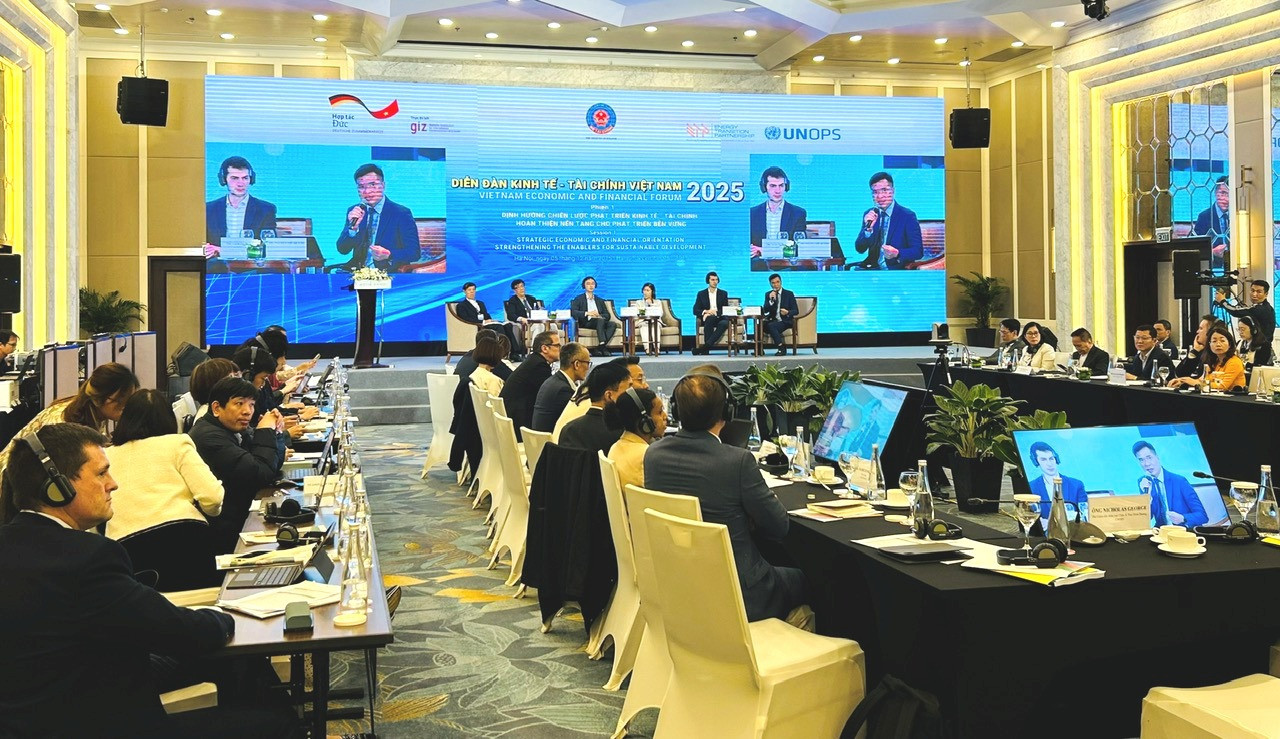
According to Associate Professor Dr. Bui Tat Thang, former Director of the Institute for Development Strategy under the Ministry of Planning and Investment, Vietnam needs stronger, more targeted policies.
“In the past, we relied on tax incentives to attract investment,” he noted. “But with the global minimum tax regime now in place, we must pivot to non-tax advantages - such as free trade zones, next-generation economic zones, eco-industrial parks, clean energy, and digital transformation.”
Associate Professor Dr. Tran Kim Chung, former Deputy Director of the Central Institute for Economic Management, echoed the need for fresh growth engines.
He called for creating new development spaces, including the parallel evolution of digital and real economies.
New economic formats must also be established - from the green economy and circular economy to the data and night-time economy.
“We need real breakthroughs,” he said. “Building new growth drivers is a strategic shift - from extensive growth based on quantity to intensive growth focused on quality, inclusion, and sustainability. This must be rooted in technology, digitalization, culture, society, human capital, environment, and institutional change.”
Nguyen Nhu Quynh, Director of the Institute for Strategy and Policy on Finance and Economy, warned that Vietnam’s current reality is neither dire nor overly optimistic.
The outdated growth structure, if unchanged, risks entrenching Vietnam in the middle-income trap.
Structural constraints remain unresolved, with bottlenecks still deeply entrenched.
“It will be difficult to deliver new results without new approaches,” Quynh emphasized. “We need fresh thinking, new leadership models, new growth frameworks, and the ability to unlock resources and development spaces. Inclusive development must be the foundation of this mindset.”
Nguyen Le
.svg)
