 Vietnamnet.vn

 Podcast



Japan: Risk-based regulation and a phased approach
Speaking at the Harmonized Skies 2026 Conference and the ASTM F38 Asia-Pacific Workshop in Tokyo from October 5 to 8, 2026, Eguchi Makoto, Head of the Unmanned Aircraft Safety Division at the Japan Civil Aviation Bureau under the Ministry of Land, Infrastructure, Transport and Tourism (MLIT), outlined Japan's regulatory approach to unmanned aircraft.
He explained that Japan's framework is fundamentally risk-based. Rather than regulating every flight in the same way, the objective is to impose requirements proportionate to the actual level of operational risk.
The scale of Japan's drone sector helps explain its growing emphasis on unmanned aircraft traffic management (UTM).
More than 387,000 unmanned aircraft have been registered in Japan, while over 45,000 operators hold Class 2 certificates and more than 5,000 hold Class 1 certificates.
In 2025, Japanese regulators processed approximately 92,000 permit and approval applications.
Eguchi acknowledged that, as these numbers continue to grow, managing individual flights through human resources alone is no longer feasible.
Digital systems are needed to exchange and coordinate flight plans and operational information.
Japan is not implementing UTM nationwide in a single step. Instead, it is following a phased approach.
On March 31, 2026, MLIT issued guidelines establishing the standards that UTM service providers, known as USPs, must meet.
On September 16, 2026, MLIT announced the certification of its first two USPs, NTT DATA and KDDI SmartDrone.
The initial phase focuses on supporting flight-plan coordination through these certified providers' systems.
According to UTM Intent Exchange, as of March 2026, the system was in the early stages of its second development phase, without real-time position sharing.
At the Tokyo conference, the company demonstrated a trial at a Tokyo Bay testing site involving flight-plan coordination among multiple operators, planned flight operations, dynamic monitoring and ground-risk assessment using the Specific Operations Risk Assessment (SORA) methodology.
The company subsequently submitted a proposed flight-plan coordination protocol to ASTM F38 for consideration as an international standard. Whether it will be adopted remains subject to ASTM's review process.
Japan's approach can be summarized through three defining characteristics.
First, the government establishes standards and the underlying framework while allowing multiple certified businesses to provide services.
Second, implementation proceeds in clearly defined stages, each with its own requirements.
Third, practical operational experience is brought into international standardization forums to help shape common rules.
Vietnam: Clear targets, but critical connections remain missing
On September 28, 2026, the Politburo issued Conclusion No. 99-KL/TW on the exploitation, governance and protection of low-altitude airspace for national development under new circumstances.
The document identifies low-altitude airspace as a national resource, a new development domain and a special sphere of sovereignty linked to airspace sovereignty, data sovereignty and cybersecurity.
Its objectives include developing the low-altitude economy to contribute 1.5% of GDP by 2045.
For aviation management professionals, the most significant aspect of the conclusion is its emphasis on governance.
The document calls for a unified, modern national governance model built on data, digital platforms and risk management.
Operations are to be regulated according to geographical areas, altitude layers, activity types and risk levels.
Management must cover the entire process, from registration, identification and licensing to operational control, monitoring, inspection and enforcement.
Infrastructure must be shared and capable of integration and interoperability with military and civil airspace management and air traffic control systems.
In other words, the principles discussed in Tokyo - risk-based regulation, digitalization and interoperability - are also central to Conclusion No. 99.
Vietnam is no longer operating in a legal vacuum.
Its regulatory foundation includes the Law on People's Air Defense, effective July 1, 2025; Decree No. 288/2025/ND-CP on unmanned aircraft management; the amended Law on Civil Aviation and its accompanying decrees and circulars, effective July 1, 2026; and Decree No. 222/2026/ND-CP on flight operations.
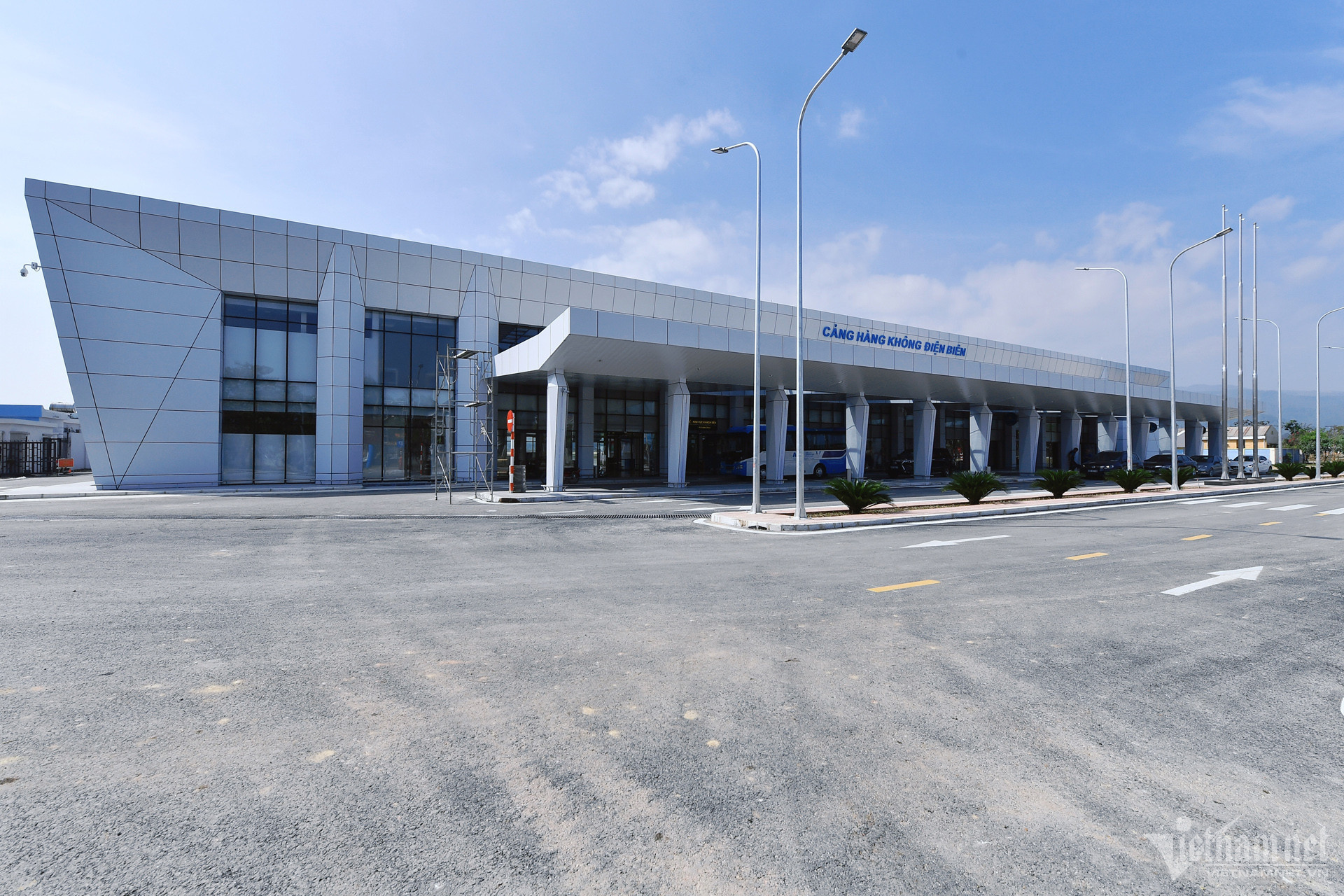
On June 23, 2026, Dien Bien became the first locality authorized to conduct a controlled regulatory sandbox for unmanned aerial vehicle (UAV) applications.
The initiative targets approximately 6,000 experimental flights by the end of May 2027, with a safety performance target exceeding 99%.
However, critical gaps remain in the connections between regulatory and operational components.
These include performance standards, risk-based operational classifications, data sharing, interfaces between air traffic management (ATM) and UTM, certification of service providers, and civil-military coordination procedures.
Based on a screening index developed by the author for his research, Vietnam's governance readiness stood at approximately 2.6 out of 5 as of July 17, 2026, with an uncertainty range of plus or minus 0.15.
The index evaluates eight dimensions: strategy and coordination; risk-based regulation; airspace and civil-military coordination; digital identification and UTM; safety and certification; industry; infrastructure; and markets, society and data.
Data infrastructure and UTM received the lowest assessments.
This index is intended as a diagnostic tool to identify priorities, not as an official ranking.
Six conditions for putting Conclusion No. 99 into practice
From an economic perspective, achieving a contribution equivalent to 1.5% of GDP requires three conditions to be met simultaneously.
First, demand must be sufficiently large, with substantial numbers of recurring flight missions.
Second, transaction costs per flight must be low, supported by digital infrastructure and streamlined procedures.
Third, risks must be effectively controlled so that society is willing to accept expanded operations.
Experience from Tokyo suggests that all three conditions depend on the ability to manage airspace through data and automation.
On that basis, this article proposes six essential conditions for implementation.
The fifth condition deserves particular attention because it raises an apparent contradiction: Does integration with international standards weaken national autonomy?
Tokyo's experience suggests that it does not, provided two distinct layers are maintained.
The interface layer, covering flight-plan formats, identification and service levels, should be open and internationally compatible so that businesses and equipment can connect seamlessly.
The sovereign data layer, including prohibited airspace, sensitive surveillance information and access rights for defense and security authorities, must remain under state control.
Interoperability is not the same as dependence.
Policy recommendations
Airspace and air traffic management: Vietnam should introduce a risk-based operational classification framework comparable to the Open, Specific and Certified categories.
The SORA methodology and category-based assessment procedures should be incorporated into domestic regulations.
Low-risk activities should face minimal requirements, allowing regulatory resources to concentrate on high-risk operations such as flights over people, near airports or beyond visual line of sight.
This work should be completed as part of the national standards and technical regulations package planned for 2027.
Low-altitude airspace should be organized according to service layers, with clearly designated testing areas, restricted zones, prohibited zones and flight corridors.
These areas should be published in digital formats that operators and UTM systems can automatically check, reducing the need for paper-based applications for individual flights.
The ATM-UTM interface should be designed as a defined technical product, specifying data models, service levels, response times for opening or closing airspace, and the transfer of responsibilities during abnormal situations.
Defense and security authorities must retain their command powers, while relevant instructions should be transmitted through auditable digital channels with comprehensive logs.
Regulatory and operational responsibilities should also be clearly separated.
Competent authorities should develop regulations and certify service providers.
Air navigation service organizations should manage the core shared information infrastructure and interfaces with ATM.
Certified UTM service providers should compete in the service delivery layer.
Separate accounting, nondiscriminatory data access and the ability to switch providers are necessary to prevent technological lock-in.
A UTM roadmap aligned with Conclusion No. 99: During 2026-2027, Vietnam should establish registration and digital identification systems, geographical zone information and a one-stop electronic permitting portal.
Pre-flight coordination should be piloted in designated sandbox areas, alongside the completion of national standards and technical regulations.
During 2028-2030, the country should certify its first UTM service providers and integrate surveillance data.
Three national flight-testing zones representing different geographical conditions should be developed into UTM laboratories.
These facilities should test ATM-UTM interfaces and civil-military coordination procedures, with independent performance assessments.
After 2030, Vietnam should move toward balancing demand and capacity, dynamically reconfiguring airspace and conditionally expanding high-density operations.
Progression to each new stage should depend on evidence-based thresholds covering safety, system availability and social acceptance.
Building the ecosystem and supporting growth: High-level coordination is essential for developing the low-altitude economy.
Vietnam should establish a national data architecture to prevent individual localities from creating separate, incompatible platforms.
Local pilot projects must connect to shared infrastructure and use standardized reporting templates, consistent with Conclusion No. 99's requirements for integrated systems.
Regulatory sandboxes should become policy laboratories.
Results from the Dien Bien pilot, including flight numbers, incidents, permitting times and operating costs, should be used to refine regulations before nationwide expansion.
A set of performance indicators should be published quarterly.
Demand should be stimulated through outcome-based public procurement in logistics, agriculture, infrastructure monitoring, search and rescue, and emergency medical services.
These sectors are among the priorities identified in Conclusion No. 99.
Liability insurance should be incorporated into the operational framework from the outset.
Vietnam should also participate actively in international standard-setting processes.
Experts should regularly join working groups under ASTM F38, the Global UTM Association (GUTMA) and the International Civil Aviation Organization's Asia-Pacific regional framework.
Priority should be given to harmonizing flight-plan formats, identification systems and service levels to enable Vietnamese businesses to operate across ASEAN borders.
Conclusion No. 99 calls for Vietnam to strengthen its role in developing international standards.
Achieving that ambition requires participation while those standards are still being formulated.
Human resources and public acceptance are equally important.
Vietnam needs to train risk assessors, UTM engineers and cybersecurity specialists.
Noise impacts and public attitudes should be assessed before operations are expanded, and transparent complaint-handling mechanisms should be established.
Risks that must be anticipated
The first risk is the gap between regulatory design and actual implementation.
This is not unique to Vietnam. Many jurisdictions with more advanced frameworks have also fallen behind their own schedules.
For that reason, milestones in 2027 and 2030 should be linked to evidence-based performance thresholds rather than administrative deadlines alone.
The second risk is platform fragmentation as multiple localities conduct pilot projects.
The cost of connecting incompatible systems later could be substantially higher than establishing common standards from the beginning.
The third risk is scattered investment.
Conclusion No. 99 already emphasizes the need to concentrate resources on clearly defined priorities and avoid waste.
The fourth risk concerns coordination between security and defense authorities.
Effective cooperation requires permanent operating procedures, not merely one-time consultations during project development.
Conclusion
The most important message from the Tokyo conference is not a regulatory blueprint that Vietnam should copy.
Rather, it is a different way of approaching the challenge: Countries do not need identical laws, but they do need systems capable of interacting with one another, managing risk and scaling through automation.
Conclusion No. 99-KL/TW establishes the appropriate sequence: governance must accompany exploitation, and standards must precede large-scale deployment.
The target of a 1.5% GDP contribution by 2045 will not be achieved simply by increasing the number of aircraft in the sky.
It will depend on the number of safe, repeatable and low-cost flight missions, which in turn requires airspace to be managed through data.
For aviation management professionals, the immediate tasks are therefore concrete.
They must translate principles into technical interfaces, procedures and standards by the 2027 deadline; turn the three national testing zones into facilities for validating ATM-UTM interfaces; and participate in the international forums where the common rules governing low-altitude airspace are being written.
Dr. Ho Tuan Sy
.svg)
