 Vietnamnet.vn

 Podcast


Speaking at a meeting with voters in Hanoi’s Dong Da Ward on November 25, To Lam addressed concerns over the progress of the national infrastructure project, whose investment policy was approved by the National Assembly in 2024.
The project management board has recently opened bids for consultancy services covering surveys and feasibility studies.
Although the project has experienced delays, To Lam stressed that implementation must not be rushed and should be subject to rigorous oversight, given its importance as the backbone of the national transport network.
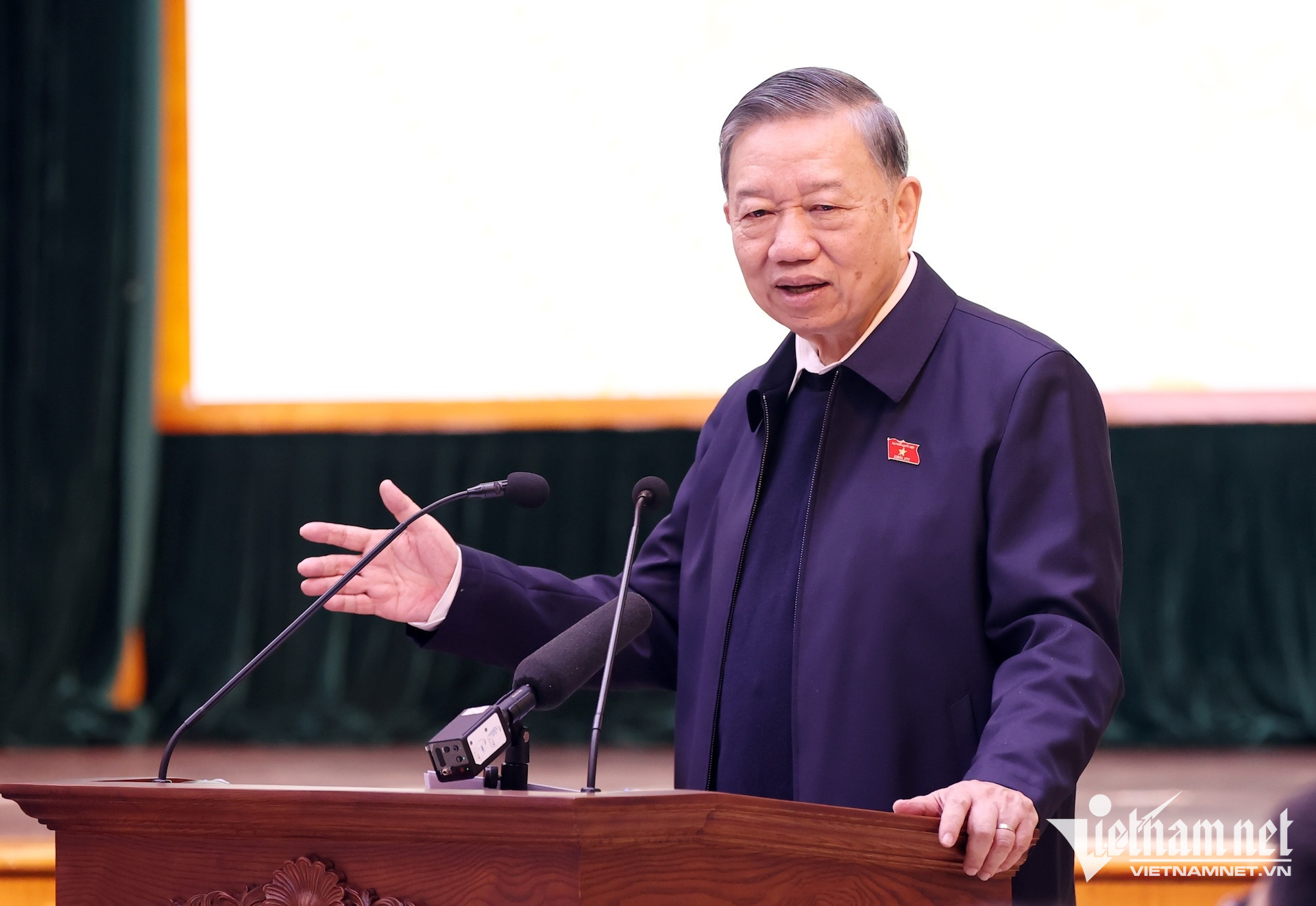
Party General Secretary and President To Lam addresses issues raised by voters, including the North-South high-speed railway project.
Vietnam must select technology best suited to its conditions, ensure consistent technical standards and develop implementation plans that guarantee operational safety.
Technical specifications must be clearly established before investment costs and economic efficiency are calculated.
The project must also undergo a comprehensive environmental impact assessment to prevent construction from causing flooding or waterlogging.
The railway should be closely integrated with urban areas, industrial parks, seaports, roads, maritime routes, inland waterways and aviation infrastructure to maximize logistics efficiency.
Technology transfer is a prerequisite
To Lam stressed that Vietnam must establish a technology transfer roadmap to gradually achieve autonomy in high-speed railway technology.
The country should not simply import foreign equipment for assembly and subsequently depend on overseas suppliers for repairs and maintenance.
Vietnam must identify which areas it can master, ranging from locomotive manufacturing, rail production and carriage construction to maintenance and servicing.
Developing a skilled workforce of engineers and technical personnel is equally important, alongside mastering signaling, communications and train control systems to ensure operational safety.
International partners seeking to participate in the project must fully comply with Vietnam’s technical standards and commit to technology transfer.
Even bidders offering the lowest costs or shortest construction schedules must present detailed implementation proposals.
“We cannot borrow money to build the railway and then remain entirely dependent on foreign countries once it becomes operational,” Party Chief and President To Lam said.
From the preparatory stage, the Government must carefully calculate funding requirements for each phase, aligning technology selection with workforce training strategies to enable Vietnam to independently operate and maintain the entire railway.
Preparing infrastructure and urban connectivity
For Hanoi, To Lam called for early preparations for site clearance and timely disclosure of information on land acquisition, resettlement arrangements and construction schedules.
The capital must also develop transport connections at Ngoc Hoi Station, ensuring passengers can conveniently continue their journeys using other modes of transport.
He noted that planning and connectivity decisions made at Ngoc Hoi Station today could shape how people travel, work and live for decades to come.
Approved in principle by the National Assembly in 2024, the North-South high-speed railway will stretch 1,541km, connecting Ngoc Hoi Station in Hanoi with Thu Thiem Station in Ho Chi Minh City.
The railway will have a design speed of 350km/h and an estimated investment of US$67.34 billion.
Tran Thuong

