 Vietnamnet.vn

 Podcast



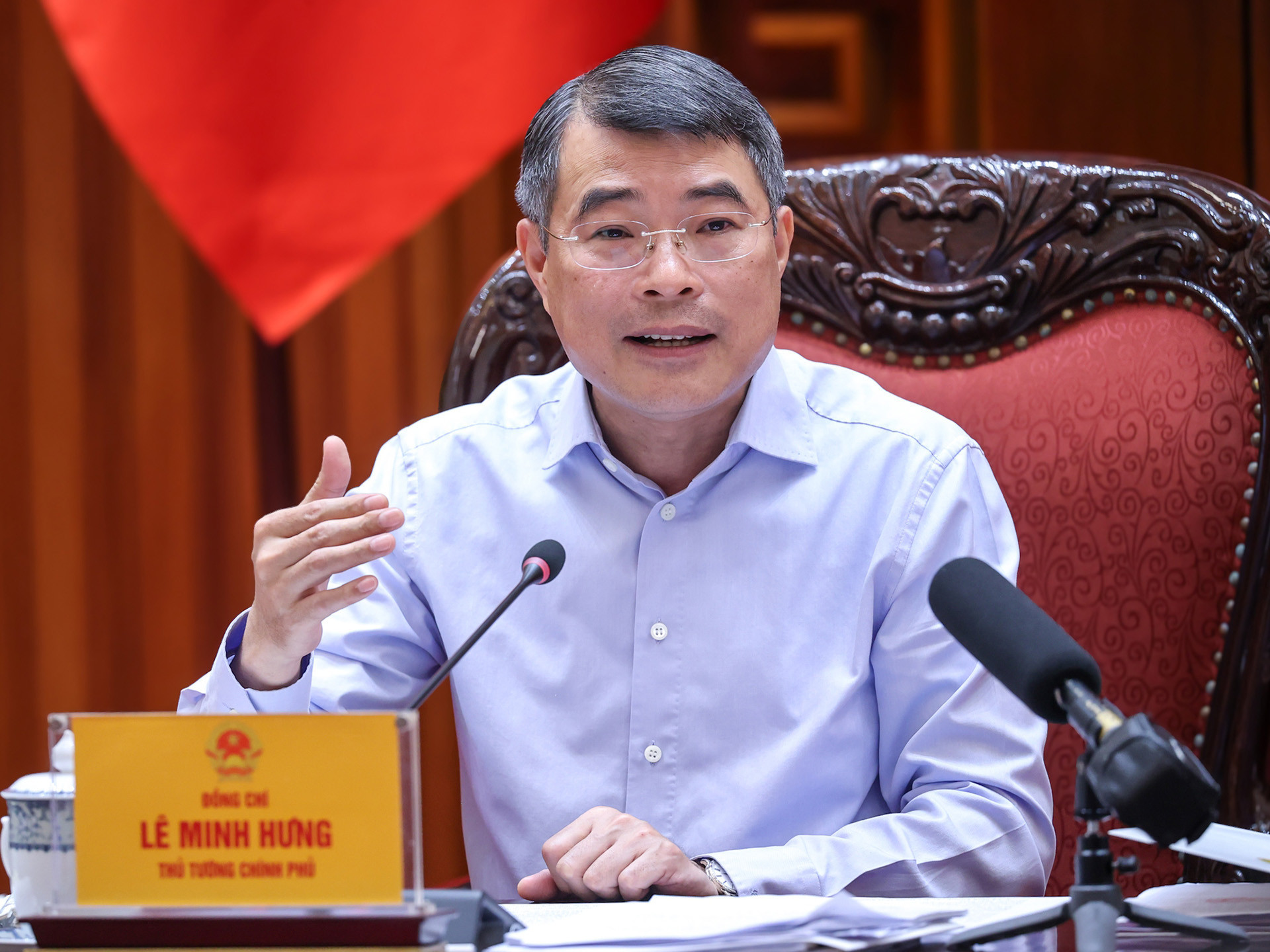
Chairing a meeting on June 2 to review the continued implementation of the International Financial Center project in Vietnam, the Prime Minister said the country must strike a balance between competitiveness and prudent regulation as it seeks to establish a globally connected financial hub.
The International Financial Center already operates under a dedicated legal framework based on the National Assembly’s Resolution No. 222/2025 and eight government decrees guiding its implementation. These foundational regulations establish key principles, policy frameworks, special incentives for strategic investors, dispute-resolution mechanisms and supervisory arrangements.
Following the issuance of the legal framework, ministries, agencies and the authorities of Da Nang and Ho Chi Minh City have actively advanced preparations for the project.
In terms of investment promotion, governing bodies and executive agencies in both cities have engaged with regulators, financial institutions, banks, investment funds, technology companies and international organizations. They have also begun developing financial products and services tailored to each location’s comparative advantages.
Regarding human resources and infrastructure, executive agencies have been established in both cities and are gradually strengthening their organizational structures, staffing arrangements, operational procedures and long-term development strategies.
Strong framework needed to attract global capital
In his concluding remarks, Prime Minister Le Minh Hung noted that the Party leadership had emphasized the urgency of bringing the International Financial Center into operation. The overarching goal is to establish a center with a transparent, clear and robust legal framework capable of attracting international investors.
He described the initiative as one of the key solutions for mobilizing medium- and long-term capital flows to support rapid and sustainable national development.
According to the Prime Minister, significant challenges remain. The international environment is increasingly complex, while financial centers across the region and around the world are competing intensely to attract capital.
“As a late entrant, Vietnam must adopt mechanisms and policies that are strong enough to attract investors while still maintaining effective management, controlling risks, preserving macroeconomic stability and ensuring sustainable growth,” he said.
To advance the project, the Prime Minister assigned Deputy Prime Minister Nguyen Van Thang to serve as Chairman of the Governing Council of the International Financial Center and directly oversee its operations. Issues beyond the council’s authority will be reported to the Prime Minister for consideration.
Relevant agencies have been instructed to submit proposals this week to strengthen the governing council’s functions and organizational structure. Once finalized, the council chairman will direct ministries and agencies to review and complete the operating regulations for the center, the governing council and executive agencies by June 10.
Deputy Prime Minister Nguyen Van Thang has also been tasked with coordinating closely with Da Nang and Ho Chi Minh City to study international best practices for executive management models and recommend the most practical and effective option.
The Prime Minister stressed that financial products and services will be decisive factors in ensuring the success of the center, particularly as Ho Chi Minh City and Da Nang serve as two of Vietnam’s major growth engines.
He instructed the Ministry of Finance to work with ministries, agencies and the two cities to identify a portfolio of financial products and services, initially focusing on those linked to trade and investment in order to attract development resources and support key infrastructure projects.
According to the Prime Minister, policy directions for these products already exist and should be implemented without excessive caution. In addition to the eight existing decrees, agencies have been asked to continue developing new regulations throughout June to create breakthrough mechanisms that will enable the rapid introduction of several core financial products and services.
The Prime Minister also called for research into a supervision and inspection mechanism directly linked to central government agencies, allowing oversight responsibilities to be carried out according to assigned sectors.
Emphasizing that the International Financial Center is now taking clearer shape, he instructed relevant authorities to develop a more concrete long-term strategy and propose amendments to existing regulations in order to further accelerate the project’s development.
Tran Thuong
.svg)
