 Vietnamnet.vn

 Podcast



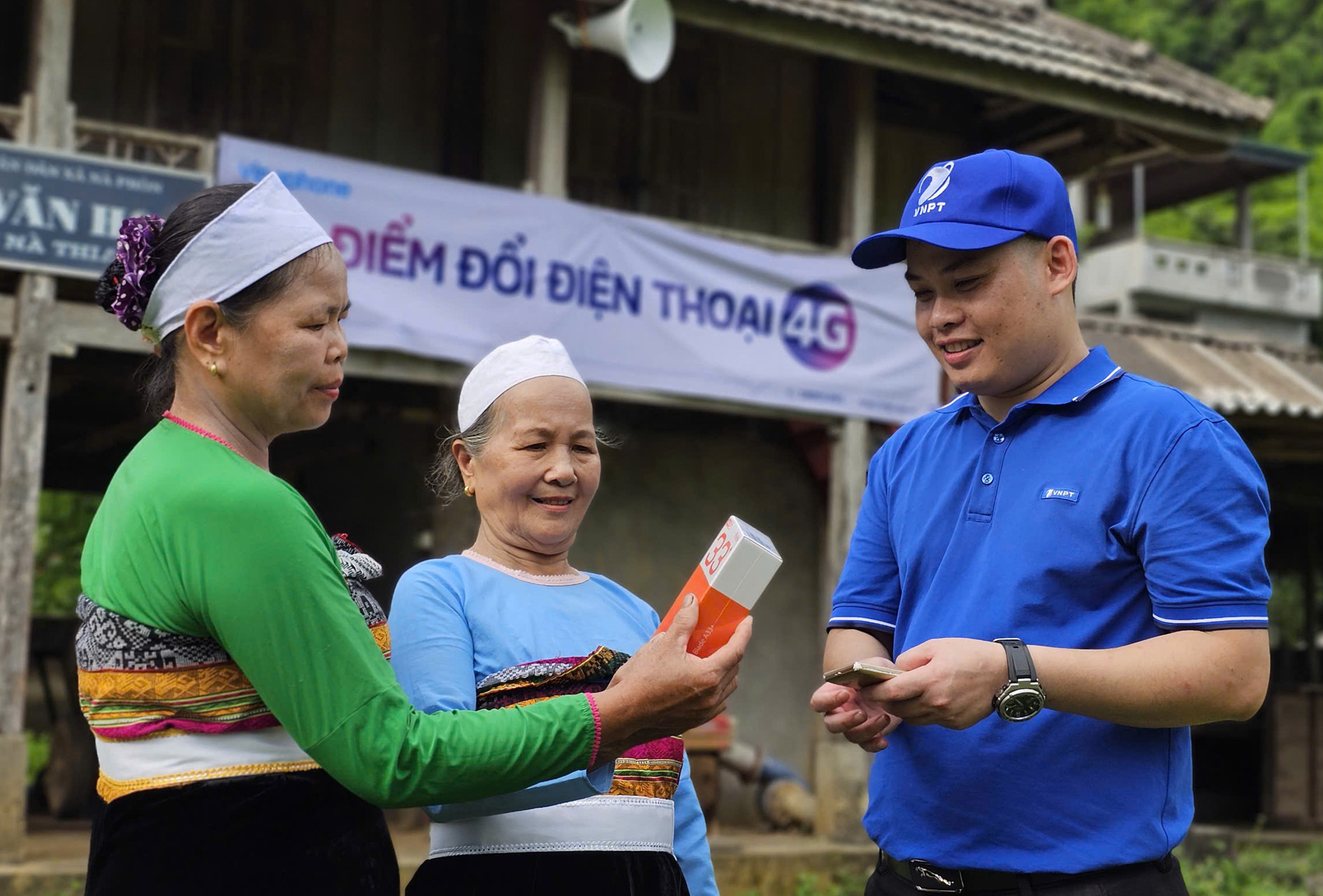
According to the Authority of Radio Frequency Management, the Ministry of Science and Technology will auction rights to use frequencies in the 900-915MHz and 945-960MHz bands on Sept. 9 following the retirement of 2G, allowing mobile operators to use the spectrum to develop their 4G and 5G networks.
The ministry previously announced an auction plan for the 900MHz band, with a starting price of more than VND1.056 trillion ($40.2 million) for each block and a license term of 15 years.
The 900MHz spectrum has been divided into three paired blocks - C3-C3', C4-C4' and C5-C5' - each with 2x5MHz of bandwidth.
The three blocks correspond to the 900-905/945-950MHz, 905-910/950-955MHz and 910-915/955-960MHz frequency ranges, respectively.
Participants can submit bids directly at the auction under an ascending-price format. Each company may register to acquire a maximum of two paired spectrum blocks.
The starting price for each paired block is VND1.056 trillion ($40.2 million).
Each bidding increment is set at VND10 billion ($380,000), while a company registering to bid for one spectrum block must place a deposit of VND55 billion ($2.1 million).
According to mobile operators, the 900MHz spectrum has become available following the shutdown of 2G networks.
As a low-frequency band, 900MHz signals can travel farther and cover wider areas, making the spectrum particularly useful for expanding 4G and 5G coverage.
Under a Prime Ministerial decision approving Vietnam’s information and communications infrastructure master plan with a vision to 2050, the country’s telecommunications infrastructure development strategy includes a roadmap for phasing out older mobile technologies, including 2G and 3G.
The former Ministry of Information and Communications, now the Ministry of Science and Technology, issued a circular governing the planning of the 1,800MHz and 900MHz bands for Vietnam’s public terrestrial International Mobile Telecommunications, or IMT, systems.
The circular, which took effect on June 24, 2024, established the legal framework for phasing out older mobile technologies and promoting widespread smartphone adoption.
Under the roadmap, from Oct. 26, 2024, mobile services could no longer be provided to subscriber devices supporting only the GSM standard, except devices connected to GSM networks for machine-to-machine, or M2M, data transmission and reception, or services provided in the Truong Sa and Hoang Sa archipelagos and at DK offshore platforms.
The 2G mobile system was therefore allowed to remain in operation through Sept. 15, 2026, except for services in the Truong Sa and Hoang Sa archipelagos and at DK offshore platforms.
Vietnamese mobile operators were required to stop providing services to newly connected non-compliant mobile phones supporting only 2G as part of the first stage of the shutdown from October 2024, before completely retiring 2G technology in September 2026.
According to Vu Thu Hien, head of the Frequency Policy and Planning Division at the Authority of Radio Frequency Management, licenses for businesses using the 900MHz band were extended for another two years after September 2024 to continue providing 2G-based voice services to 3G and 4G subscribers whose devices did not support VoLTE.
Many early-generation 3G and 4G smartphones lacked VoLTE, which allows voice calls to be carried over 4G networks. Those subscribers therefore continued to rely on 2G or 3G networks for voice calls until September 2026.
Following the 2G shutdown, Viettel will operate only 4G and 5G technologies, having already retired its 3G network.
VNPT and MobiFone, meanwhile, are shutting down only their 2G networks, meaning they will continue to operate 3G, 4G and 5G in parallel.
As a result, basic “brick phones” without 4G support will no longer work on Viettel’s network, while those that do not support at least 3G will no longer work on VinaPhone and MobiFone networks.
Following the retirement of 2G, mobile operators will need to rapidly expand 4G and 5G coverage to maintain service quality for customers, particularly in remote and underserved areas.
Thai Khang
.svg)
