 Vietnamnet.vn

 Podcast


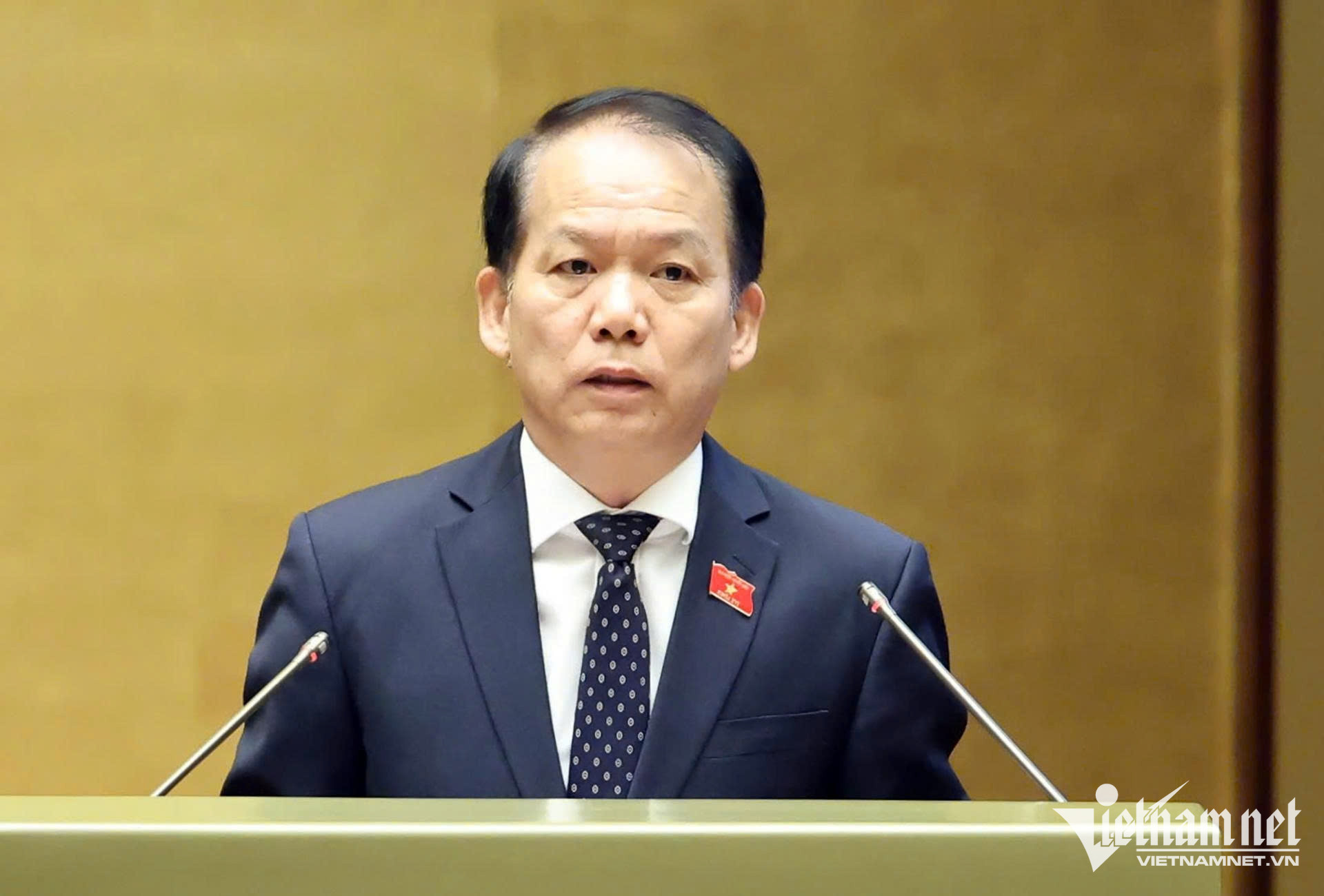
The National Assembly on Saturday morning heard the government's proposal and an appraisal report on draft amendments to the Law on Environmental Protection, including measures to support the transition away from vehicles that contribute to environmental pollution.
Under the draft legislation, the government proposes defining a low-emission zone as a designated area where measures are introduced to reduce emissions, primarily from transport, with the aim of improving air quality and protecting public health.
The establishment and management of such zones must meet environmental air quality and public health requirements while remaining consistent with urban planning, traffic management and the capacity of public transport systems.
The draft also calls for a phased approach to establishing low-emission zones, ensuring that implementation is feasible, transparent and publicly communicated while minimizing adverse effects on production, business activities, services and people's daily lives.
Priority would be given to controlling high-emission vehicles and those powered by fossil fuels.
To support the introduction of low-emission zones, the government would develop preferential policies, financial support and other incentives to encourage public transport and vehicles powered by renewable energy, as well as those with low fuel consumption, low emissions or zero emissions.
The government would also introduce policies to facilitate the transition away from fossil fuel-powered and other polluting vehicles, while establishing criteria for designating low-emission zones and measures to regulate emissions within them.
Proposal to use real-time monitoring data as legal evidence for penalties
In its appraisal report, the National Assembly's Committee on Science, Technology and Environment endorsed the need to amend the Law on Environmental Protection.
The committee said the revisions would help translate the 14th National Party Congress's resolution on green, circular and low-carbon economic development into legislation, supporting Vietnam's goal of achieving net-zero emissions by 2050.
Regarding environmental monitoring and data integrity, the committee noted that cases of software manipulation had already resulted in falsified monitoring figures and substantial damage.
The draft law has therefore been revised to strengthen safeguards against such practices.
The committee recommended additional provisions requiring the capabilities of environmental monitoring organizations to be disclosed through a national database.
It also suggested considering a role for professional associations in independent oversight, alongside severe penalties and professional bans for organizations found to have deliberately manipulated software at automated monitoring stations to falsify environmental data, as has occurred in previous cases.
The appraisal body further proposed allowing data collected directly from environmental monitoring systems to serve as legal evidence for imposing administrative penalties.
It urged the government to introduce regulations covering the entire data chain, from the original source through subsequent processing and use.
These safeguards would ensure that monitoring data remains objective, accurate, complete and traceable, with clear accountability and legal validity for state environmental management, administrative enforcement and, where necessary, criminal investigations and proceedings.
The draft legislation also introduces a provision holding chairpersons of provincial-level People's Committees responsible for environmental pollution occurring within their jurisdictions and areas of management responsibility.
However, the committee called for a review of the wording to avoid imposing overly broad responsibilities, emphasizing the need for fairness and clearly defined individual accountability.
It also stressed that decentralizing environmental management must be accompanied by central government oversight, alternative management safeguards and stronger post-inspection capabilities to prevent regulatory oversight from weakening.
Tran Thuong

