 Vietnamnet.vn

 Podcast



The move is aimed at relieving mounting traffic congestion between Ho Chi Minh City and Dong Nai province.
The proposal, submitted by the Dong Nai People’s Committee, seeks approval for a resolution authorizing the committee to act as the lead agency for implementing the project under a public-private partnership (PPP) model.
The extended route would pass through both Dong Nai and Ho Chi Minh City.
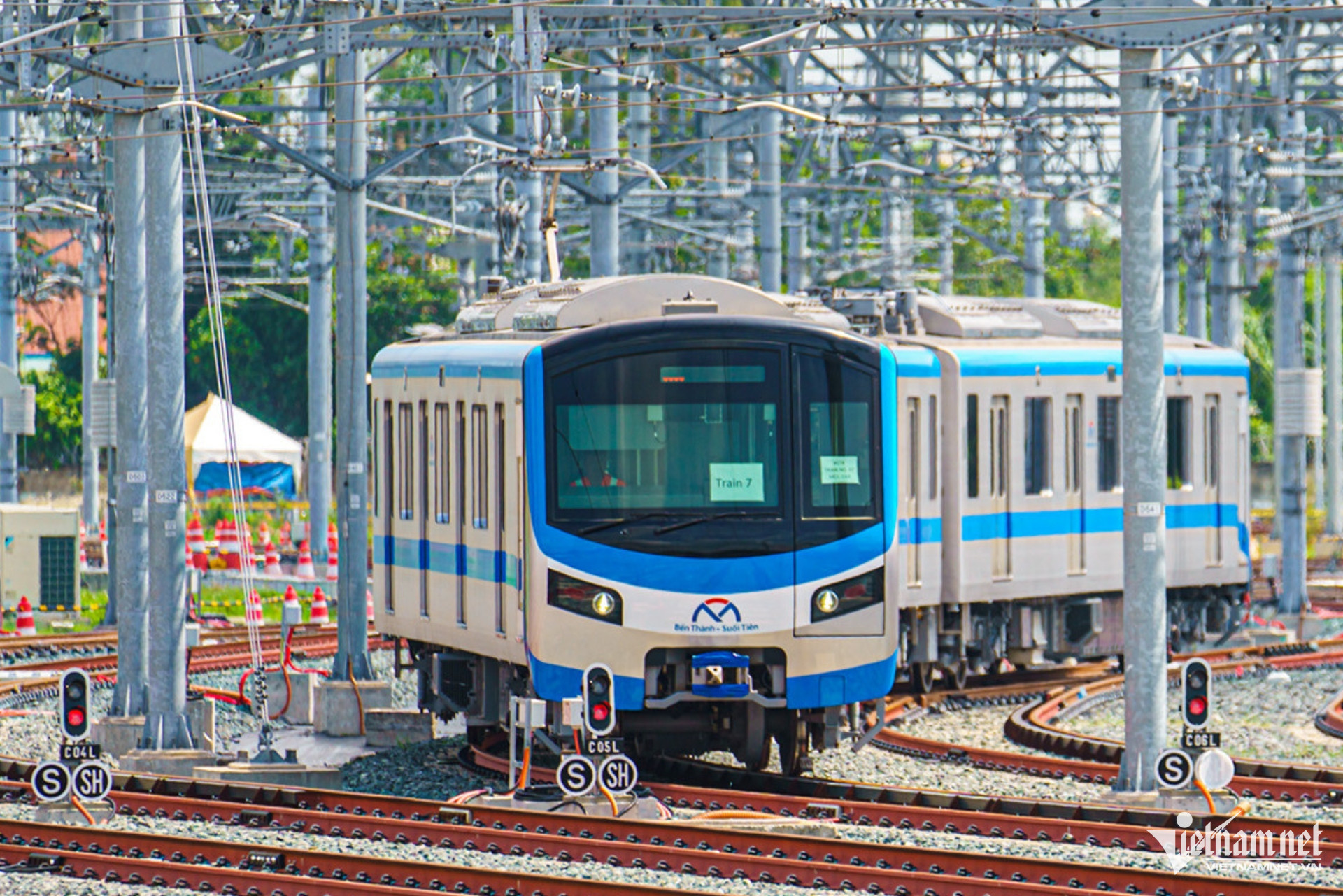
According to the project's documents, the planned extension begins at Station S0 in Tan Van, crosses the Dong Nai River, then runs along National Highway 1 to connect to Station SC in the administrative center of Dong Nai.
From there, the line continues along the planned Bien Hoa – Long Thanh railway corridor, follows Provincial Road 771, cuts across the HCMC – Long Thanh Expressway, connects with Station SA, and then branches toward the planned railway corridor into Long Thanh Airport.
The total length of the proposed extension is approximately 41 kilometers, divided into three segments: S0–SC (6.1 km), SC–SA (28.2 km), and the airport access section (7.1 km).
This route will run parallel to the planned Thu Thiem – Long Thanh metro line and the North–South high-speed railway.
The total estimated investment is over 60.26 trillion VND (about 2.5 billion USD), including around 4.3 trillion VND (approximately 180 million USD) for land clearance and resettlement. The project is targeted for completion in 2029.
According to the Dong Nai authorities, transportation between the province and HCMC currently relies heavily on road infrastructure.
With a rapidly increasing number of vehicles, major routes like National Highways 1 and 51 are frequently congested, despite numerous ongoing inter-regional projects such as highways and ring roads.
Infrastructure development still falls short of actual demand - a gap that is expected to widen once Long Thanh International Airport becomes operational.
As such, Dong Nai emphasizes the urgency of developing high-capacity public transit systems, including metro lines, high-speed railways, and inter-regional overpasses.
Such systems are seen as vital to reducing travel times, enhancing urban connectivity, and shortening the journey between the country’s two major international airports.
Hoang Anh
.svg)
