 Vietnamnet.vn

 Podcast



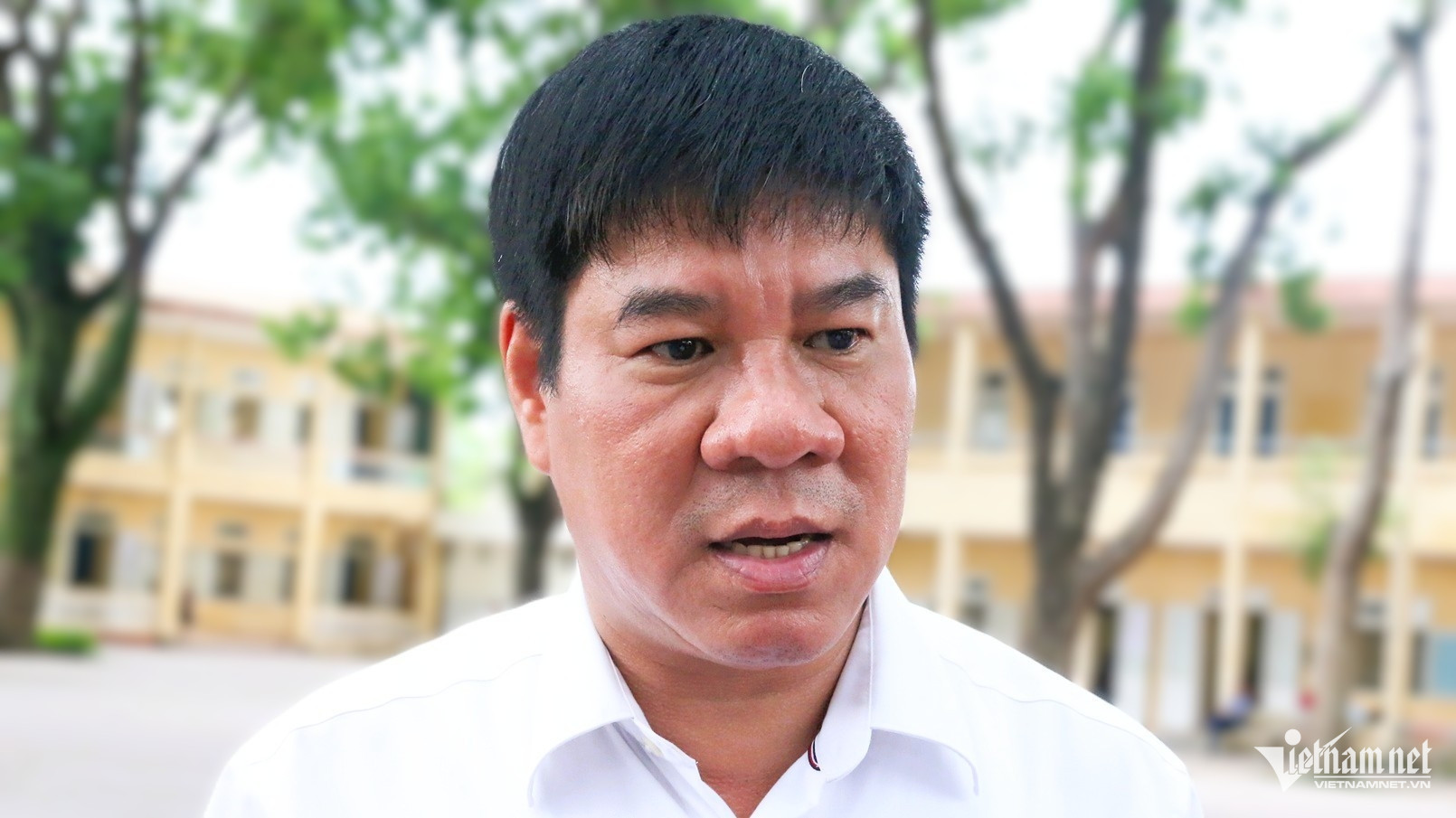
Speaking to VietNamNet, Professor Huynh Van Chuong, Director General of MOET's Department of Quality Management, said the proposal is designed to modernize the national examination system while improving security, fairness and operational efficiency.
According to Chuong, computer-based testing would eliminate many manual procedures such as printing, transporting, distributing and machine-scoring multiple-choice answer sheets. The system would also record the entire testing process directly, reducing human error while enabling multiple testing sessions using standardized examinations of equivalent difficulty.
The new format would also support a wider variety of question types, including audio, images, video and interactive simulations.
As a result, examinations would assess not only students' knowledge but also their ability to apply concepts, analyze information and solve problems, while improving security, monitoring, auditability and post-examination review.
"Many people mistakenly believe computer-based examinations mean taking exams over the internet," Chuong said. "Under the proposed model, examination papers would be transmitted through secure communication channels operated by the Government Cipher Committee to servers at examination centers. Candidates would complete their tests on an internal local area network (LAN) that is completely disconnected from the internet. This model reduces dependence on internet connectivity and minimizes the risk of direct cyberattacks."
Built-in safeguards against unauthorized access
According to MOET, one of the proposal's key objectives is to maximize automation throughout the examination process in order to reduce errors and minimize subjective human intervention, while still maintaining appropriate oversight and accountability where human involvement remains necessary.
The ministry plans to study and apply technologies covering data security, automated examination management, system monitoring, automated marking and artificial intelligence to assist in selected stages of building a standardized question bank.
However, Chuong stressed that AI would not determine examination content or replace experts responsible for drafting, reviewing, testing and approving examination questions.
"Examination questions will continue to be developed, reviewed, tested and approved through a rigorous professional process," he said.
The proposal also sets stringent requirements for system security.
Examination questions and candidates' responses would be encrypted during transmission, storage and backup. The system would include role-based access control, operator authentication, activity logs and mechanisms to detect unusual access attempts.
Multiple backup layers would be implemented to prevent data loss in the event of technical failures, while any post-examination use of data would have to comply with regulations on personal data protection and information security.
Regarding candidate identification, Chuong said the proposal currently only calls for research into technologies that could support identity verification and help prevent impersonation during examinations.
Any deployment would require an appropriate legal framework, technical standards, personal data protection mechanisms and contingency plans for cases where identification technology produces incorrect results.
Ensuring fairness across multiple testing sessions
Chuong said fairness is the guiding principle throughout the proposal.
Computer-based examinations would be introduced gradually and only at provinces and examination centers that fully meet requirements for facilities, technical infrastructure and personnel. The system would not be implemented nationwide until conditions are sufficiently consistent across different regions.
Students would be given opportunities to familiarize themselves with the digital examination format beforehand, while local authorities would provide support for candidates with limited access to computers.
During the transition period, the proposal envisions running paper-based and computer-based examinations in parallel.
Both formats would be required to measure the same competencies and carry equal value for graduation and university admissions. Rules governing candidate allocation would be announced publicly before each examination and would not create unequal treatment.
Under the proposed roadmap, beginning in 2027, candidates taking computer-based and paper-based examinations would sit the same examination content for multiple-choice subjects, with the primary difference being the method of answering questions and recording responses.
Chuong said multiple testing sessions would only be introduced once standardized question banks, field testing and scientific psychometric methods can ensure equivalent difficulty across all examination versions, preventing any candidate from gaining an advantage or disadvantage based on the session they attend.
Regarding concerns about examination paper leaks, he said security had been incorporated into the system's design from the outset.
Each testing session would draw questions from a sufficiently large standardized question bank. Examination papers would be encrypted and transmitted to testing centers shortly before the examination through secure communication channels.
Although different sessions would use different examination papers, all versions would be required to maintain equivalent difficulty and comply with strict security procedures.
The proposal also addresses potential disruptions such as power outages, hardware failures and software errors.
The system would automatically save candidates' work at regular intervals, while examination centers would be equipped with backup computers and emergency power supplies. All incidents would be documented through written reports and system logs to facilitate post-examination reviews while ensuring candidates receive their full allotted testing time.
Chuong emphasized that moving examinations onto computers would not change the knowledge requirements or learning objectives defined under Vietnam's national general education curriculum.
"The computer is simply a testing tool," he said.
MOET, together with local education authorities and schools, will provide free practice software and sample examinations so students can become familiar with the new format before sitting the official examination. Students will not be required to acquire additional technology skills or purchase equipment solely for the examination.
Thanh Hung
.svg)
