 Vietnamnet.vn

 Podcast


Prime Minister Le Minh Hung, on behalf of the Government, signed a resolution following its regular October meeting, assigning specific tasks to ministries, government agencies and local authorities.
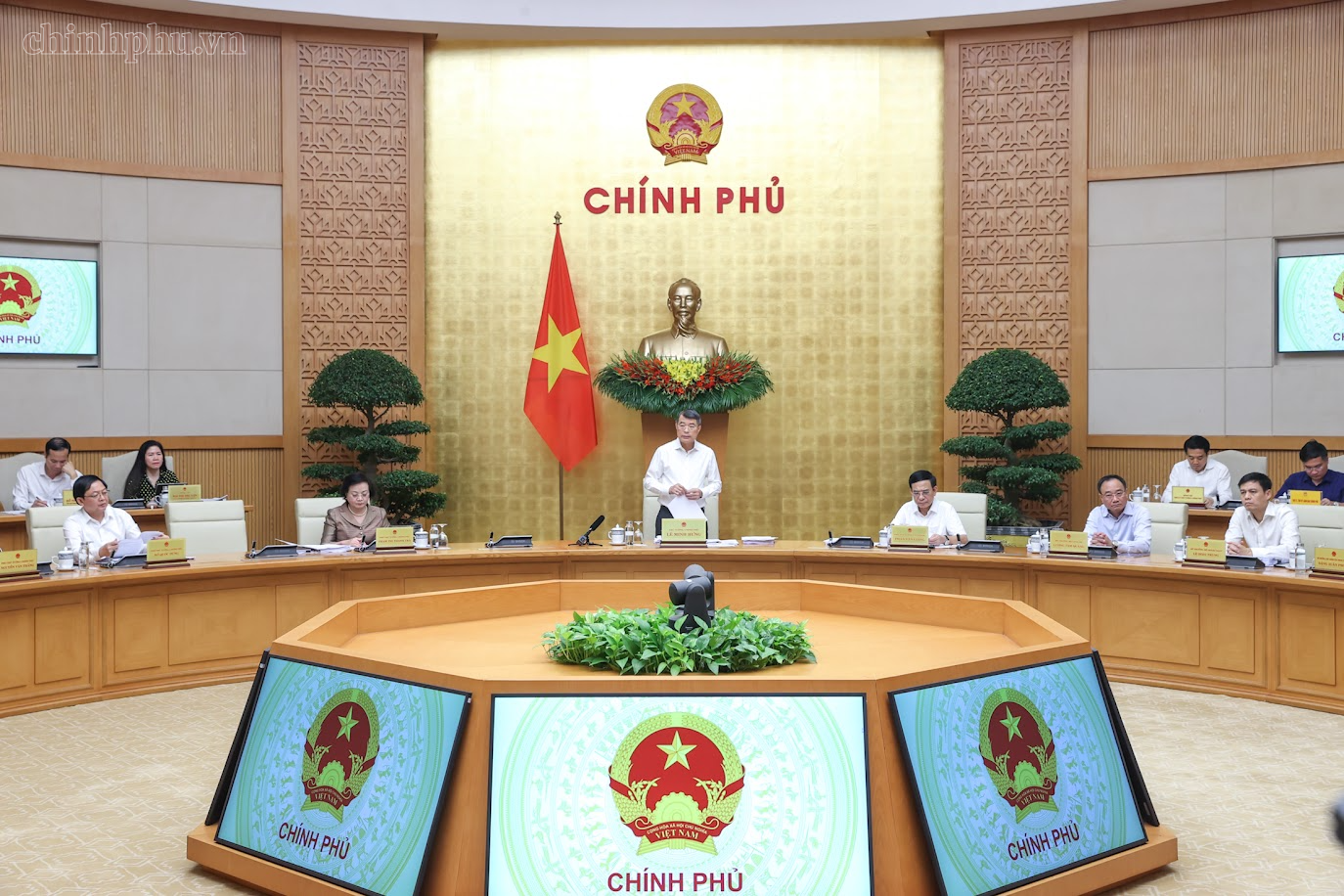
Under the resolution, the Ministry of Health must coordinate with relevant agencies and localities to submit a report to the Prime Minister on the proposed amendments to the Law on Donation, Removal and Transplantation of Human Tissues and Organs and Donation and Removal of Human Bodies, along with related matters, before November 10. A report on amendments to the Food Safety Law must be submitted before November 15.
The ministry must also review the organizational structure, functions, responsibilities, staffing, facilities, equipment and financial mechanisms of commune-level health stations.
The Government has instructed the ministry to urgently review and revise overlapping or inadequate regulations, issue comprehensive and consistent circulars on technical and economic norms, and address obstacles in pharmaceutical procurement, bidding and supply.
It must also develop specific measures to eliminate unnecessary intermediary stages in the procurement of medicines, medical supplies and equipment, while substantially resolving shortages of medicines and medical devices.
Strengthening moral education and national traditions
The Ministry of Education and Training has been instructed to work with relevant agencies and local authorities to review and revise the national general education curriculum and textbooks, reducing unnecessary content while making teaching more practical and effective.
In coordination with the Ministry of Finance and local governments, it must assess demand and establish annual roadmaps to substantially address shortages of schools and classrooms, while proposing appropriate resource allocations to competent authorities.
The Government has also called for stronger guidance, supervision and inspections to ensure educational institutions promote moral values, personal development, national traditions, Vietnamese history and respect for the law among students.
Schools must foster a positive educational culture, prevent and address school violence, and maintain safe, healthy, welcoming and supportive learning environments.
The ministry has also been assigned to develop and submit a comprehensive proposal for regulating smartphone and social media use in educational institutions, with measures tailored to different educational levels.
Meanwhile, the Ministry of Home Affairs must finalize proposals for reforms to salary policies and social insurance for submission to competent authorities.
The Government has instructed the ministry to closely monitor, assess and forecast labor market developments, particularly labor relations, wages and year-end bonuses, and promptly address wage arrears, delayed payments and labor disputes.
The ministry must also submit 34 government resolutions announcing the natural land areas of 3,321 commune-level administrative units, along with a resolution defining administrative management boundaries at sea.
Another priority is to work urgently with the Party Central Committee's Organization Commission to guide ministries, agencies and local authorities in proposing staffing allocations for 2027-2031.
The ministry must consolidate staffing plans for the period from ministries and ministerial-level agencies and report them to competent authorities.
By November 30, it must complete a report on the regulatory framework for job position lists, job descriptions, competency frameworks, standards and staffing norms.
It must also provide consistent guidance to ministries, agencies and local authorities on developing job positions and submit the proposals to the Steering Committee for consideration before forwarding them to the Party Central Committee's Organization Commission.
For the Ministry of Finance, the Government has ordered a review of tax policies scheduled to expire on January 1, 2027, and proposals for appropriate measures. Existing tax, fee and charge exemptions, reductions and payment extensions that remain suitable should continue to be implemented effectively.
The ministry must also ensure transparency regarding the progress and results of handling and utilizing surplus government buildings and land following administrative restructuring.
It has been instructed to directly supervise and guide localities with large numbers of unresolved properties, aiming to complete their disposal or reassignment in 2026 while ensuring efficiency and preventing losses and waste.
Government calls for action against delays and buck-passing
The Ministry of Construction has been instructed to comprehensively review plans and necessary conditions for bringing the first phase of Long Thanh International Airport into operation in 2026.
It must also accelerate progress on Gia Binh Airport and infrastructure projects serving APEC 2027, ensuring the highest standards of security and safety, feasibility, efficiency and regulatory compliance.
The Government resolution calls for urgent proposals on an integrated transport connectivity plan linking Gia Binh Airport with central Hanoi and surrounding localities.
Alongside finalizing a strategic plan for transport service development through 2035, with a vision to 2050, the ministry must proactively complete investment procedures for the Lao Cai - Hanoi - Hai Phong railway and the North - South high-speed railway, as well as planning for the Dong Dang - Hanoi railway.
In its broader directives, the Government emphasized the need to promptly address avoidance of responsibility, buck-passing and delays in the performance of official duties.
Authorities must handle petitions and requests within their jurisdiction in a timely manner and remove difficulties facing individuals and businesses, particularly those involving interest rates, tax and customs procedures, specialized inspections, administrative procedures and business conditions.
The Government also called for substantial reductions in administrative procedures and business requirements.
It stressed the importance of accelerating the development of databases supporting interconnected one-stop administrative services, while ensuring that regulatory, policy and procedural obstacles do not cause businesses and investors to miss opportunities.
Tran Thuong

