 Vietnamnet.vn

 Podcast


A simple search for "online temple visits" on TikTok brings up numerous accounts broadcasting livestreams simultaneously.
These streams often feature AI-generated animated Buddhist imagery accompanied by religious music. Viewers are encouraged to purchase and send virtual gifts in exchange for actions performed by digital characters, such as lighting incense, kneeling in prayer, making offerings, striking wooden fish instruments and chanting Buddhist scriptures.
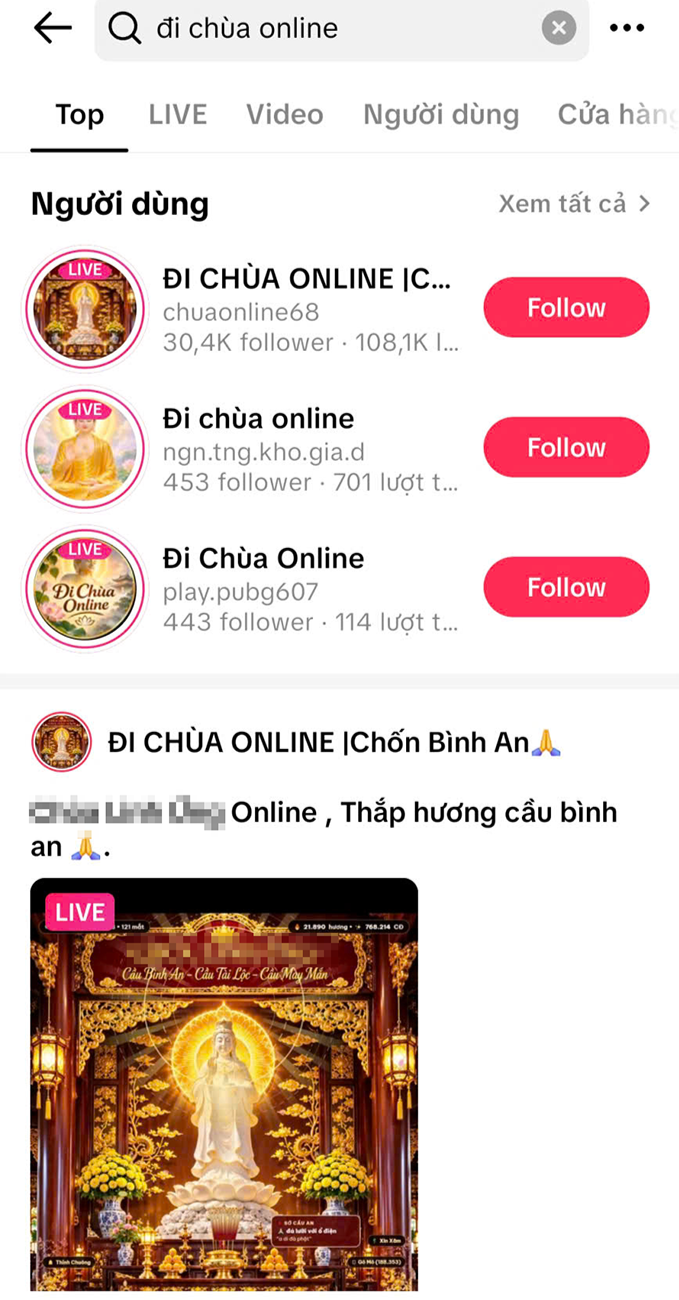
When viewers send gifts, their names are announced during the livestream, often accompanied by claims that they will accumulate spiritual merit, receive blessings from the Buddha, enjoy family harmony or attract peace and good fortune.
Some livestreams also incorporate fortune-telling, divination, rituals to ward off bad luck and prayers for wealth, subtly encouraging viewers to send virtual gifts or transfer money.
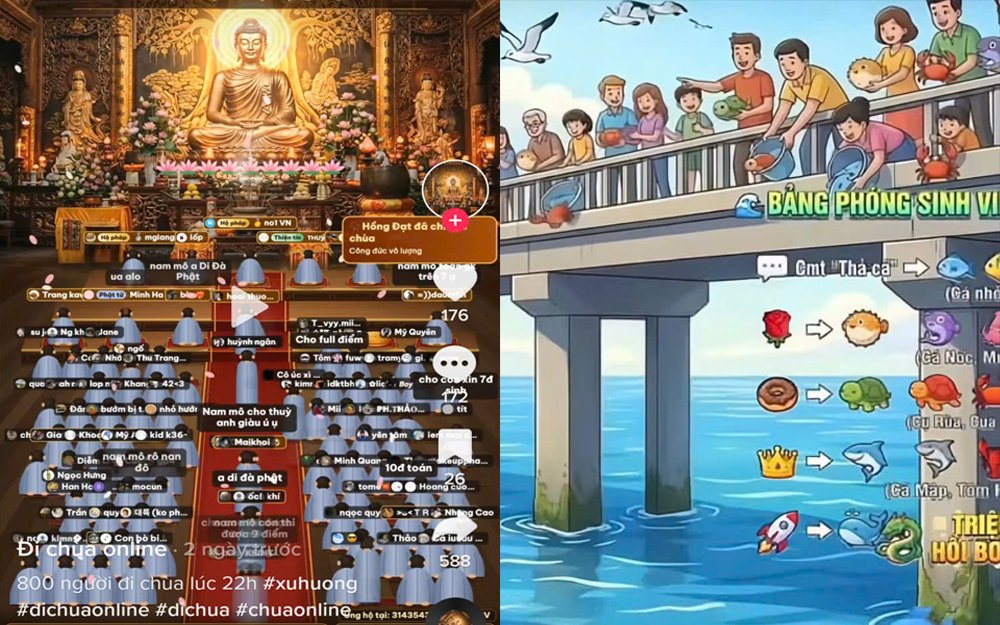
A similar practice has emerged around "online animal release" rituals, a digital adaptation of the Buddhist tradition of releasing captive animals as an act of compassion.
Participants send virtual gifts to have their names read aloud during livestreams, accompanied by promises of spiritual blessings and good fortune.
Major Phan Hoang Su of the Tran Bien Ward Police in Dong Nai, who regularly shares legal education videos and warnings about online scams, said such activities showed signs of exploiting religious beliefs and spiritual practices for financial gain.
He explained that participants wishing to have their names announced during virtual temple visits or animal release ceremonies must purchase and send digital gifts.
The livestream operators can then convert those gifts into real money.
According to Su, participants also face risks of personal information exposure.
Some individuals may contact viewers directly and request personal details under the pretext of conducting spiritual rituals on their behalf.
Unverified websites and applications offering virtual temple visits or animal release services may also ask users to log in through social media accounts or provide personal information and photographs, creating potential data security risks.
More seriously, anonymous operators may create fraudulent websites or applications disguised as spiritual platforms to attract users, install malware on their devices or steal personal information and banking credentials.
Once criminals obtain such information, they can use various methods to commit fraud, steal assets or engage in other illegal activities.
Police issue warnings over online religious activities
The Cybersecurity Division of Dong Thap Provincial Police was among the first authorities to warn about the commercialization of online temple visits and other spiritual livestreams on social media.
The division said some activities had been distorted for commercial purposes and personal profit, potentially affecting public order, religious beliefs and traditional cultural values.
According to the division, virtual temple visits and religious livestreams are not inherently illegal.
However, using images of the Buddha, places of worship or religious ceremonies to attract likes, views and virtual gifts, or creating disrespectful entertainment content, can negatively affect cultural and spiritual life and undermine respect for religious traditions.
Authorities also warned that activities involving monetary or material rewards based on chance could constitute gambling, potentially exposing participants to legal liability.
Fortune-telling and superstitious practices conducted for financial gain may result in administrative penalties. More serious violations could lead to criminal prosecution if the relevant legal conditions are met.
In response to the growing trend, the Cybersecurity Division of Dong Thap Provincial Police has issued recommendations for livestream organizers, viewers and online platform administrators.
Livestream organizers are advised not to exploit religious or spiritual beliefs to solicit virtual gifts, donations or payments through promises of supernatural rewards.
They are also urged not to turn religious imagery and rituals into inappropriate commercial entertainment.
Viewers should remain cautious about invitations to participate in such activities and avoid transferring money or sending virtual gifts based on unsubstantiated promises of spiritual benefits.
Social media users are advised not to promote, share, support or participate in activities suspected of exploiting religious beliefs for financial gain.
Administrators of online platforms, groups and communities should proactively identify, prevent and address potentially unlawful content in accordance with applicable laws and platform policies.
Dam De

