 Vietnamnet.vn

 Podcast



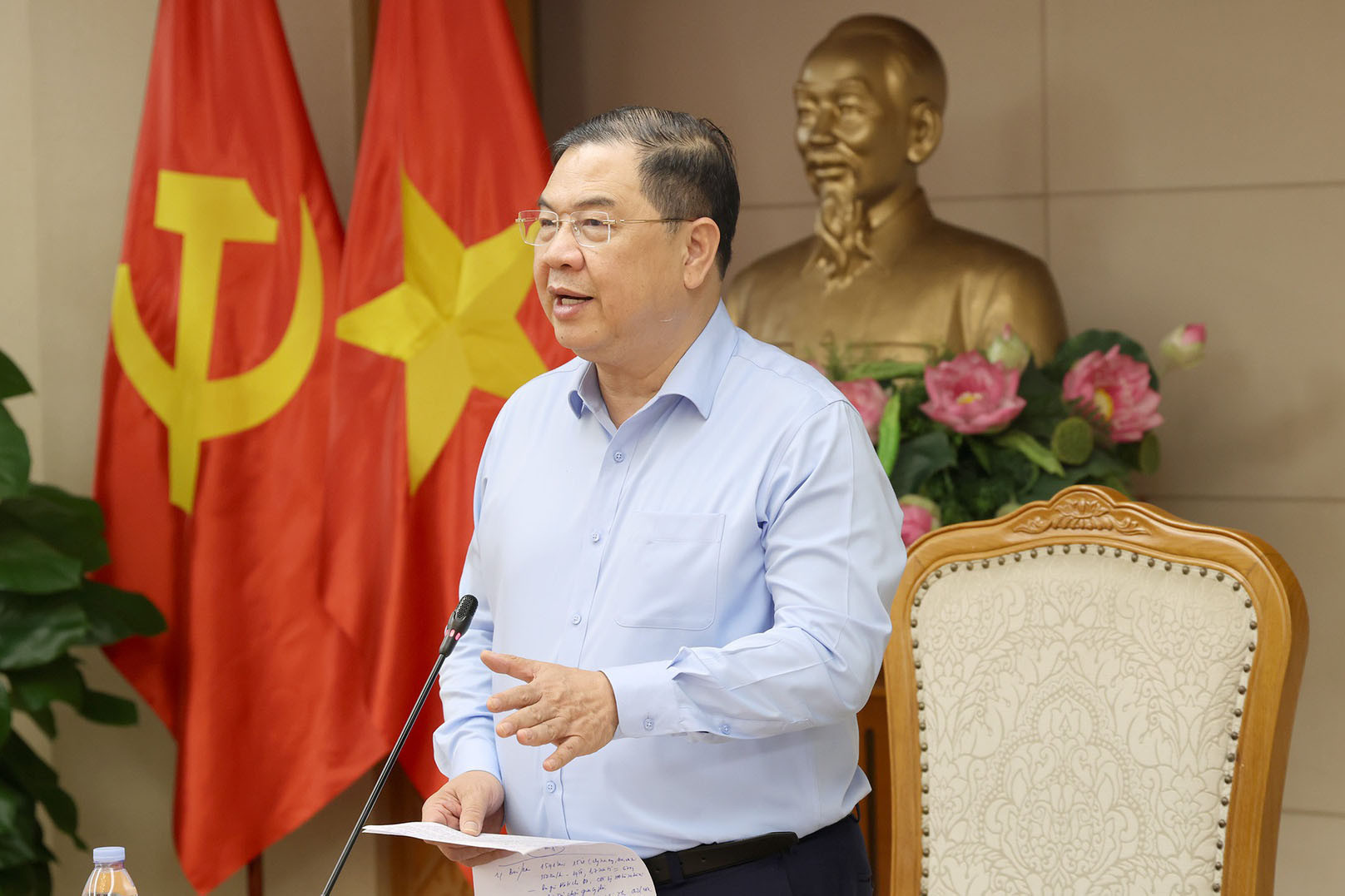
The Government Office has released a conclusion following his meeting on the implementation progress of the high-speed railway along the North - South axis, as well as other railway projects.
According to the conclusion, the Deputy Prime Minister described these as critical projects in a new and complex field, presenting numerous challenges that require strong and coordinated efforts across the entire political system.
Project implementation must be comprehensively evaluated across economic, political, and foreign policy dimensions, ensuring financial efficiency while aligning with Vietnam’s strategic goal of achieving greater autonomy in railway industry development. Appropriate models for management and operation must also be established.
He called on ministries, sectors, and local authorities to ensure progress, quality, and investment efficiency, while acting within their mandates and avoiding any shifting or avoidance of responsibility. Localities along the project route are required to expedite land clearance immediately after receiving project documentation and boundary markers from the Ministry of Construction.
The Ministry of Construction, together with relevant agencies, is tasked with reviewing and proposing amendments to legal frameworks governing investment, management, and operation of railway projects, ensuring they are both effective and suited to Vietnam’s practical conditions.
The Ministry of Science and Technology and the Ministry of Construction must urgently review, develop, and issue a comprehensive system of standards and technical regulations for railways - including high-speed rail, standard-gauge rail, and urban rail - that align with domestic conditions while approaching international practices. Notably, standards for urban rail systems are expected to be completed by June for nationwide application, with attention to integration with the national railway network.
For project components where Vietnam currently lacks machinery, equipment, or advanced technologies, the Ministry of Construction has been assigned to work with partners to receive, evaluate, and establish specific technical norms tailored to the project, ensuring cost efficiency while building a roadmap toward broader application.
Regarding the North - South high-speed railway, the Ministry of Construction must urgently complete procedures to select consultants for the feasibility study within the second quarter. Local authorities are also required to accelerate planning efforts to maximize the economic benefits of the railway corridor.
Crucially, partner selection for technology transfer must strictly adhere to the principle of transferring technology to Vietnam.
For the Lao Cai - Hanoi - Hai Phong railway line, the Ministry of Construction is instructed to review and assess consultancy proposals within the feasibility study, ensuring long-term vision, efficiency, and connectivity between key economic centers while maintaining synchronization across transport modes.
The Deputy Prime Minister emphasized that project timelines must not compromise technical processes, standards, quality, or efficiency. Absolute safety must be ensured throughout the entire lifecycle of the project. If adjustments to investment policies are necessary, the Ministry of Construction must finalize documentation for submission to the Government in May and to the National Assembly Standing Committee in June.
Regarding urban railway projects in Hanoi and Ho Chi Minh City, local authorities are required to coordinate closely with ministries to review implementation progress. Efforts must focus on resolving bottlenecks related to investment procedures, land clearance, funding, and technology, ensuring safe and efficient operations that are resilient to climate change and aligned with approved planning.
For new projects, careful study is required to select appropriate, synchronized technologies, alongside a reasonable investment roadmap that reflects local budget capacities and avoids fragmented development.
Tran Thuong
.svg)
