 Vietnamnet.vn

 Podcast



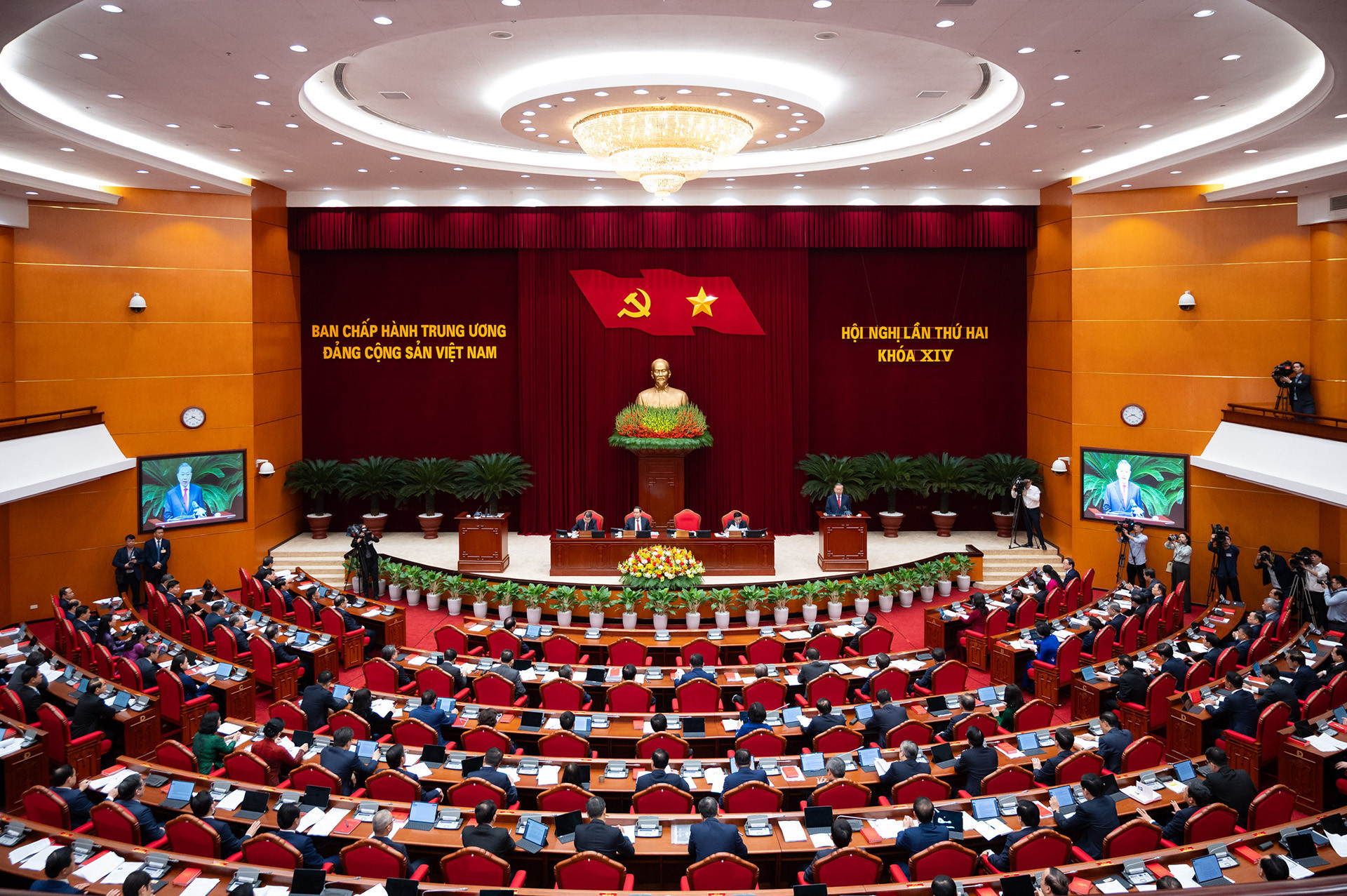
The directive is part of Resolution No. 04 issued following the second plenum of the 14th Party Central Committee, which focuses on strengthening the Party’s leadership in preventing and combating corruption, wastefulness, and negative practices in the new context.
The Central Committee set out a clear objective: to persistently prevent, detect, and push back corruption, waste, and misconduct, while building a clean and strong Party and political system, thereby reinforcing public trust.
Anti-corruption efforts, it stressed, must place national and public interests above all, while also promoting socio-economic development and ensuring rapid, sustainable growth.
A notable perspective highlighted in the resolution is the need to combine strict enforcement with development-oriented thinking, encouraging and protecting those who are innovative, proactive, and willing to act for the common good.
The Central Committee also emphasized early detection and prevention, warning against allowing minor violations to accumulate into serious wrongdoing. It called for tighter control over conditions that may give rise to corruption, particularly in key sectors and emerging fields with high risk.
At the same time, enforcement must be strict, timely, humane, and persuasive, with no “off-limits zones” or exceptions. Authorities are required to ensure objectivity and comprehensiveness, taking into account specific historical contexts and prioritizing political, economic, and social effectiveness, as well as national interests, when determining appropriate handling measures.
Recovering assets is a top priority, alongside encouraging offenders to voluntarily compensate for damages.
Party committees and leaders at all levels are required to take direct responsibility for prevention efforts, including regular self-inspection and early detection of corruption, waste, and internal degradation in political ideology, ethics, and lifestyle.
The Central Committee also stressed that leaders must be held accountable for negligence, lack of oversight, or any acts of concealment that enable corruption or misconduct.
Officials and Party members, especially those in leadership roles, are expected to uphold strong ethical standards and integrity, and must not allow family members or associates to exploit their positions for personal gain.
The resolution outlines the need to promptly improve the legal framework to ensure consistency, clarity, and enforceability. This includes studying the development of a law on asset registration.
Importantly, the Central Committee called for timely amendments to the Criminal Code, the Criminal Procedure Code, and related laws to institutionalize new policies on exemption, reduction, or exclusion of criminal liability.
Among the proposed directions are clearly defined criteria to exempt criminal liability for individuals who incur risks or cause damage while applying science, technology, innovation, or digital transformation for the common good.
It also suggests reducing criminal liability and penalties for those who commit offenses without profit motives, voluntarily return assets, remedy damages, and actively cooperate in investigations.
In addition, the resolution encourages expanding the use of financial penalties and reducing reliance on imprisonment for economic and position-related offenses.
The Central Committee called for strict control of power and the effective implementation of preventive measures against corruption and misconduct.
It also emphasized the importance of building a capable and reputable cadre of officials at all levels, especially strategic and grassroots leadership.
Timely replacement or resignation of underperforming officials, as well as strict handling of those who delay, evade responsibility, or harass citizens and businesses, was identified as a key solution.
Notably, the resolution also calls for continued improvement of salary and income policies to ensure that public officials can maintain integrity and focus on their duties.
In terms of enforcement, authorities are required to ensure fair, objective, timely, and effective handling of violations, without exceptions.
The Central Committee also stressed the need to modernize inspection, auditing, investigation, prosecution, and adjudication methods, while strengthening early-stage supervision of major policies, projects, and programs.
Inspections and audits should focus on high-risk areas and issues of public concern, while proactively identifying and addressing violations in emerging and critical sectors.
Authorities are also tasked with preventing the formation of “interest groups” that exploit systems for personal gain.
At the same time, the resolution strictly prohibits the misuse of anti-corruption efforts to interfere with or obstruct normal operations of organizations and individuals.
It prioritizes the application of civil, economic, administrative, and organizational measures, with criminal prosecution reserved for cases that warrant it. In such cases, offenders may be allowed to remedy economic consequences within a defined timeframe, which will serve as a key basis for further handling.
Finally, the Central Committee called for enhanced international cooperation, including negotiating and signing mutual legal assistance agreements and international treaties on anti-corruption, as well as intensifying efforts to track down and extradite fugitives and recover assets transferred abroad.
Tran Thuong
.svg)
